
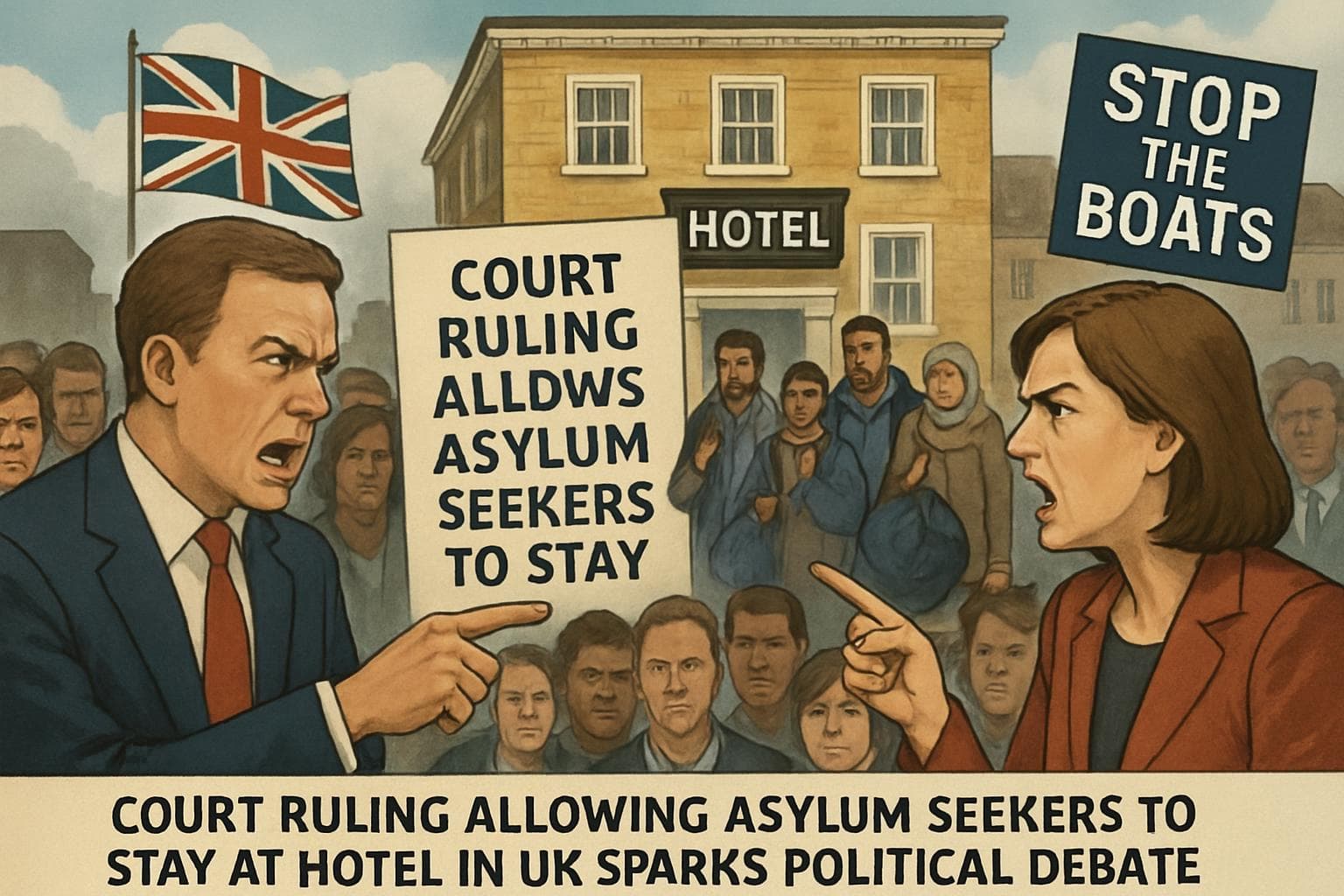
Court Ruling on Asylum Hotels Sparks Political Debate
In This Article
HIGHLIGHTS
- The Court of Appeal ruled in favor of the government, allowing asylum seekers to remain at the Bell Hotel in Epping.
- This decision prevents immediate chaos by avoiding the need to rehouse 138 asylum seekers quickly.
- The ruling buys the government time to close asylum hotels by 2029, amid political pressure from both sides.
- Nigel Farage and other right-wing figures criticized the ruling, claiming it prioritizes asylum seekers over British citizens.
- Public opinion remains divided, with significant concern over immigration levels and the handling of asylum policies.
The recent Court of Appeal decision allowing asylum seekers to remain at the Bell Hotel in Epping has ignited political tensions across the UK. While the ruling is a technical victory for the government, it underscores the ongoing challenges in managing asylum accommodations amid rising political pressure.
Government's Temporary Relief
The ruling provides the government with a reprieve, averting the immediate need to find alternative housing for 138 asylum seekers. This decision prevents a potential cascade of legal challenges from local councils, which could have disrupted the already strained asylum system. The government now has until 2029 to phase out the use of hotels for asylum seekers in a "controlled and orderly way."
Political Reactions and Criticism
Despite the legal win, the government faces criticism from right-wing figures like Nigel Farage, who accused it of using European human rights legislation against local residents. Farage's comments reflect a broader sentiment among some voters who feel that asylum seekers are being prioritized over British citizens. Reform UK leaders echoed these sentiments, further fueling the debate.
Divided Public Opinion
Public opinion on immigration remains polarized. A recent YouGov poll indicates that 71% of voters believe Labour leader Keir Starmer is mishandling the asylum crisis, with many concerned about high immigration levels. This sentiment provides fertile ground for political figures like Farage to capitalize on public discontent.
Future Implications
The ruling has prompted calls for more radical solutions, such as using former military barracks for housing, a suggestion made by Health Minister Stephen Kinnock. However, such measures risk alienating left-leaning voters who advocate for more humane treatment of asylum seekers. The Green Party criticized the focus on legal battles, urging for more practical and compassionate solutions.
WHAT THIS MIGHT MEAN
The Court of Appeal's decision may temporarily stabilize the government's asylum accommodation strategy, but it also highlights the need for long-term solutions. As the 2029 deadline approaches, the government must balance legal obligations with public sentiment and political pressures. Experts suggest that without comprehensive immigration reform, the issue will continue to polarize voters and dominate political discourse. The ruling could also set a precedent for future legal challenges, potentially reshaping the landscape of asylum policy in the UK.
Related Articles

Diplomatic Tensions Rise as Trump Criticizes Starmer's Iran Policy
UK Government to Reform Asylum Seeker Support and Employment Policies

Reform UK Aims to Reshape Welsh Politics with New Manifesto

UK Faces Dilemmas Amid Iran Conflict and China Spying Allegations

UK-Iran Tensions: Starmer Defends Cautious Approach Amid Trump Criticism

UK Reinforces Military Presence in Cyprus Amid Middle East Tensions
Court Ruling on Asylum Hotels Sparks Political Debate
In This Article
 Ethan Brooks| Published
 HIGHLIGHTS
- The Court of Appeal ruled in favor of the government, allowing asylum seekers to remain at the Bell Hotel in Epping.
- This decision prevents immediate chaos by avoiding the need to rehouse 138 asylum seekers quickly.
- The ruling buys the government time to close asylum hotels by 2029, amid political pressure from both sides.
- Nigel Farage and other right-wing figures criticized the ruling, claiming it prioritizes asylum seekers over British citizens.
- Public opinion remains divided, with significant concern over immigration levels and the handling of asylum policies.
The recent Court of Appeal decision allowing asylum seekers to remain at the Bell Hotel in Epping has ignited political tensions across the UK. While the ruling is a technical victory for the government, it underscores the ongoing challenges in managing asylum accommodations amid rising political pressure.
Government's Temporary Relief
The ruling provides the government with a reprieve, averting the immediate need to find alternative housing for 138 asylum seekers. This decision prevents a potential cascade of legal challenges from local councils, which could have disrupted the already strained asylum system. The government now has until 2029 to phase out the use of hotels for asylum seekers in a "controlled and orderly way."
Political Reactions and Criticism
Despite the legal win, the government faces criticism from right-wing figures like Nigel Farage, who accused it of using European human rights legislation against local residents. Farage's comments reflect a broader sentiment among some voters who feel that asylum seekers are being prioritized over British citizens. Reform UK leaders echoed these sentiments, further fueling the debate.
Divided Public Opinion
Public opinion on immigration remains polarized. A recent YouGov poll indicates that 71% of voters believe Labour leader Keir Starmer is mishandling the asylum crisis, with many concerned about high immigration levels. This sentiment provides fertile ground for political figures like Farage to capitalize on public discontent.
Future Implications
The ruling has prompted calls for more radical solutions, such as using former military barracks for housing, a suggestion made by Health Minister Stephen Kinnock. However, such measures risk alienating left-leaning voters who advocate for more humane treatment of asylum seekers. The Green Party criticized the focus on legal battles, urging for more practical and compassionate solutions.
WHAT THIS MIGHT MEAN
The Court of Appeal's decision may temporarily stabilize the government's asylum accommodation strategy, but it also highlights the need for long-term solutions. As the 2029 deadline approaches, the government must balance legal obligations with public sentiment and political pressures. Experts suggest that without comprehensive immigration reform, the issue will continue to polarize voters and dominate political discourse. The ruling could also set a precedent for future legal challenges, potentially reshaping the landscape of asylum policy in the UK.
Related Articles
Diplomatic Tensions Rise as Trump Criticizes Starmer's Iran Policy
UK Government to Reform Asylum Seeker Support and Employment Policies
Reform UK Aims to Reshape Welsh Politics with New Manifesto
UK Faces Dilemmas Amid Iran Conflict and China Spying Allegations
UK-Iran Tensions: Starmer Defends Cautious Approach Amid Trump Criticism
UK Reinforces Military Presence in Cyprus Amid Middle East Tensions