
Cyclones Wreak Havoc in Sri Lanka and Indonesia, Prompting Massive Rescue Efforts
In This Article
HIGHLIGHTS
- Cyclone Ditwah has caused severe flooding and landslides in Sri Lanka, resulting in 123 deaths and 130 missing individuals, according to the Disaster Management Centre.
- In Indonesia, Cyclone Senyar has triggered rare flooding, killing at least 80 people, with rescue operations ongoing in North Sumatra.
- Sri Lankan authorities have mobilized military resources, including helicopters and boats, to aid in rescue and relief efforts for affected residents.
- Thailand has relocated several events of the upcoming South East Asian Games to Bangkok due to severe flooding in the southern regions.
- The Sri Lankan government has issued evacuation orders for low-lying areas, particularly near the Kelani River, as water levels continue to rise.
Severe weather conditions have devastated parts of Sri Lanka and Indonesia, as Cyclone Ditwah and Cyclone Senyar unleash destruction across the regions. In Sri Lanka, the death toll has reached 123, with 130 individuals still missing, according to the Disaster Management Centre (DMC). The cyclone has triggered torrential rains, leading to widespread flooding and landslides, particularly affecting the central tea-growing district of Badulla.
Sri Lanka's Struggle with Cyclone Ditwah
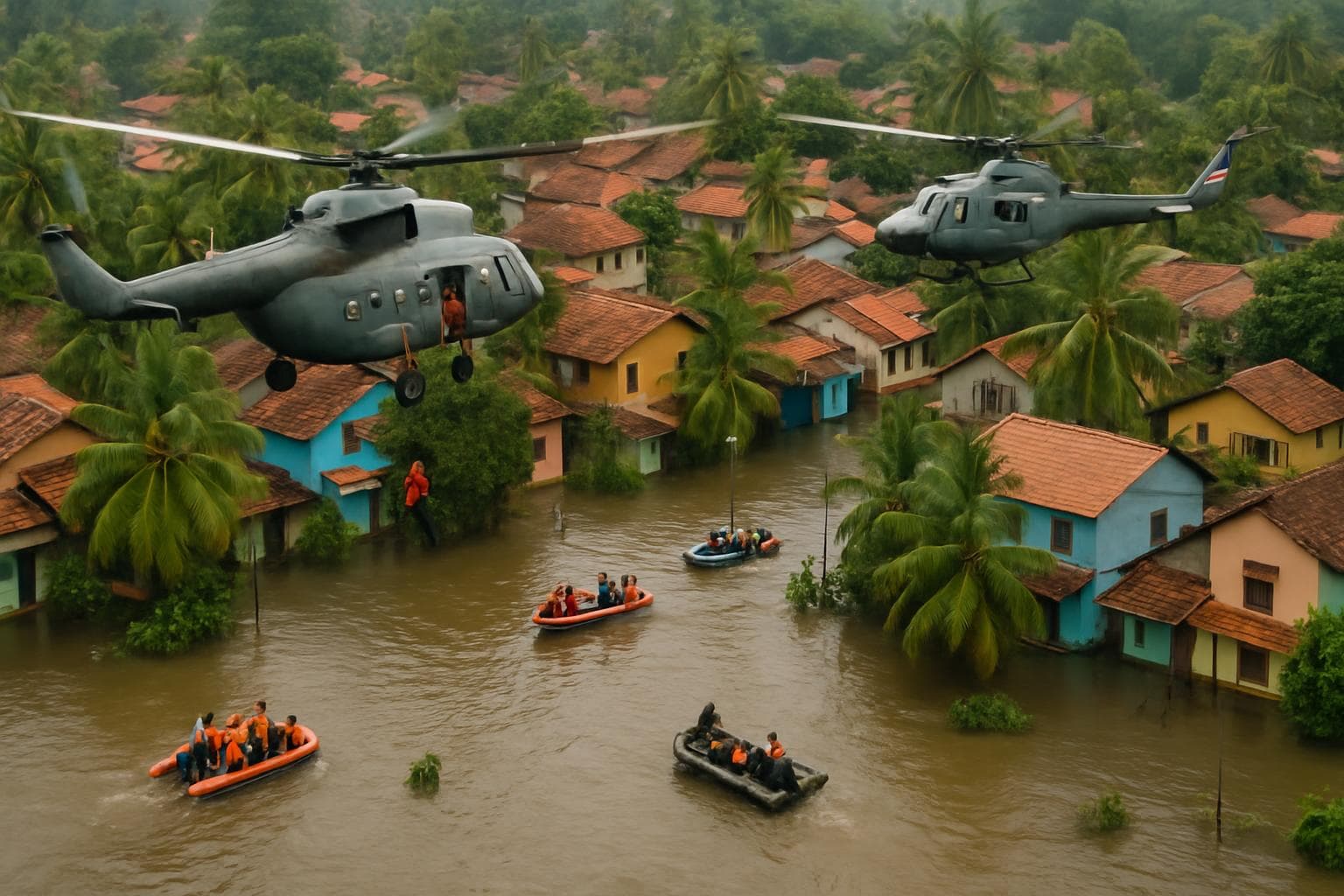
Cyclone Ditwah made landfall on Wednesday, causing record rainfall and prompting the Sri Lankan government to deploy military resources for rescue operations. The DMC reported that over 43,995 people have been displaced, with many seeking refuge in state-run welfare centers. The Kelani River's rising levels have led to evacuation orders for residents in low-lying areas, including the capital, Colombo. The government has utilized helicopters and boats to evacuate stranded villagers, with notable rescues including a man airlifted from a coconut tree.
Indonesia Faces Rare Cyclone-Induced Flooding
Meanwhile, Indonesia is grappling with the aftermath of Cyclone Senyar, which has resulted in at least 80 fatalities. The cyclone's impact is particularly severe in North Sumatra, where rescue operations are underway. Erma Yulihastin, a researcher at Indonesia's National Research and Innovation Agency, noted the rarity of cyclones in the region, as they seldom form near the equator.
Regional Impacts and Responses
The extreme weather has also affected Thailand, prompting the relocation of several South East Asian Games events to Bangkok. The decision was made to ensure the safety of athletes and spectators, as flooding continues to impact the southern regions of the country.
Humanitarian Efforts and International Support
In response to the crisis, India has dispatched a planeload of supplies to assist Sri Lanka, with Prime Minister Narendra Modi expressing readiness to provide further aid. The situation remains dire, with authorities warning of potential worsening conditions.
WHAT THIS MIGHT MEAN
As rescue and relief operations continue in Sri Lanka and Indonesia, the focus will likely shift towards long-term recovery and rebuilding efforts. The Sri Lankan government may face increased pressure to enhance its disaster management strategies, particularly in light of the severe impact of Cyclone Ditwah. International support, such as aid from India, will be crucial in addressing immediate humanitarian needs.
In Indonesia, the rare occurrence of a cyclone may prompt discussions on climate change and its impact on weather patterns in the region. Researchers and policymakers might explore strategies to better predict and mitigate the effects of such extreme weather events in the future.
Related Articles
Iran Postpones Khamenei Funeral Amid Escalating US-Israeli Strikes

Canada Calls for De-escalation Amid US-Israel Strikes on Iran
US Supreme Court Ruling Sparks Trade Uncertainty in Asia and Beyond

Bill Gates Withdraws from India AI Summit Amid Epstein Controversy

India's AI Impact Summit Faces Logistical Hurdles Amid Global AI Discussions
Bangladesh Nationalist Party Wins Historic Election Amidst Political Transformation
Cyclones Wreak Havoc in Sri Lanka and Indonesia, Prompting Massive Rescue Efforts
In This Article
 Leila Hassan| Published
 HIGHLIGHTS
- Cyclone Ditwah has caused severe flooding and landslides in Sri Lanka, resulting in 123 deaths and 130 missing individuals, according to the Disaster Management Centre.
- In Indonesia, Cyclone Senyar has triggered rare flooding, killing at least 80 people, with rescue operations ongoing in North Sumatra.
- Sri Lankan authorities have mobilized military resources, including helicopters and boats, to aid in rescue and relief efforts for affected residents.
- Thailand has relocated several events of the upcoming South East Asian Games to Bangkok due to severe flooding in the southern regions.
- The Sri Lankan government has issued evacuation orders for low-lying areas, particularly near the Kelani River, as water levels continue to rise.
Severe weather conditions have devastated parts of Sri Lanka and Indonesia, as Cyclone Ditwah and Cyclone Senyar unleash destruction across the regions. In Sri Lanka, the death toll has reached 123, with 130 individuals still missing, according to the Disaster Management Centre (DMC). The cyclone has triggered torrential rains, leading to widespread flooding and landslides, particularly affecting the central tea-growing district of Badulla.
Sri Lanka's Struggle with Cyclone Ditwah
Cyclone Ditwah made landfall on Wednesday, causing record rainfall and prompting the Sri Lankan government to deploy military resources for rescue operations. The DMC reported that over 43,995 people have been displaced, with many seeking refuge in state-run welfare centers. The Kelani River's rising levels have led to evacuation orders for residents in low-lying areas, including the capital, Colombo. The government has utilized helicopters and boats to evacuate stranded villagers, with notable rescues including a man airlifted from a coconut tree.
Indonesia Faces Rare Cyclone-Induced Flooding
Meanwhile, Indonesia is grappling with the aftermath of Cyclone Senyar, which has resulted in at least 80 fatalities. The cyclone's impact is particularly severe in North Sumatra, where rescue operations are underway. Erma Yulihastin, a researcher at Indonesia's National Research and Innovation Agency, noted the rarity of cyclones in the region, as they seldom form near the equator.
Regional Impacts and Responses
The extreme weather has also affected Thailand, prompting the relocation of several South East Asian Games events to Bangkok. The decision was made to ensure the safety of athletes and spectators, as flooding continues to impact the southern regions of the country.
Humanitarian Efforts and International Support
In response to the crisis, India has dispatched a planeload of supplies to assist Sri Lanka, with Prime Minister Narendra Modi expressing readiness to provide further aid. The situation remains dire, with authorities warning of potential worsening conditions.
WHAT THIS MIGHT MEAN
As rescue and relief operations continue in Sri Lanka and Indonesia, the focus will likely shift towards long-term recovery and rebuilding efforts. The Sri Lankan government may face increased pressure to enhance its disaster management strategies, particularly in light of the severe impact of Cyclone Ditwah. International support, such as aid from India, will be crucial in addressing immediate humanitarian needs.
In Indonesia, the rare occurrence of a cyclone may prompt discussions on climate change and its impact on weather patterns in the region. Researchers and policymakers might explore strategies to better predict and mitigate the effects of such extreme weather events in the future.
Related Articles
Iran Postpones Khamenei Funeral Amid Escalating US-Israeli Strikes
Canada Calls for De-escalation Amid US-Israel Strikes on Iran
US Supreme Court Ruling Sparks Trade Uncertainty in Asia and Beyond
Bill Gates Withdraws from India AI Summit Amid Epstein Controversy
India's AI Impact Summit Faces Logistical Hurdles Amid Global AI Discussions
Bangladesh Nationalist Party Wins Historic Election Amidst Political Transformation