
Bangladesh Nationalist Party Wins Historic Election Amidst Political Transformation
In This Article
HIGHLIGHTS
- The Bangladesh Nationalist Party (BNP) secured a landslide victory with 204 seats in the first election since the Gen Z protests ousted Sheikh Hasina.
- The election marked the first competitive vote in Bangladesh in nearly two decades, with over 120 million eligible voters participating.
- Jamaat-e-Islami, despite not forming the government, achieved its strongest parliamentary presence with 76 seats.
- Tarique Rahman, poised to become the next prime minister, promises democratic reforms and a "rainbow nation" for Bangladesh.
- The election results have sparked a shift in regional dynamics, with India and China extending congratulations to the new BNP-led government.
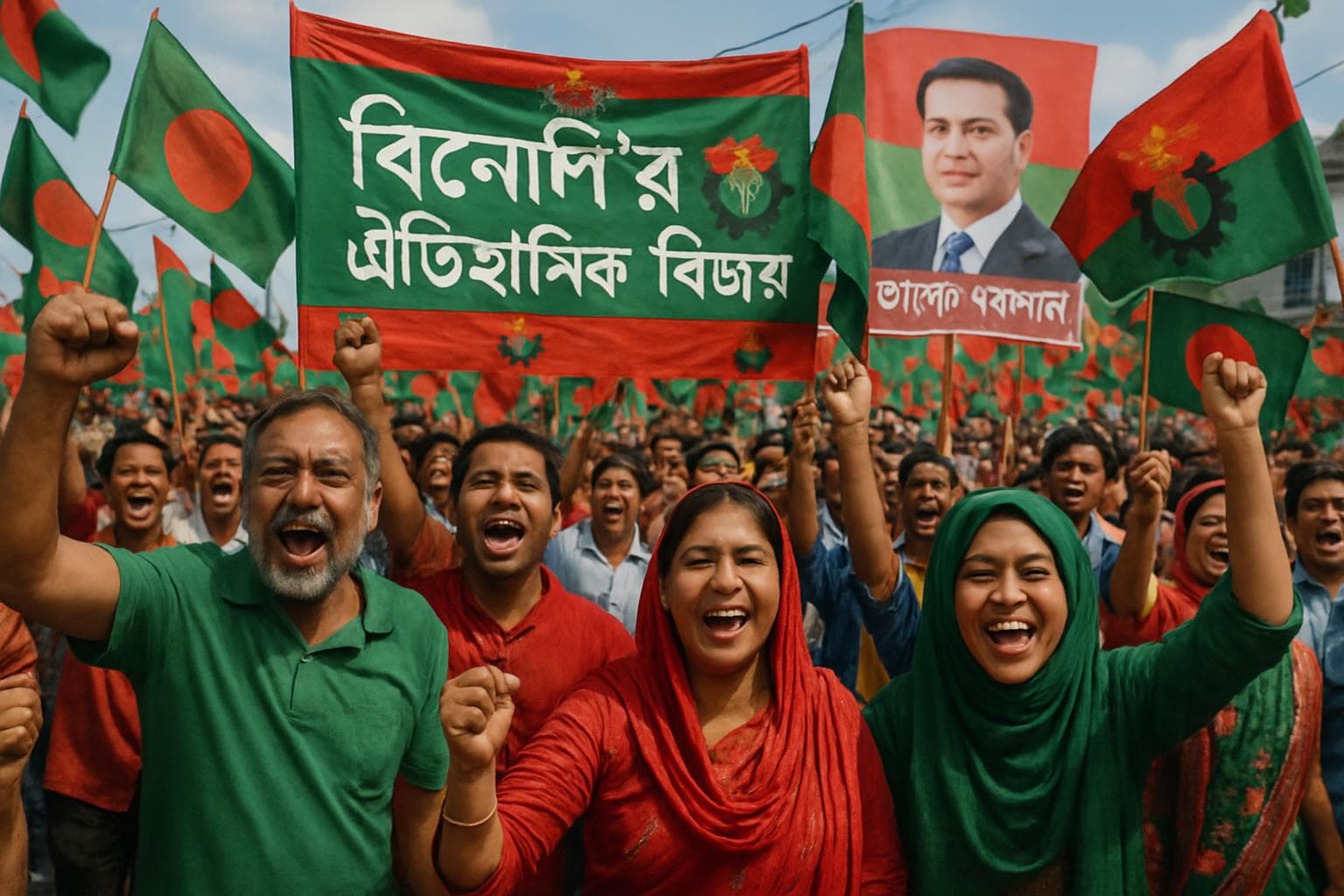
Bangladesh has witnessed a significant political shift as the Bangladesh Nationalist Party (BNP) claimed a decisive victory in the country's first election since the Gen Z-led protests ousted long-standing leader Sheikh Hasina. The BNP, led by Tarique Rahman, secured 204 seats, surpassing the two-thirds majority needed to form a government, marking a return to power after two decades.
A New Era of Democracy
The election, held on Thursday, was the first competitive vote in Bangladesh in nearly 20 years, offering a fresh start for the nation. More than 120 million people were eligible to vote, with a significant portion of the electorate under the age of 37. The interim government, led by Nobel Peace Prize laureate Muhammad Yunus, proposed a referendum on constitutional changes aimed at repairing the country's fractured political system.
Jamaat-e-Islami's Strong Showing
Jamaat-e-Islami, the BNP's main rival, secured 76 seats, marking its strongest performance in parliamentary elections to date. Despite not forming the government, Jamaat's leader, Shafiqur Rahman, expressed a commitment to "positive politics" and acknowledged the need for constructive opposition.
Regional Reactions
The election results have drawn international attention, with India and China among the first to congratulate the BNP. Indian Prime Minister Narendra Modi extended an olive branch to the new government, emphasizing support for a democratic and inclusive Bangladesh. Meanwhile, China has expressed eagerness to strengthen bilateral relations, highlighting recent investments and cooperation in various sectors.
Challenges Ahead for the BNP
Tarique Rahman, who returned to Bangladesh after 17 years in exile, is set to become the next prime minister. He has pledged to usher in an era of clean politics, focusing on economic and democratic reforms. However, the BNP faces significant challenges in addressing the country's deep-seated political divisions and ensuring stability.
WHAT THIS MIGHT MEAN
The BNP's victory marks a pivotal moment for Bangladesh, with potential implications for both domestic and regional politics. Domestically, the new government must navigate the complexities of implementing promised reforms while managing expectations from a diverse electorate. The establishment of a "National Reconciliation Commission" could play a crucial role in healing past divisions.
Regionally, the shift in power may alter Bangladesh's diplomatic relations, particularly with India and China. As the BNP seeks to redefine its foreign policy, maintaining a balance between these influential neighbors will be essential. The international community will be closely watching how the new government addresses human rights concerns and fosters democratic principles in the coming years.
Related Articles
Canada Calls for De-escalation Amid US-Israel Strikes on Iran

US Supreme Court Ruling Sparks Trade Uncertainty in Asia and Beyond
Trump's New Tariff Strategy Sparks Global Trade Uncertainty

Bill Gates Withdraws from India AI Summit Amid Epstein Controversy
Peru's Political Turmoil: President José Jerí Ousted Amid Scandal

India's AI Impact Summit Faces Logistical Hurdles Amid Global AI Discussions
Bangladesh Nationalist Party Wins Historic Election Amidst Political Transformation
In This Article
 Alex Carter| Published
 HIGHLIGHTS
- The Bangladesh Nationalist Party (BNP) secured a landslide victory with 204 seats in the first election since the Gen Z protests ousted Sheikh Hasina.
- The election marked the first competitive vote in Bangladesh in nearly two decades, with over 120 million eligible voters participating.
- Jamaat-e-Islami, despite not forming the government, achieved its strongest parliamentary presence with 76 seats.
- Tarique Rahman, poised to become the next prime minister, promises democratic reforms and a "rainbow nation" for Bangladesh.
- The election results have sparked a shift in regional dynamics, with India and China extending congratulations to the new BNP-led government.
Bangladesh has witnessed a significant political shift as the Bangladesh Nationalist Party (BNP) claimed a decisive victory in the country's first election since the Gen Z-led protests ousted long-standing leader Sheikh Hasina. The BNP, led by Tarique Rahman, secured 204 seats, surpassing the two-thirds majority needed to form a government, marking a return to power after two decades.
A New Era of Democracy
The election, held on Thursday, was the first competitive vote in Bangladesh in nearly 20 years, offering a fresh start for the nation. More than 120 million people were eligible to vote, with a significant portion of the electorate under the age of 37. The interim government, led by Nobel Peace Prize laureate Muhammad Yunus, proposed a referendum on constitutional changes aimed at repairing the country's fractured political system.
Jamaat-e-Islami's Strong Showing
Jamaat-e-Islami, the BNP's main rival, secured 76 seats, marking its strongest performance in parliamentary elections to date. Despite not forming the government, Jamaat's leader, Shafiqur Rahman, expressed a commitment to "positive politics" and acknowledged the need for constructive opposition.
Regional Reactions
The election results have drawn international attention, with India and China among the first to congratulate the BNP. Indian Prime Minister Narendra Modi extended an olive branch to the new government, emphasizing support for a democratic and inclusive Bangladesh. Meanwhile, China has expressed eagerness to strengthen bilateral relations, highlighting recent investments and cooperation in various sectors.
Challenges Ahead for the BNP
Tarique Rahman, who returned to Bangladesh after 17 years in exile, is set to become the next prime minister. He has pledged to usher in an era of clean politics, focusing on economic and democratic reforms. However, the BNP faces significant challenges in addressing the country's deep-seated political divisions and ensuring stability.
WHAT THIS MIGHT MEAN
The BNP's victory marks a pivotal moment for Bangladesh, with potential implications for both domestic and regional politics. Domestically, the new government must navigate the complexities of implementing promised reforms while managing expectations from a diverse electorate. The establishment of a "National Reconciliation Commission" could play a crucial role in healing past divisions.
Regionally, the shift in power may alter Bangladesh's diplomatic relations, particularly with India and China. As the BNP seeks to redefine its foreign policy, maintaining a balance between these influential neighbors will be essential. The international community will be closely watching how the new government addresses human rights concerns and fosters democratic principles in the coming years.
Related Articles
Canada Calls for De-escalation Amid US-Israel Strikes on Iran
US Supreme Court Ruling Sparks Trade Uncertainty in Asia and Beyond
Trump's New Tariff Strategy Sparks Global Trade Uncertainty
Bill Gates Withdraws from India AI Summit Amid Epstein Controversy
Peru's Political Turmoil: President José Jerí Ousted Amid Scandal
India's AI Impact Summit Faces Logistical Hurdles Amid Global AI Discussions