
Sanae Takaichi Secures Landslide Victory in Japan's Snap Election
In This Article
HIGHLIGHTS
- Japan's Prime Minister Sanae Takaichi's coalition won a landslide victory in the snap election, securing 352 of 465 seats.
- The Liberal Democratic Party (LDP) alone achieved a majority with 316 seats, bolstered by Takaichi's popularity.
- Takaichi's coalition partner, the Japan Innovation Party, gained 36 seats, giving the coalition a supermajority.
- Takaichi's economic policies, including a 21 trillion yen stimulus package, have sparked debate amid Japan's heavy debt burden.
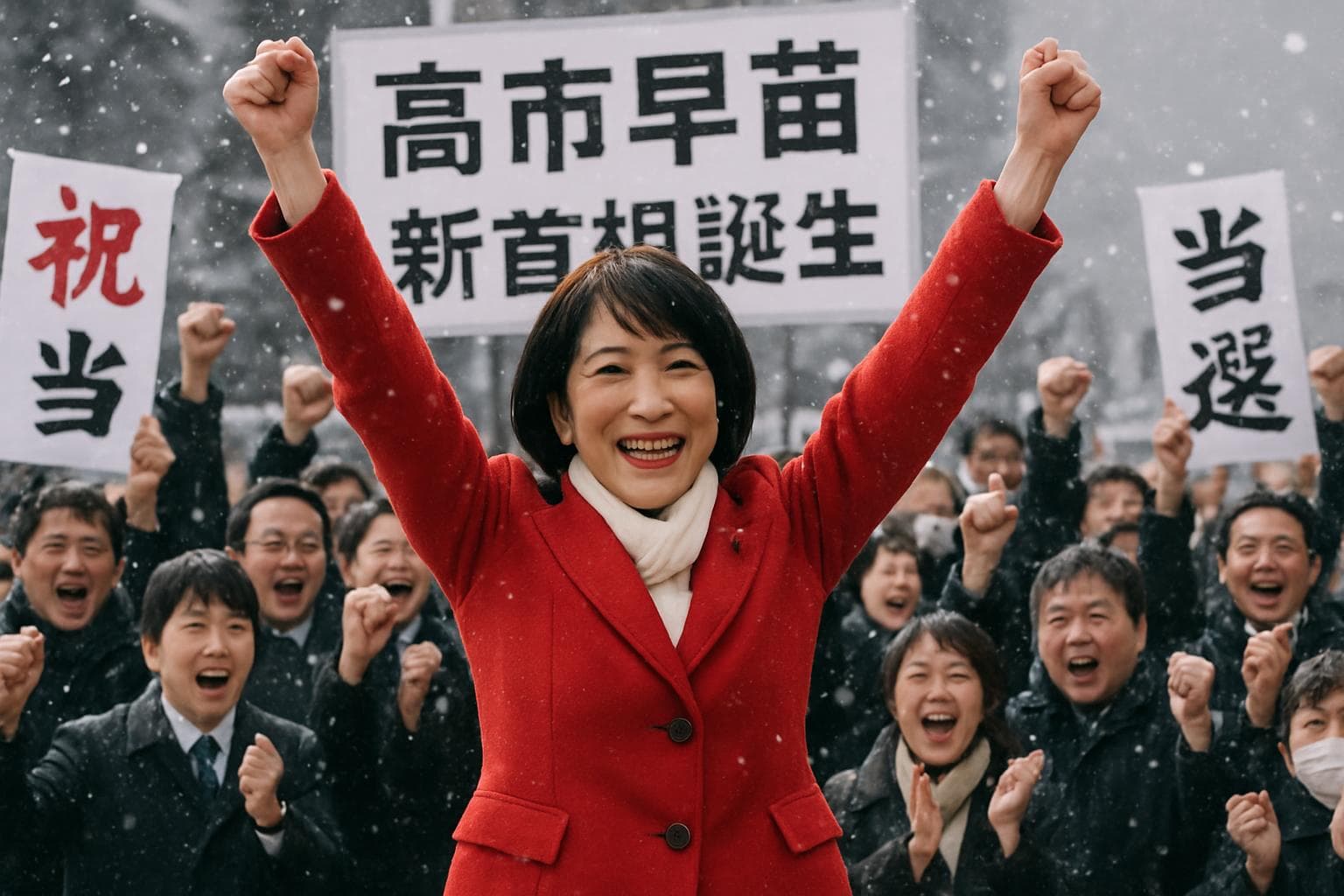
- The election was marked by rare snowfall, affecting transportation as voters braved the cold to cast their ballots.
Japan's Prime Minister Sanae Takaichi has solidified her political standing with a decisive victory in the country's snap election, securing a robust mandate to advance her conservative agenda. The Liberal Democratic Party (LDP), under Takaichi's leadership, captured 316 seats in the 465-member House of Representatives, according to figures from NHK. This victory marks a significant turnaround for the LDP, which had lost its parliamentary majority under previous leadership.
Historic Win for Takaichi's Coalition
The election results, announced on a snowy Sunday, saw the LDP's coalition partner, the Japan Innovation Party, securing 36 seats. This gives Takaichi a supermajority, allowing her to bypass the upper house, which remains outside her control. The election was called just four months after Takaichi became Japan's first female prime minister, a move seen by some as a gamble given the party's recent struggles.
Economic Policies and Public Response
Takaichi's campaign focused on economic revitalization, with promises of a 21 trillion yen stimulus package to address the cost of living crisis. Her proposal to suspend the 8% consumption tax on food for two years has been met with mixed reactions, as Japan grapples with a debt exceeding twice its GDP. Despite financial market concerns, Takaichi remains committed to her fiscal strategy, emphasizing the need for both public and private investment.
International Reactions and Diplomatic Challenges
International leaders, including US President Donald Trump and Indian Prime Minister Narendra Modi, have congratulated Takaichi on her victory. However, her tenure faces diplomatic challenges, particularly with China, following her comments on Taiwan's defense. The resulting tension has impacted cultural exchanges and tourism between the two nations.
Voter Sentiment and Social Media Influence
Voter turnout was notable despite adverse weather conditions, with many citizens expressing a desire for long-term economic solutions. Takaichi's active social media presence, which includes viral videos and personal insights, has resonated with younger voters, further boosting her popularity.
WHAT THIS MIGHT MEAN
With a strong electoral mandate, Takaichi is poised to implement her conservative policies, though her economic strategies will be closely scrutinized given Japan's fiscal challenges. The supermajority may facilitate legislative changes, but the ongoing diplomatic tensions with China could complicate international relations. Experts suggest that Takaichi's ability to balance domestic priorities with foreign policy will be crucial in shaping Japan's future trajectory. As her administration progresses, the impact of her policies on Japan's economy and regional stability will be key areas to watch.
Images from the Web

Related Articles

US Supreme Court Ruling Sparks Trade Uncertainty in Asia and Beyond

Congress Subpoenas Attorney General Bondi in Epstein Investigation

UK Faces Dilemmas Amid Iran Conflict and China Spying Allegations

Senate Blocks Resolution to Limit Trump's Military Actions in Iran

Canada Calls for De-escalation Amid US-Israel Strikes on Iran
China Sets Lowest GDP Growth Target in Decades Amid Economic Challenges
Sanae Takaichi Secures Landslide Victory in Japan's Snap Election
In This Article
 Alex Carter| Published
 HIGHLIGHTS
- Japan's Prime Minister Sanae Takaichi's coalition won a landslide victory in the snap election, securing 352 of 465 seats.
- The Liberal Democratic Party (LDP) alone achieved a majority with 316 seats, bolstered by Takaichi's popularity.
- Takaichi's coalition partner, the Japan Innovation Party, gained 36 seats, giving the coalition a supermajority.
- Takaichi's economic policies, including a 21 trillion yen stimulus package, have sparked debate amid Japan's heavy debt burden.
- The election was marked by rare snowfall, affecting transportation as voters braved the cold to cast their ballots.
Japan's Prime Minister Sanae Takaichi has solidified her political standing with a decisive victory in the country's snap election, securing a robust mandate to advance her conservative agenda. The Liberal Democratic Party (LDP), under Takaichi's leadership, captured 316 seats in the 465-member House of Representatives, according to figures from NHK. This victory marks a significant turnaround for the LDP, which had lost its parliamentary majority under previous leadership.
Historic Win for Takaichi's Coalition
The election results, announced on a snowy Sunday, saw the LDP's coalition partner, the Japan Innovation Party, securing 36 seats. This gives Takaichi a supermajority, allowing her to bypass the upper house, which remains outside her control. The election was called just four months after Takaichi became Japan's first female prime minister, a move seen by some as a gamble given the party's recent struggles.
Economic Policies and Public Response
Takaichi's campaign focused on economic revitalization, with promises of a 21 trillion yen stimulus package to address the cost of living crisis. Her proposal to suspend the 8% consumption tax on food for two years has been met with mixed reactions, as Japan grapples with a debt exceeding twice its GDP. Despite financial market concerns, Takaichi remains committed to her fiscal strategy, emphasizing the need for both public and private investment.
International Reactions and Diplomatic Challenges
International leaders, including US President Donald Trump and Indian Prime Minister Narendra Modi, have congratulated Takaichi on her victory. However, her tenure faces diplomatic challenges, particularly with China, following her comments on Taiwan's defense. The resulting tension has impacted cultural exchanges and tourism between the two nations.
Voter Sentiment and Social Media Influence
Voter turnout was notable despite adverse weather conditions, with many citizens expressing a desire for long-term economic solutions. Takaichi's active social media presence, which includes viral videos and personal insights, has resonated with younger voters, further boosting her popularity.
WHAT THIS MIGHT MEAN
With a strong electoral mandate, Takaichi is poised to implement her conservative policies, though her economic strategies will be closely scrutinized given Japan's fiscal challenges. The supermajority may facilitate legislative changes, but the ongoing diplomatic tensions with China could complicate international relations. Experts suggest that Takaichi's ability to balance domestic priorities with foreign policy will be crucial in shaping Japan's future trajectory. As her administration progresses, the impact of her policies on Japan's economy and regional stability will be key areas to watch.
Images from the Web
Related Articles
US Supreme Court Ruling Sparks Trade Uncertainty in Asia and Beyond
Congress Subpoenas Attorney General Bondi in Epstein Investigation
UK Faces Dilemmas Amid Iran Conflict and China Spying Allegations
Senate Blocks Resolution to Limit Trump's Military Actions in Iran
Canada Calls for De-escalation Amid US-Israel Strikes on Iran
China Sets Lowest GDP Growth Target in Decades Amid Economic Challenges