
Devon Teen Joins Legal Battle to Ban Smartphones in UK Schools
In This Article
HIGHLIGHTS
- A 17-year-old Devon student, Flossie McShea, has joined a legal challenge against the UK government's smartphone policy in schools.
- The legal action, initiated by Will Orr-Ewing and Pete Montgomery, seeks a judicial review to ban smartphones in schools, citing exposure to harmful content.
- Flossie and other claimants argue that current policies fail to protect students from explicit and violent material.
- Lawyers claim that the existing smartphone policy, followed by 79% of secondary schools, is ineffective in safeguarding students.
- The High Court is set to receive legal papers for the judicial review, aiming to reform education policy for better child protection.
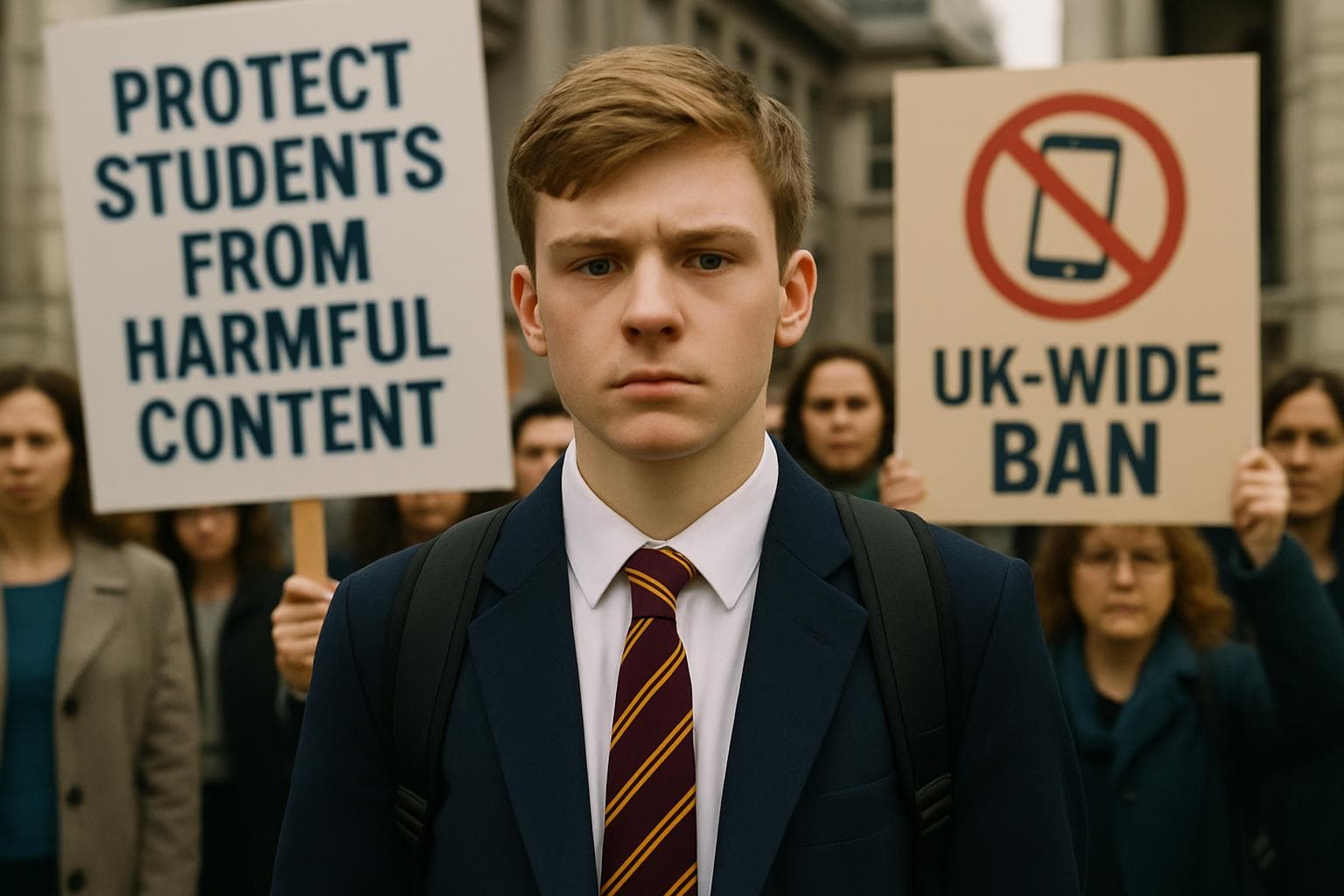
A 17-year-old student from Devon, Flossie McShea, has become a pivotal figure in a legal campaign challenging the UK government's guidance on smartphone use in schools. This initiative, led by fathers Will Orr-Ewing and Pete Montgomery, seeks a judicial review to enforce a nationwide ban on smartphones in educational settings, arguing that current policies inadequately protect students from harmful content.
Exposure to Harmful Content
Flossie McShea recounts her troubling experiences with smartphones during her school years, where she was exposed to explicit and violent videos, including disturbing scenes of violence and pornography. "Videos were going around all the time," she recalls, emphasizing the pervasive nature of smartphone use despite school policies. Her testimony highlights the psychological impact of such exposure, which continues to affect her years later.
Legal Action and Support
The legal action, which will be lodged in the High Court, challenges the Department for Education's current guidance that allows headteachers to determine smartphone policies. Claimants argue that this approach is insufficient for safeguarding students. Katie Moore, another claimant, shares her daughter's experiences with explicit content at school, underscoring the need for stricter regulations.
Calls for Policy Reform
Lawyers representing the claimants argue that the existing smartphone policy, implemented by 79% of secondary schools, fails to prevent serious safeguarding incidents. Child protection specialist Dr. Ciarán Murphy supports the case, highlighting the urgent need for policy reform to ensure student safety.
WHAT THIS MIGHT MEAN
The outcome of this legal challenge could significantly impact education policy across the UK. If successful, it may lead to a nationwide ban on smartphones in schools, prompting a reevaluation of current safeguarding measures. Experts suggest that such a ban could enhance student well-being and reduce exposure to harmful content. However, opponents may argue that a blanket ban could hinder educational opportunities and communication. As the High Court prepares to review the case, the debate over balancing technology use and child protection in education continues to intensify.
Images from the Web

Related Articles
South West Water Faces Legal Repercussions Over Devon Parasite Outbreak

Police Federation Chief Arrested Amid Fraud Investigation

Middle East Conflict Drives UK Energy Prices to New Highs

Canada and Australia Forge Strategic Partnership Amid Global Uncertainty

UK Government to Reform Asylum Seeker Support and Employment Policies

UK Faces Dilemmas Amid Iran Conflict and China Spying Allegations
Devon Teen Joins Legal Battle to Ban Smartphones in UK Schools
In This Article
 Sofia Romano| Published
 HIGHLIGHTS
- A 17-year-old Devon student, Flossie McShea, has joined a legal challenge against the UK government's smartphone policy in schools.
- The legal action, initiated by Will Orr-Ewing and Pete Montgomery, seeks a judicial review to ban smartphones in schools, citing exposure to harmful content.
- Flossie and other claimants argue that current policies fail to protect students from explicit and violent material.
- Lawyers claim that the existing smartphone policy, followed by 79% of secondary schools, is ineffective in safeguarding students.
- The High Court is set to receive legal papers for the judicial review, aiming to reform education policy for better child protection.
A 17-year-old student from Devon, Flossie McShea, has become a pivotal figure in a legal campaign challenging the UK government's guidance on smartphone use in schools. This initiative, led by fathers Will Orr-Ewing and Pete Montgomery, seeks a judicial review to enforce a nationwide ban on smartphones in educational settings, arguing that current policies inadequately protect students from harmful content.
Exposure to Harmful Content
Flossie McShea recounts her troubling experiences with smartphones during her school years, where she was exposed to explicit and violent videos, including disturbing scenes of violence and pornography. "Videos were going around all the time," she recalls, emphasizing the pervasive nature of smartphone use despite school policies. Her testimony highlights the psychological impact of such exposure, which continues to affect her years later.
Legal Action and Support
The legal action, which will be lodged in the High Court, challenges the Department for Education's current guidance that allows headteachers to determine smartphone policies. Claimants argue that this approach is insufficient for safeguarding students. Katie Moore, another claimant, shares her daughter's experiences with explicit content at school, underscoring the need for stricter regulations.
Calls for Policy Reform
Lawyers representing the claimants argue that the existing smartphone policy, implemented by 79% of secondary schools, fails to prevent serious safeguarding incidents. Child protection specialist Dr. Ciarán Murphy supports the case, highlighting the urgent need for policy reform to ensure student safety.
WHAT THIS MIGHT MEAN
The outcome of this legal challenge could significantly impact education policy across the UK. If successful, it may lead to a nationwide ban on smartphones in schools, prompting a reevaluation of current safeguarding measures. Experts suggest that such a ban could enhance student well-being and reduce exposure to harmful content. However, opponents may argue that a blanket ban could hinder educational opportunities and communication. As the High Court prepares to review the case, the debate over balancing technology use and child protection in education continues to intensify.
Images from the Web
Related Articles
South West Water Faces Legal Repercussions Over Devon Parasite Outbreak
Police Federation Chief Arrested Amid Fraud Investigation
Middle East Conflict Drives UK Energy Prices to New Highs
Canada and Australia Forge Strategic Partnership Amid Global Uncertainty
UK Government to Reform Asylum Seeker Support and Employment Policies
UK Faces Dilemmas Amid Iran Conflict and China Spying Allegations