
DOJ Faces Backlash Over Privacy Breach in Epstein Document Release
In This Article
HIGHLIGHTS
- The DOJ removed thousands of Jeffrey Epstein-related documents after victims' identities were compromised due to redaction errors.
- Victims and their lawyers criticized the DOJ for failing to protect privacy, calling it a significant breach of victim rights.
- The DOJ attributed the errors to "technical or human error" and is revising its document review protocols.
- Despite releasing 3 million pages, advocates claim millions of Epstein files remain undisclosed, sparking calls for further transparency.
- Legal proceedings have been affected, with calls for mistrials due to improperly redacted documents being made public.
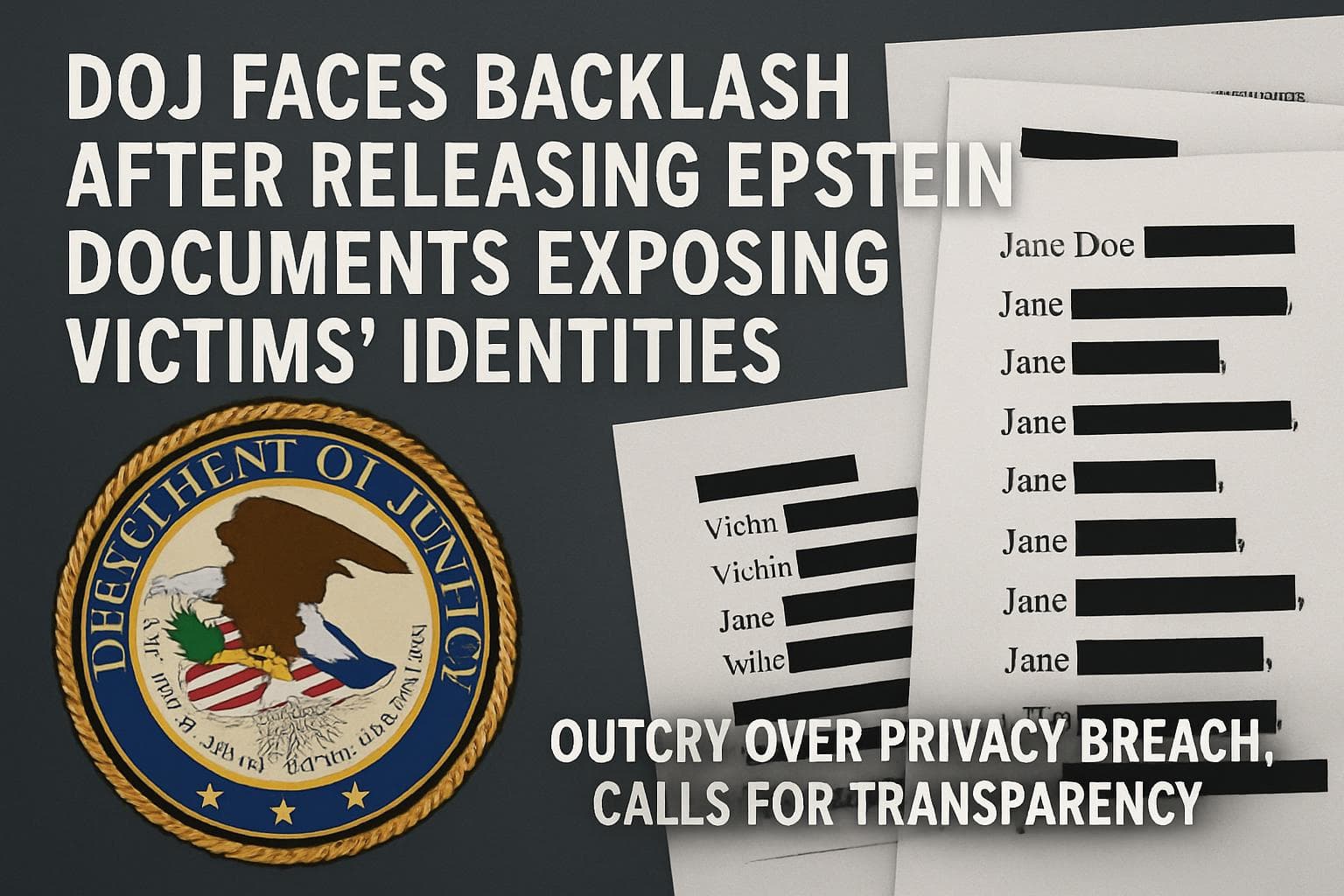
The U.S. Department of Justice (DOJ) is under fire after releasing thousands of documents related to Jeffrey Epstein that inadvertently exposed the identities of victims. The disclosure, which occurred last Friday, has been described by victims and their lawyers as a severe breach of privacy, prompting the DOJ to remove the documents from its website.
Victim Privacy Breach Sparks Outcry
The documents, part of a mandated release under the Epstein Files Transparency Act, were intended to shed light on the disgraced financier's criminal activities. However, flawed redactions led to the exposure of sensitive information, including email addresses and nude photos, affecting nearly 100 survivors. Lawyers for the victims labeled the incident as "the single most egregious violation of victim privacy in one day in United States history."
The DOJ has since taken down all flagged files, citing "technical or human error" as the cause. In a letter to a federal judge, the department assured that it is reviewing additional requests for redaction and has independently removed a substantial number of documents. Victims, however, remain dissatisfied, with some receiving death threats following the release.
Legal and Political Ramifications
The mishandling of the document release has had legal repercussions. In a New York federal court, lawyers for defendants in a related sex trafficking trial requested a mistrial, arguing that the unredacted documents compromised their clients' right to a fair trial. Although the judge tentatively rejected the request, the incident underscores the broader implications of the DOJ's errors.
Deputy Attorney General Todd Blanche acknowledged sporadic redaction errors but emphasized that they represent a minuscule fraction of the total materials. Despite this, the DOJ's transparency efforts have been criticized, with advocates arguing that millions of documents remain undisclosed.
Calls for Greater Transparency
The DOJ's handling of the Epstein files has reignited demands for accountability. Critics argue that the government has failed to fully disclose the extent of Epstein's criminal network and the systemic failures that allowed his abuse to persist. Women's rights attorney Dr. Ann Olivarius highlighted the discrepancy between the number of documents identified as relevant and those released, questioning the DOJ's transparency.
WHAT THIS MIGHT MEAN
The DOJ's document release debacle could have significant legal and political implications. Victims and their advocates are likely to continue pressing for full disclosure, potentially leading to further legal challenges. The incident may also prompt legislative scrutiny, with lawmakers seeking to ensure that similar breaches do not occur in the future.
As the DOJ revises its protocols, the focus will remain on balancing transparency with the protection of victim privacy. The ongoing fallout from the Epstein case underscores the complexities of handling sensitive information in high-profile investigations, highlighting the need for robust safeguards to prevent further breaches.
Related Articles
Venezuelan Political Prisoners Seek Amnesty Amidst Hopes for Democratic Transition

Prince Andrew's Ties to Epstein Under Scrutiny Amid Calls for Inquiry

Prince Andrew's Arrest Intensifies Scrutiny on Royal Succession and Prince William's Future Role
China Sets Lowest GDP Growth Target in Decades Amid Economic Challenges
Congress Subpoenas Attorney General Bondi in Epstein Investigation

Cuba Faces Widespread Blackout Amid Deepening Fuel Crisis
DOJ Faces Backlash Over Privacy Breach in Epstein Document Release
In This Article
 Sofia Romano| Published
 HIGHLIGHTS
- The DOJ removed thousands of Jeffrey Epstein-related documents after victims' identities were compromised due to redaction errors.
- Victims and their lawyers criticized the DOJ for failing to protect privacy, calling it a significant breach of victim rights.
- The DOJ attributed the errors to "technical or human error" and is revising its document review protocols.
- Despite releasing 3 million pages, advocates claim millions of Epstein files remain undisclosed, sparking calls for further transparency.
- Legal proceedings have been affected, with calls for mistrials due to improperly redacted documents being made public.
The U.S. Department of Justice (DOJ) is under fire after releasing thousands of documents related to Jeffrey Epstein that inadvertently exposed the identities of victims. The disclosure, which occurred last Friday, has been described by victims and their lawyers as a severe breach of privacy, prompting the DOJ to remove the documents from its website.
Victim Privacy Breach Sparks Outcry
The documents, part of a mandated release under the Epstein Files Transparency Act, were intended to shed light on the disgraced financier's criminal activities. However, flawed redactions led to the exposure of sensitive information, including email addresses and nude photos, affecting nearly 100 survivors. Lawyers for the victims labeled the incident as "the single most egregious violation of victim privacy in one day in United States history."
The DOJ has since taken down all flagged files, citing "technical or human error" as the cause. In a letter to a federal judge, the department assured that it is reviewing additional requests for redaction and has independently removed a substantial number of documents. Victims, however, remain dissatisfied, with some receiving death threats following the release.
Legal and Political Ramifications
The mishandling of the document release has had legal repercussions. In a New York federal court, lawyers for defendants in a related sex trafficking trial requested a mistrial, arguing that the unredacted documents compromised their clients' right to a fair trial. Although the judge tentatively rejected the request, the incident underscores the broader implications of the DOJ's errors.
Deputy Attorney General Todd Blanche acknowledged sporadic redaction errors but emphasized that they represent a minuscule fraction of the total materials. Despite this, the DOJ's transparency efforts have been criticized, with advocates arguing that millions of documents remain undisclosed.
Calls for Greater Transparency
The DOJ's handling of the Epstein files has reignited demands for accountability. Critics argue that the government has failed to fully disclose the extent of Epstein's criminal network and the systemic failures that allowed his abuse to persist. Women's rights attorney Dr. Ann Olivarius highlighted the discrepancy between the number of documents identified as relevant and those released, questioning the DOJ's transparency.
WHAT THIS MIGHT MEAN
The DOJ's document release debacle could have significant legal and political implications. Victims and their advocates are likely to continue pressing for full disclosure, potentially leading to further legal challenges. The incident may also prompt legislative scrutiny, with lawmakers seeking to ensure that similar breaches do not occur in the future.
As the DOJ revises its protocols, the focus will remain on balancing transparency with the protection of victim privacy. The ongoing fallout from the Epstein case underscores the complexities of handling sensitive information in high-profile investigations, highlighting the need for robust safeguards to prevent further breaches.
Related Articles
Venezuelan Political Prisoners Seek Amnesty Amidst Hopes for Democratic Transition
Prince Andrew's Ties to Epstein Under Scrutiny Amid Calls for Inquiry
Prince Andrew's Arrest Intensifies Scrutiny on Royal Succession and Prince William's Future Role
China Sets Lowest GDP Growth Target in Decades Amid Economic Challenges
Congress Subpoenas Attorney General Bondi in Epstein Investigation
Cuba Faces Widespread Blackout Amid Deepening Fuel Crisis