
Surge in Driving Test Fraud Raises Road Safety Concerns Across Great Britain
In This Article
HIGHLIGHTS
- Cheating on driving tests in England, Scotland, and Wales surged by 47% in the year to September 2025, with 2,844 cases reported.
- Over 1,100 incidents involved Bluetooth technology, while impersonation attempts were recorded 1,084 times for theory tests and 647 times for practical tests.
- The DVSA attributes the rise to increased cheating and improved detection, amid a backlog causing long waits for practical tests.
- Ninety-six individuals were prosecuted for cheating or impersonation, facing penalties including prison sentences and driving bans.
- Experts warn that driving test fraud poses significant road safety risks, potentially leading to more accidents and insurance issues.
Cheating on driving tests in England, Scotland, and Wales has seen a dramatic increase, with cases rising by 47% in the year leading up to September 2025. According to the Driver and Vehicle Standards Agency (DVSA), 2,844 instances of fraud were recorded, up from 1,940 the previous year. This surge has sparked significant concerns about road safety and the integrity of the driving test system.
Rise in Technology-Assisted Cheating
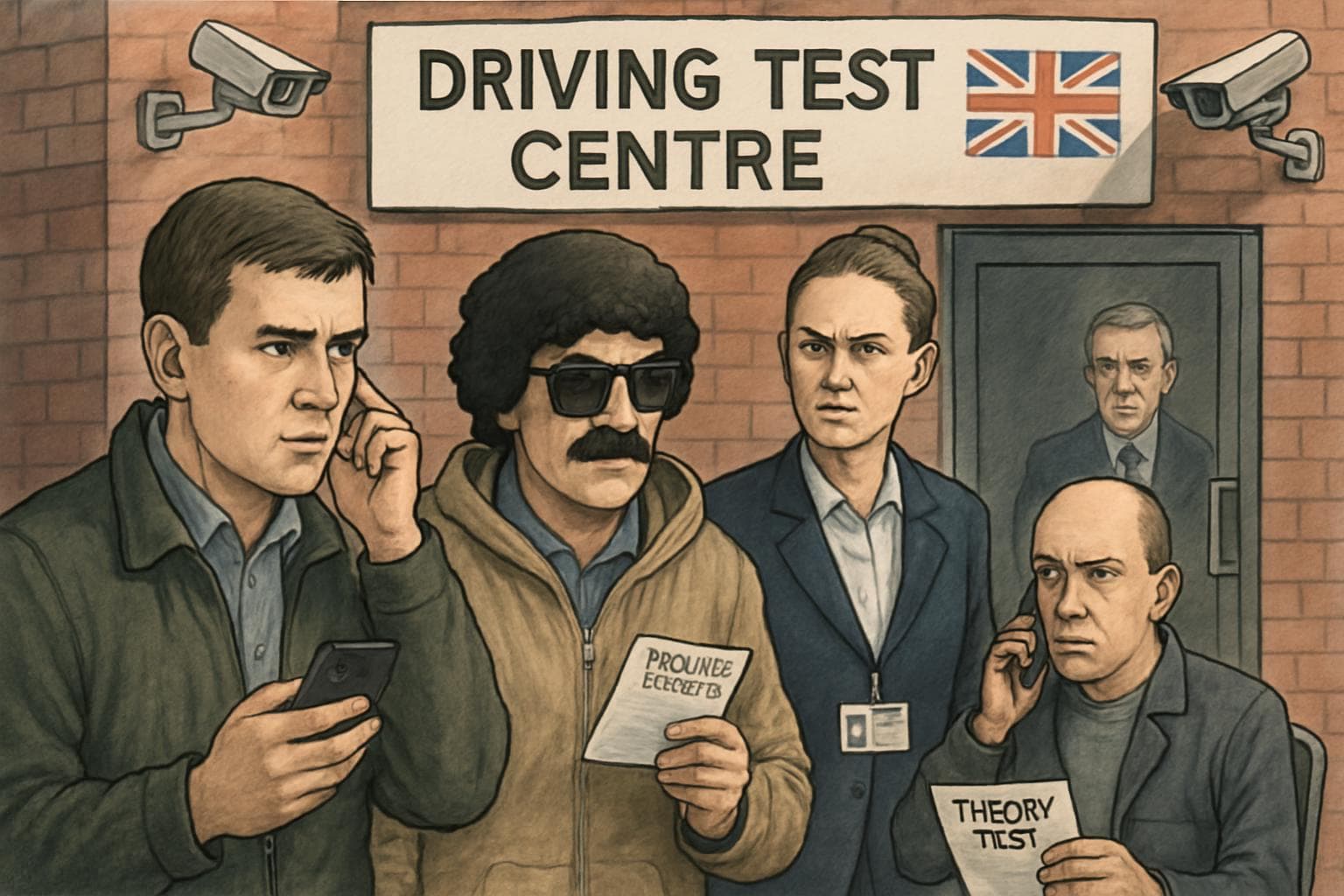
The most prevalent method of cheating involved the use of Bluetooth technology, with 1,113 cases reported. Candidates used earpieces connected to concealed phones to receive answers during theory tests. Impersonation was another common tactic, with 1,084 attempts recorded for theory tests and 647 for practical tests. The DVSA has implemented measures such as matching candidates' faces with their photo IDs and conducting physical checks to combat these fraudulent activities.
Legal Consequences and Prosecutions
The legal repercussions for those caught cheating are severe. In the past year, 96 individuals faced prosecution, with penalties ranging from driving bans to prison sentences. Notable cases include Qounain Khan, who received an eight-month sentence for impersonating learners at theory test centers, and Ali Rasul, sentenced to two years for repeated cheating attempts using hidden earpieces and impersonators.
Impact of Test Backlog
The rise in cheating coincides with a significant backlog in practical driving tests, with learners facing an average wait time of 22 weeks. This backlog, exacerbated by the COVID-19 pandemic, has led to increased desperation among candidates. However, the DVSA maintains there is no direct evidence linking the backlog to the rise in cheating.
Expert Warnings on Road Safety
Experts, including Dr. Rasha Kassem of Aston University, warn that fraudulent driving test passes could lead to more accidents and insurance complications. "This is a serious crime with potential consequences for road safety," she stated. The DVSA's director of enforcement services, Marian Kitson, emphasized the agency's commitment to maintaining road safety through enhanced fraud detection and collaboration with law enforcement.
WHAT THIS MIGHT MEAN
The increase in driving test fraud presents significant challenges for road safety and the integrity of the licensing system. If the backlog in practical tests persists, the pressure on learners may continue to drive fraudulent activities. The DVSA's ongoing efforts to enhance fraud detection and collaborate with law enforcement are crucial in addressing this issue. However, further measures may be needed to reduce waiting times and alleviate the desperation that fuels such cheating. As the situation evolves, the effectiveness of these strategies will be critical in ensuring that only qualified drivers are on the roads, thereby safeguarding public safety.
Related Articles

Police Federation Chief Arrested Amid Fraud Investigation

Saharan Dust to Illuminate UK Skies with Vivid Sunrises and Sunsets

Crackdown on Waste Crime: £1.2 Million Fine and New Drone Unit to Combat Illegal Dumping

Sisters Tragically Drown at Eryri National Park's Watkin Path

Labour MP's Husband Arrested in UK-China Espionage Probe

Government Announces £4 Billion Overhaul of SEND Support in England
Surge in Driving Test Fraud Raises Road Safety Concerns Across Great Britain
In This Article
 Sofia Romano| Published
 HIGHLIGHTS
- Cheating on driving tests in England, Scotland, and Wales surged by 47% in the year to September 2025, with 2,844 cases reported.
- Over 1,100 incidents involved Bluetooth technology, while impersonation attempts were recorded 1,084 times for theory tests and 647 times for practical tests.
- The DVSA attributes the rise to increased cheating and improved detection, amid a backlog causing long waits for practical tests.
- Ninety-six individuals were prosecuted for cheating or impersonation, facing penalties including prison sentences and driving bans.
- Experts warn that driving test fraud poses significant road safety risks, potentially leading to more accidents and insurance issues.
Cheating on driving tests in England, Scotland, and Wales has seen a dramatic increase, with cases rising by 47% in the year leading up to September 2025. According to the Driver and Vehicle Standards Agency (DVSA), 2,844 instances of fraud were recorded, up from 1,940 the previous year. This surge has sparked significant concerns about road safety and the integrity of the driving test system.
Rise in Technology-Assisted Cheating
The most prevalent method of cheating involved the use of Bluetooth technology, with 1,113 cases reported. Candidates used earpieces connected to concealed phones to receive answers during theory tests. Impersonation was another common tactic, with 1,084 attempts recorded for theory tests and 647 for practical tests. The DVSA has implemented measures such as matching candidates' faces with their photo IDs and conducting physical checks to combat these fraudulent activities.
Legal Consequences and Prosecutions
The legal repercussions for those caught cheating are severe. In the past year, 96 individuals faced prosecution, with penalties ranging from driving bans to prison sentences. Notable cases include Qounain Khan, who received an eight-month sentence for impersonating learners at theory test centers, and Ali Rasul, sentenced to two years for repeated cheating attempts using hidden earpieces and impersonators.
Impact of Test Backlog
The rise in cheating coincides with a significant backlog in practical driving tests, with learners facing an average wait time of 22 weeks. This backlog, exacerbated by the COVID-19 pandemic, has led to increased desperation among candidates. However, the DVSA maintains there is no direct evidence linking the backlog to the rise in cheating.
Expert Warnings on Road Safety
Experts, including Dr. Rasha Kassem of Aston University, warn that fraudulent driving test passes could lead to more accidents and insurance complications. "This is a serious crime with potential consequences for road safety," she stated. The DVSA's director of enforcement services, Marian Kitson, emphasized the agency's commitment to maintaining road safety through enhanced fraud detection and collaboration with law enforcement.
WHAT THIS MIGHT MEAN
The increase in driving test fraud presents significant challenges for road safety and the integrity of the licensing system. If the backlog in practical tests persists, the pressure on learners may continue to drive fraudulent activities. The DVSA's ongoing efforts to enhance fraud detection and collaborate with law enforcement are crucial in addressing this issue. However, further measures may be needed to reduce waiting times and alleviate the desperation that fuels such cheating. As the situation evolves, the effectiveness of these strategies will be critical in ensuring that only qualified drivers are on the roads, thereby safeguarding public safety.
Related Articles
Police Federation Chief Arrested Amid Fraud Investigation
Saharan Dust to Illuminate UK Skies with Vivid Sunrises and Sunsets
Crackdown on Waste Crime: £1.2 Million Fine and New Drone Unit to Combat Illegal Dumping
Sisters Tragically Drown at Eryri National Park's Watkin Path
Labour MP's Husband Arrested in UK-China Espionage Probe
Government Announces £4 Billion Overhaul of SEND Support in England