
Devastating Earthquake in Eastern Afghanistan Leaves Over 800 Dead
In This Article
HIGHLIGHTS
- A 6.0 magnitude earthquake struck eastern Afghanistan, primarily affecting Kunar and Nangarhar provinces, with over 800 confirmed dead.
- The earthquake's shallow depth and subsequent aftershocks exacerbated destruction, with roads blocked by landslides hindering rescue efforts.
- The Taliban government has requested international aid, emphasizing the urgent need for medical supplies, shelter, and clean water.
- The disaster highlights Afghanistan's vulnerability to natural calamities, compounded by a struggling healthcare system and reduced foreign aid.
- Local hospitals are overwhelmed with casualties, and the death toll is expected to rise as many remain trapped under rubble.
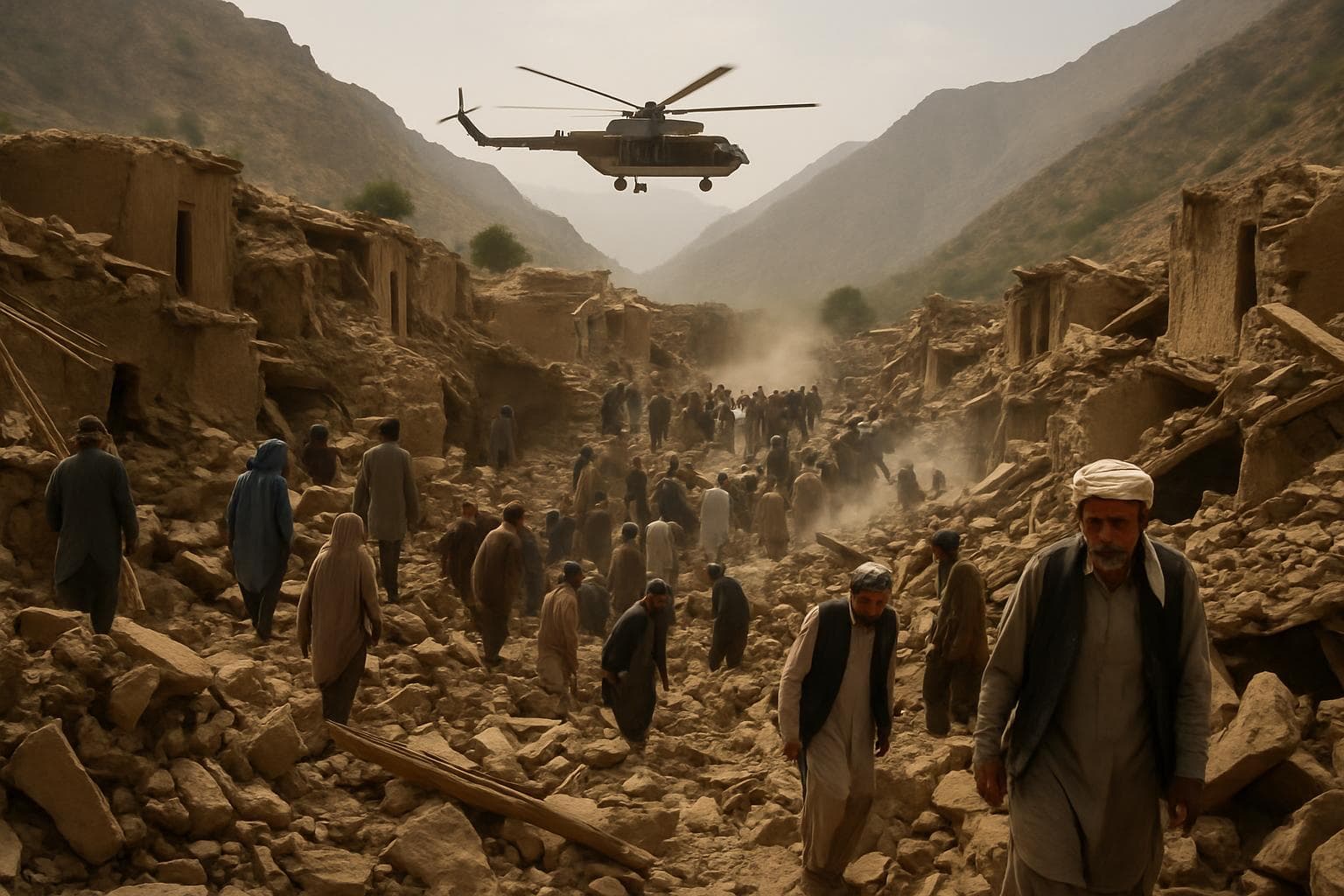
A powerful earthquake measuring 6.0 on the Richter scale has devastated eastern Afghanistan, leaving at least 800 people dead and injuring approximately 2,500, according to Taliban officials. The quake struck late Sunday night, with its epicenter located 27 kilometers northeast of Jalalabad in Nangarhar province. The tremor was felt as far as Kabul and neighboring Pakistan.
Impact and Immediate Aftermath
The earthquake, occurring at a shallow depth of 8 kilometers, caused significant destruction across the mountainous regions of Kunar and Nangarhar provinces. The Taliban's interior ministry reported that the majority of casualties were in Kunar, where entire villages have been reduced to rubble. The disaster has been compounded by aftershocks and landslides, which have blocked roads and hampered rescue operations.
Challenges in Rescue Operations
Rescue efforts are ongoing, but the remote and rugged terrain presents significant challenges. Helicopters are being used to evacuate the injured, as many roads remain impassable. The Taliban government has urgently called for international assistance, highlighting the need for field hospitals, medical aid, and basic necessities such as food and clean water.
Humanitarian Crisis and International Response
Afghanistan's healthcare system, already strained by reduced foreign aid since the Taliban's return to power in 2021, is struggling to cope with the influx of casualties. Local hospitals are overwhelmed, with new patients arriving every few minutes. The Afghan Red Crescent and international organizations like the UN and Red Cross are on the ground, providing emergency assistance.
Personal Tragedies and Community Impact
The earthquake has left many families devastated. Rasheed Khan, a cloth merchant from Kunar, lost his wife, children, and brothers in the disaster. "It's doomsday for me," he lamented, reflecting the personal tragedies faced by many in the region. The earthquake has also affected communities that had recently returned from Iran and Pakistan, where they had fled to escape previous conflicts.
WHAT THIS MIGHT MEAN
The aftermath of the earthquake poses significant challenges for Afghanistan, a country already grappling with political instability and humanitarian crises. The immediate focus will be on rescue operations and providing aid to the affected regions. However, the disaster underscores the urgent need for a more robust disaster response infrastructure and international support.
Experts warn that Afghanistan's vulnerability to natural disasters, particularly in the seismically active Hindu Kush region, necessitates long-term planning and investment in infrastructure resilience. The international community's response will be crucial in addressing both the immediate needs and the broader implications for Afghanistan's recovery and stability.
Related Articles

US-Iran Tensions Escalate Amid Renewed Nuclear Talks and Protests

Middle East Conflict Drives UK Energy Prices to New Highs
US and Israel Intensify Military Campaign as Iran's Capabilities Dwindle
UK Reinforces Military Presence in Cyprus Amid Middle East Tensions

Canada and Australia Forge Strategic Partnership Amid Global Uncertainty

Sisters Tragically Drown at Eryri National Park's Watkin Path
Devastating Earthquake in Eastern Afghanistan Leaves Over 800 Dead
In This Article
 James Okoro| Published
 HIGHLIGHTS
- A 6.0 magnitude earthquake struck eastern Afghanistan, primarily affecting Kunar and Nangarhar provinces, with over 800 confirmed dead.
- The earthquake's shallow depth and subsequent aftershocks exacerbated destruction, with roads blocked by landslides hindering rescue efforts.
- The Taliban government has requested international aid, emphasizing the urgent need for medical supplies, shelter, and clean water.
- The disaster highlights Afghanistan's vulnerability to natural calamities, compounded by a struggling healthcare system and reduced foreign aid.
- Local hospitals are overwhelmed with casualties, and the death toll is expected to rise as many remain trapped under rubble.
A powerful earthquake measuring 6.0 on the Richter scale has devastated eastern Afghanistan, leaving at least 800 people dead and injuring approximately 2,500, according to Taliban officials. The quake struck late Sunday night, with its epicenter located 27 kilometers northeast of Jalalabad in Nangarhar province. The tremor was felt as far as Kabul and neighboring Pakistan.
Impact and Immediate Aftermath
The earthquake, occurring at a shallow depth of 8 kilometers, caused significant destruction across the mountainous regions of Kunar and Nangarhar provinces. The Taliban's interior ministry reported that the majority of casualties were in Kunar, where entire villages have been reduced to rubble. The disaster has been compounded by aftershocks and landslides, which have blocked roads and hampered rescue operations.
Challenges in Rescue Operations
Rescue efforts are ongoing, but the remote and rugged terrain presents significant challenges. Helicopters are being used to evacuate the injured, as many roads remain impassable. The Taliban government has urgently called for international assistance, highlighting the need for field hospitals, medical aid, and basic necessities such as food and clean water.
Humanitarian Crisis and International Response
Afghanistan's healthcare system, already strained by reduced foreign aid since the Taliban's return to power in 2021, is struggling to cope with the influx of casualties. Local hospitals are overwhelmed, with new patients arriving every few minutes. The Afghan Red Crescent and international organizations like the UN and Red Cross are on the ground, providing emergency assistance.
Personal Tragedies and Community Impact
The earthquake has left many families devastated. Rasheed Khan, a cloth merchant from Kunar, lost his wife, children, and brothers in the disaster. "It's doomsday for me," he lamented, reflecting the personal tragedies faced by many in the region. The earthquake has also affected communities that had recently returned from Iran and Pakistan, where they had fled to escape previous conflicts.
WHAT THIS MIGHT MEAN
The aftermath of the earthquake poses significant challenges for Afghanistan, a country already grappling with political instability and humanitarian crises. The immediate focus will be on rescue operations and providing aid to the affected regions. However, the disaster underscores the urgent need for a more robust disaster response infrastructure and international support.
Experts warn that Afghanistan's vulnerability to natural disasters, particularly in the seismically active Hindu Kush region, necessitates long-term planning and investment in infrastructure resilience. The international community's response will be crucial in addressing both the immediate needs and the broader implications for Afghanistan's recovery and stability.
Related Articles
US-Iran Tensions Escalate Amid Renewed Nuclear Talks and Protests
Middle East Conflict Drives UK Energy Prices to New Highs
US and Israel Intensify Military Campaign as Iran's Capabilities Dwindle
UK Reinforces Military Presence in Cyprus Amid Middle East Tensions
Canada and Australia Forge Strategic Partnership Amid Global Uncertainty
Sisters Tragically Drown at Eryri National Park's Watkin Path