
Ecuadorian Soldiers Sentenced in Landmark Human Rights Case
In This Article
HIGHLIGHTS
- Eleven Ecuadorian soldiers were sentenced to 34 years for the forced disappearance of four Afro-Ecuadorian boys in Guayaquil.
- The boys, aged 11 to 15, were abducted, beaten, and left in a desolate area; their bodies were found burned days later.
- The case highlights human rights abuses under President Daniel Noboa's security policy, which involves military patrols.
- Five soldiers received reduced sentences for cooperating, while one was acquitted; the judge ordered human rights training for military personnel.
- The public prosecutor continues to investigate the case as a kidnapping resulting in death, with the exact killers still unidentified.
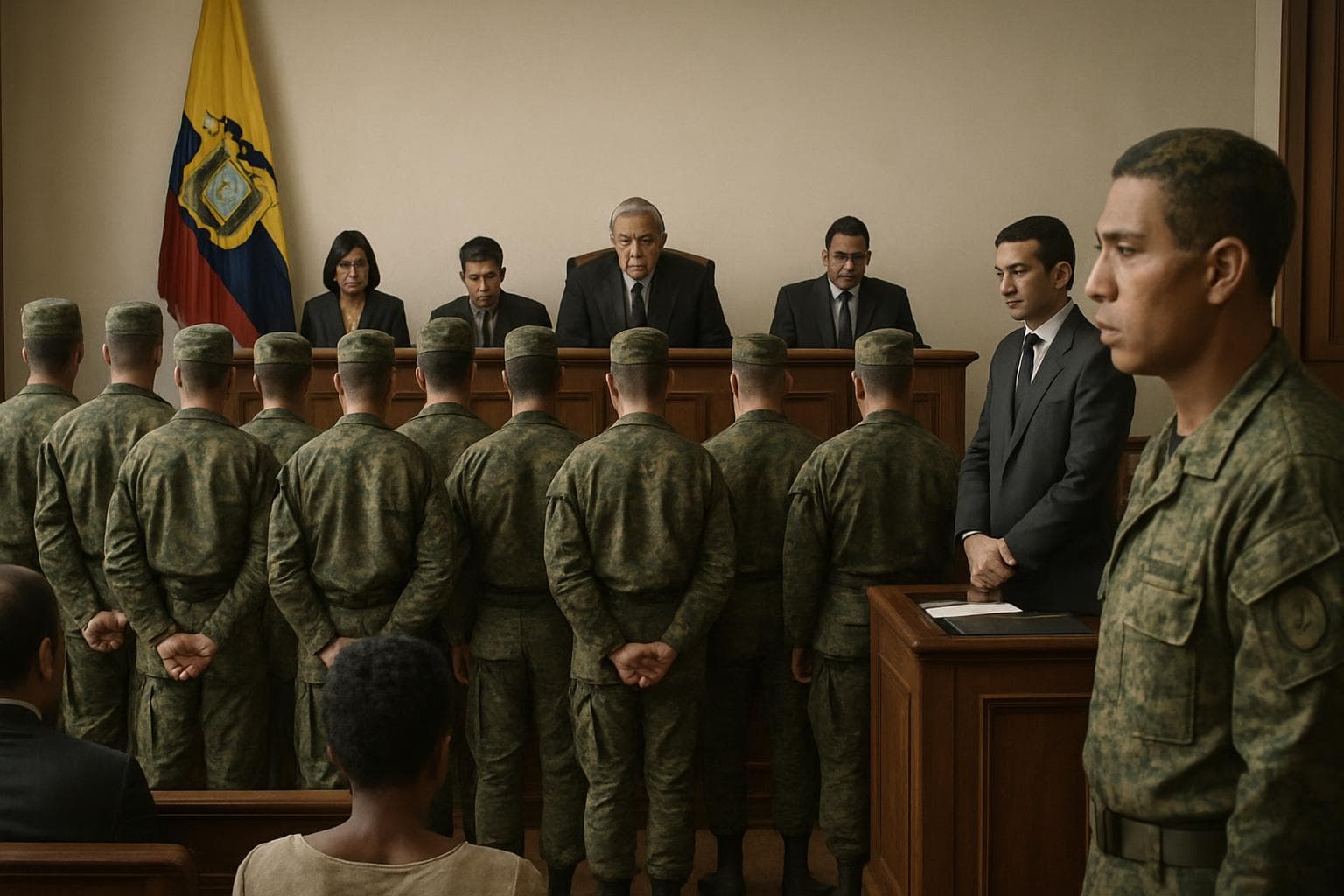
In a significant ruling, an Ecuadorian court has sentenced eleven soldiers to 34 years in prison each for their involvement in the forced disappearance of four Afro-Ecuadorian boys in Guayaquil last year. The case, which has drawn national and international attention, underscores the severe human rights abuses linked to President Daniel Noboa's stringent security measures.
The Tragic Events in Guayaquil
The victims, known as the "Guayaquil Four," were aged between 11 and 15. They were returning from a football match in the Las Malvinas neighborhood when they were intercepted by a military patrol. The soldiers, part of a broader government initiative to combat rising crime rates, allegedly forced the boys to strip, subjected them to racial insults, and abandoned them in a remote area. Despite one boy's desperate call to his father, the boys were missing for over two weeks before their charred bodies were discovered on Christmas Eve.
Judicial Proceedings and Sentencing
The court found the soldiers guilty of forced disappearance, a charge that reflects the gravity of the crime under Ecuadorian law. Five soldiers received reduced sentences for their cooperation, while a lieutenant-colonel was acquitted. The presiding judge, Jovanny Suárez, emphasized the cruelty of the acts and ordered the military to issue an official apology and undergo human rights training. The judge also mandated a commemorative plaque for the victims.
Ongoing Investigations and Broader Implications
While the trial focused on forced disappearance, the public prosecutor's office continues to investigate the case as a kidnapping resulting in death. The exact circumstances of the boys' deaths remain unclear, with forensic reports indicating they were shot at close range before their bodies were burned. The case has sparked widespread outrage, particularly among Afro-Ecuadorian communities, highlighting their vulnerability to state violence.
WHAT THIS MIGHT MEAN
The sentencing marks a pivotal moment in Ecuador's struggle with human rights abuses, particularly under the current security policies. As the investigation into the killings continues, there is potential for further legal action against those responsible. The case may prompt a reevaluation of military involvement in civilian policing, especially concerning human rights training and accountability. International human rights organizations are likely to monitor the situation closely, advocating for systemic changes to prevent future abuses.
Related Articles
ICE Detention of Five-Year-Old Sparks Outrage Amid Minnesota Immigration Crackdown
Ecuador Nightclub Shooting Leaves Eight Dead Amid Rising Gang Violence
Ecuador Extradites Notorious Drug Lord 'Fito' to the United States
Chinese Whistleblower Granted Asylum in US After Exposing Xinjiang Abuses
Ecuador Protests ICE Agent's Attempted Entry into Minneapolis Consulate
Chile's Rightward Shift: José Antonio Kast's Election Victory and Its Implications
Ecuadorian Soldiers Sentenced in Landmark Human Rights Case
In This Article
 Sofia Romano| Published
 HIGHLIGHTS
- Eleven Ecuadorian soldiers were sentenced to 34 years for the forced disappearance of four Afro-Ecuadorian boys in Guayaquil.
- The boys, aged 11 to 15, were abducted, beaten, and left in a desolate area; their bodies were found burned days later.
- The case highlights human rights abuses under President Daniel Noboa's security policy, which involves military patrols.
- Five soldiers received reduced sentences for cooperating, while one was acquitted; the judge ordered human rights training for military personnel.
- The public prosecutor continues to investigate the case as a kidnapping resulting in death, with the exact killers still unidentified.
In a significant ruling, an Ecuadorian court has sentenced eleven soldiers to 34 years in prison each for their involvement in the forced disappearance of four Afro-Ecuadorian boys in Guayaquil last year. The case, which has drawn national and international attention, underscores the severe human rights abuses linked to President Daniel Noboa's stringent security measures.
The Tragic Events in Guayaquil
The victims, known as the "Guayaquil Four," were aged between 11 and 15. They were returning from a football match in the Las Malvinas neighborhood when they were intercepted by a military patrol. The soldiers, part of a broader government initiative to combat rising crime rates, allegedly forced the boys to strip, subjected them to racial insults, and abandoned them in a remote area. Despite one boy's desperate call to his father, the boys were missing for over two weeks before their charred bodies were discovered on Christmas Eve.
Judicial Proceedings and Sentencing
The court found the soldiers guilty of forced disappearance, a charge that reflects the gravity of the crime under Ecuadorian law. Five soldiers received reduced sentences for their cooperation, while a lieutenant-colonel was acquitted. The presiding judge, Jovanny Suárez, emphasized the cruelty of the acts and ordered the military to issue an official apology and undergo human rights training. The judge also mandated a commemorative plaque for the victims.
Ongoing Investigations and Broader Implications
While the trial focused on forced disappearance, the public prosecutor's office continues to investigate the case as a kidnapping resulting in death. The exact circumstances of the boys' deaths remain unclear, with forensic reports indicating they were shot at close range before their bodies were burned. The case has sparked widespread outrage, particularly among Afro-Ecuadorian communities, highlighting their vulnerability to state violence.
WHAT THIS MIGHT MEAN
The sentencing marks a pivotal moment in Ecuador's struggle with human rights abuses, particularly under the current security policies. As the investigation into the killings continues, there is potential for further legal action against those responsible. The case may prompt a reevaluation of military involvement in civilian policing, especially concerning human rights training and accountability. International human rights organizations are likely to monitor the situation closely, advocating for systemic changes to prevent future abuses.
Related Articles
ICE Detention of Five-Year-Old Sparks Outrage Amid Minnesota Immigration Crackdown
Ecuador Nightclub Shooting Leaves Eight Dead Amid Rising Gang Violence
Ecuador Extradites Notorious Drug Lord 'Fito' to the United States
Chinese Whistleblower Granted Asylum in US After Exposing Xinjiang Abuses
Ecuador Protests ICE Agent's Attempted Entry into Minneapolis Consulate
Chile's Rightward Shift: José Antonio Kast's Election Victory and Its Implications