
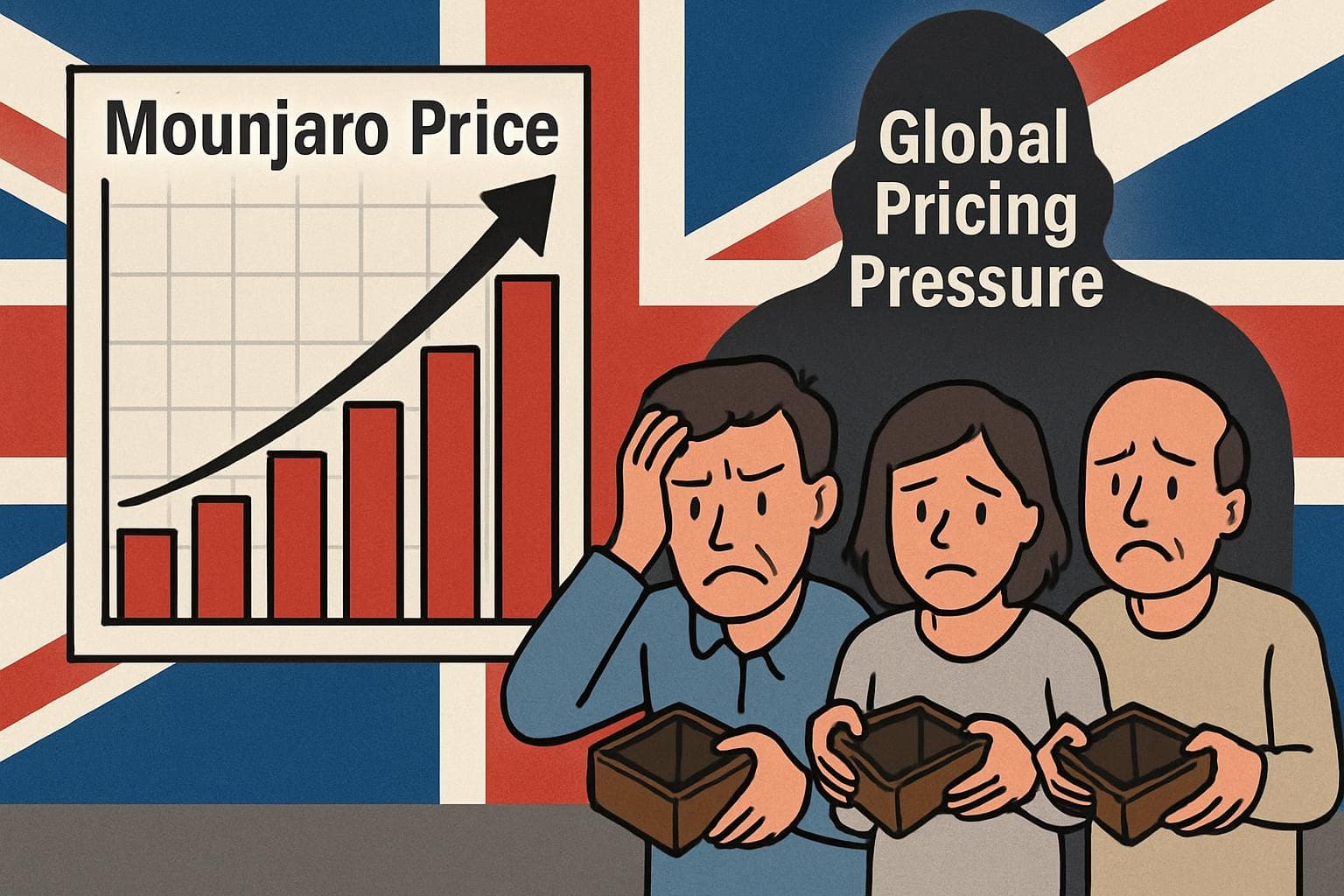
Eli Lilly Raises UK Price of Mounjaro Amid Global Pricing Pressure
In This Article
HIGHLIGHTS
- Eli Lilly announced a 170% price increase for the weight-loss drug Mounjaro in the UK, raising the highest dose from £122 to £330.
- The price hike does not affect the NHS, which has a discounted rate, but impacts private buyers who make up 90% of users.
- Eli Lilly aims to align UK prices with European markets, citing new clinical evidence and global pricing parity objectives.
- Donald Trump has pressured pharmaceutical companies to lower US drug prices, advocating for global pricing parity.
- Dr. Leyla Hannbeck expressed disappointment over the price increase, urging patients to consult pharmacies for alternatives.
The cost of the weight-loss drug Mounjaro is set to rise significantly in the UK, as manufacturer Eli Lilly announced a price increase of up to 170%. This adjustment will see the price for a month's supply of the highest dose jump from £122 to £330, affecting the many private buyers who rely on the drug for weight management.
Price Increase and Market Impact
The price hike, effective from September, will not impact the National Health Service (NHS), which benefits from a previously negotiated discounted rate. However, it poses a challenge for the estimated 1.5 million UK users of weight-loss drugs, 90% of whom purchase them privately from online services and pharmacies. Eli Lilly stated that the initial UK price was set significantly below European averages to expedite NHS availability. Now, the company seeks to align UK prices with those in other European markets, citing new clinical evidence supporting the drug's value.
Global Pricing Parity and Political Pressure
This development comes amid increasing pressure from former US President Donald Trump, who has been vocal about the need for global drug pricing parity. Trump has threatened pharmaceutical companies with stringent measures unless they lower US drug prices, which are reportedly three times higher than those in other developed nations. In a letter to major drugmakers, including Eli Lilly, Trump emphasized the necessity of collaborative efforts to achieve fair pricing globally.
Industry Reactions and Alternatives
Dr. Leyla Hannbeck, head of the Independent Pharmacies Association, expressed shock and disappointment at the price increase, urging patients to consult their local pharmacies for advice and alternative treatments. She emphasized that Mounjaro is not the only option available for those seeking weight-loss solutions.
Future Developments in Weight Loss Treatments
The pharmaceutical industry continues to experience high demand for weight-loss treatments, with companies like Denmark's Novo Nordisk also making significant strides. As drugmakers race to develop more convenient and potentially cheaper pill alternatives, the landscape of weight-loss treatments may soon evolve, offering new options for patients and healthcare providers alike.
WHAT THIS MIGHT MEAN
The price increase for Mounjaro in the UK could lead to a shift in consumer behavior, with more individuals seeking alternative weight-loss treatments or negotiating prices through private healthcare providers. The ongoing pressure from political figures like Donald Trump may also prompt pharmaceutical companies to reconsider their global pricing strategies, potentially leading to more equitable pricing across different markets.
As the industry explores the development of pill alternatives to injectable treatments, the accessibility and affordability of weight-loss drugs could improve, benefiting both patients and healthcare systems. However, the success of these initiatives will depend on continued innovation and collaboration between governments, healthcare providers, and pharmaceutical companies.
Related Articles
UK Government to Reform Asylum Seeker Support and Employment Policies

UK Faces Dilemmas Amid Iran Conflict and China Spying Allegations

UK-Iran Tensions: Starmer Defends Cautious Approach Amid Trump Criticism
Diplomatic Tensions Rise as Trump Criticizes Starmer's Iran Policy
UK Reinforces Military Presence in Cyprus Amid Middle East Tensions
Persistent Safety Concerns in Nottingham Maternity Services Amidst Calls for Systemic Reform
Eli Lilly Raises UK Price of Mounjaro Amid Global Pricing Pressure
In This Article
 Ethan Brooks| Published
 HIGHLIGHTS
- Eli Lilly announced a 170% price increase for the weight-loss drug Mounjaro in the UK, raising the highest dose from £122 to £330.
- The price hike does not affect the NHS, which has a discounted rate, but impacts private buyers who make up 90% of users.
- Eli Lilly aims to align UK prices with European markets, citing new clinical evidence and global pricing parity objectives.
- Donald Trump has pressured pharmaceutical companies to lower US drug prices, advocating for global pricing parity.
- Dr. Leyla Hannbeck expressed disappointment over the price increase, urging patients to consult pharmacies for alternatives.
The cost of the weight-loss drug Mounjaro is set to rise significantly in the UK, as manufacturer Eli Lilly announced a price increase of up to 170%. This adjustment will see the price for a month's supply of the highest dose jump from £122 to £330, affecting the many private buyers who rely on the drug for weight management.
Price Increase and Market Impact
The price hike, effective from September, will not impact the National Health Service (NHS), which benefits from a previously negotiated discounted rate. However, it poses a challenge for the estimated 1.5 million UK users of weight-loss drugs, 90% of whom purchase them privately from online services and pharmacies. Eli Lilly stated that the initial UK price was set significantly below European averages to expedite NHS availability. Now, the company seeks to align UK prices with those in other European markets, citing new clinical evidence supporting the drug's value.
Global Pricing Parity and Political Pressure
This development comes amid increasing pressure from former US President Donald Trump, who has been vocal about the need for global drug pricing parity. Trump has threatened pharmaceutical companies with stringent measures unless they lower US drug prices, which are reportedly three times higher than those in other developed nations. In a letter to major drugmakers, including Eli Lilly, Trump emphasized the necessity of collaborative efforts to achieve fair pricing globally.
Industry Reactions and Alternatives
Dr. Leyla Hannbeck, head of the Independent Pharmacies Association, expressed shock and disappointment at the price increase, urging patients to consult their local pharmacies for advice and alternative treatments. She emphasized that Mounjaro is not the only option available for those seeking weight-loss solutions.
Future Developments in Weight Loss Treatments
The pharmaceutical industry continues to experience high demand for weight-loss treatments, with companies like Denmark's Novo Nordisk also making significant strides. As drugmakers race to develop more convenient and potentially cheaper pill alternatives, the landscape of weight-loss treatments may soon evolve, offering new options for patients and healthcare providers alike.
WHAT THIS MIGHT MEAN
The price increase for Mounjaro in the UK could lead to a shift in consumer behavior, with more individuals seeking alternative weight-loss treatments or negotiating prices through private healthcare providers. The ongoing pressure from political figures like Donald Trump may also prompt pharmaceutical companies to reconsider their global pricing strategies, potentially leading to more equitable pricing across different markets.
As the industry explores the development of pill alternatives to injectable treatments, the accessibility and affordability of weight-loss drugs could improve, benefiting both patients and healthcare systems. However, the success of these initiatives will depend on continued innovation and collaboration between governments, healthcare providers, and pharmaceutical companies.
Related Articles
UK Government to Reform Asylum Seeker Support and Employment Policies
UK Faces Dilemmas Amid Iran Conflict and China Spying Allegations
UK-Iran Tensions: Starmer Defends Cautious Approach Amid Trump Criticism
Diplomatic Tensions Rise as Trump Criticizes Starmer's Iran Policy
UK Reinforces Military Presence in Cyprus Amid Middle East Tensions
Persistent Safety Concerns in Nottingham Maternity Services Amidst Calls for Systemic Reform