
Resident Doctors in England Strike Over Pay Dispute, Impacting NHS Services
In This Article
HIGHLIGHTS
- Resident doctors in England have commenced a five-day strike over pay restoration, affecting NHS services nationwide.
- The British Medical Association (BMA) argues that doctors' pay has decreased by 21% in real terms since 2008, despite recent pay increases.
- Health Secretary Wes Streeting criticized the strike as "reckless," while the BMA insists on pay restoration to retain and attract medical staff.
- NHS services remain operational, prioritizing urgent care, though some routine appointments and surgeries have been postponed.
- Public support for the strike is visible, with many expressing solidarity with the doctors' demands for fair compensation.
Resident doctors across England have embarked on a five-day strike, demanding pay restoration in a move that has significant implications for the National Health Service (NHS). The strike, organized by the British Medical Association (BMA), began at 7:00 am on Friday and is set to continue until 7:00 am on Wednesday, July 30. This industrial action comes after failed negotiations with the government over pay restoration, which the BMA claims has seen doctors' salaries fall by 21% in real terms since 2008.
Impact on NHS Services
The strike has prompted NHS trusts to prioritize urgent and emergency care, while some routine appointments and surgeries have been postponed. Dr. Trevor Smith, South West regional medical director for NHS England, apologized for the disruption but assured the public that the NHS remains "open for business." He emphasized that high-priority operations would continue, and patients in life-threatening situations should still call 999.
Government and BMA Standoff
Health Secretary Wes Streeting has labeled the strike as "reckless and unnecessary," arguing that the recent 5.4% pay rise, following a 22% increase over the past two years, was a fair offer. However, the BMA contends that these increases are insufficient to address the long-term erosion of doctors' pay. Dr. Tom Dolphin, BMA leader, expressed disappointment over the government's stance, stating that the strike was a last resort to ensure fair compensation for doctors.
Public Support and Concerns
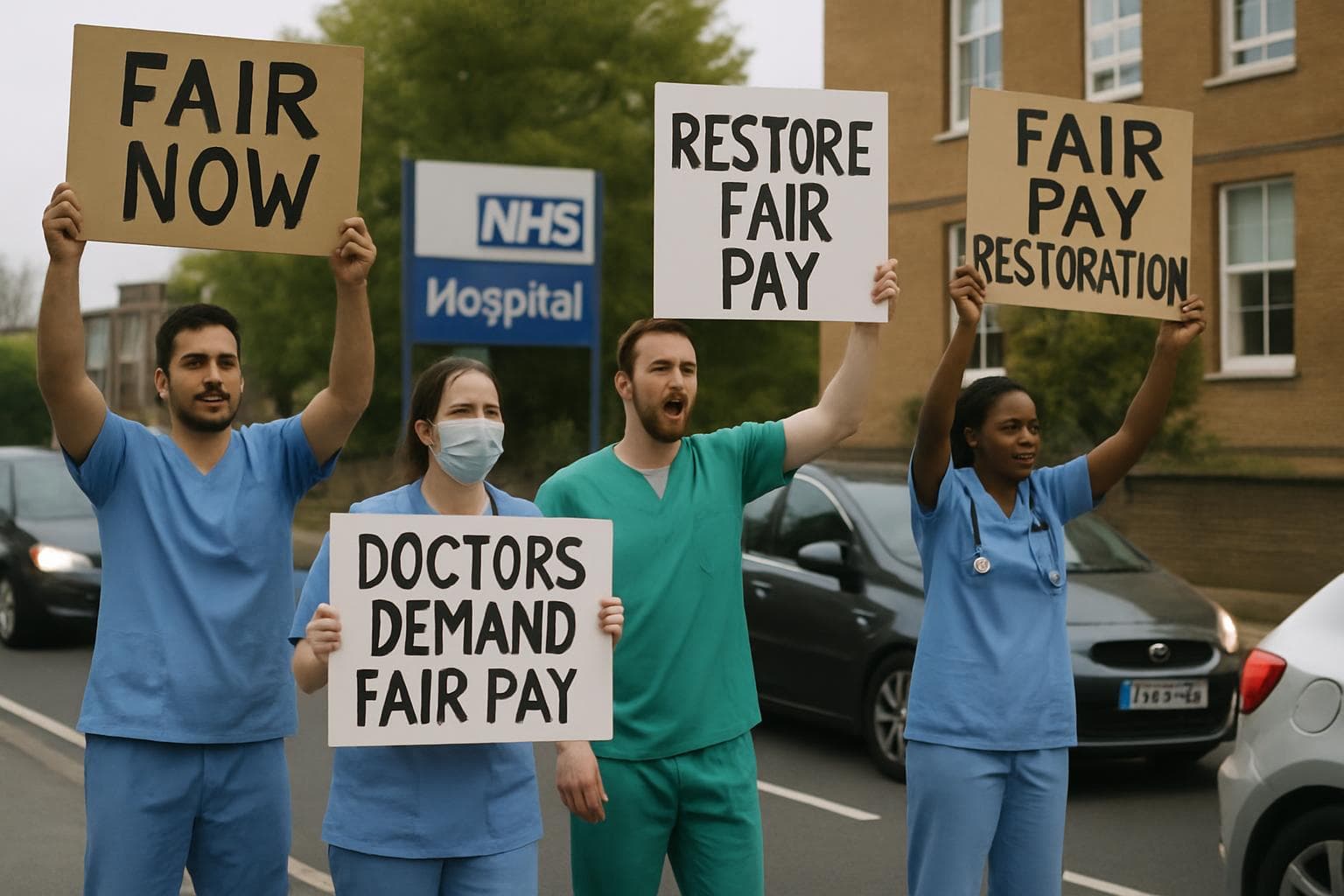
Despite the disruption, public support for the striking doctors is evident, with many expressing solidarity with their demands. Outside Manchester Royal Infirmary, car horns beeped in support as doctors waved placards demanding "Pay Restoration for Doctors." Dr. Mohammed Kamora, a striking doctor, emphasized the need for a "journey" towards pay restoration to prevent further loss of medical staff.
Long-term Implications
The ongoing strike highlights a broader crisis within the UK's healthcare workforce. Dr. Stella Chatzieleftheriou, a BMA representative, warned of the sustainability issues facing the medical workforce at current wage levels. She noted that many doctors are leaving the UK for better opportunities abroad, further exacerbating staffing shortages.
WHAT THIS MIGHT MEAN
The strike by resident doctors underscores the urgent need for a resolution to the ongoing pay dispute. If the government and the BMA fail to reach an agreement, the NHS could face further strikes, potentially leading to more significant disruptions in healthcare services. Experts warn that without addressing the pay restoration demands, the UK risks losing more medical professionals to other countries, worsening the existing workforce crisis. The government's response and willingness to engage in meaningful negotiations will be crucial in determining the future stability of the NHS and its ability to retain skilled healthcare workers.
Related Articles
UK Government to Reform Asylum Seeker Support and Employment Policies

UK Faces Dilemmas Amid Iran Conflict and China Spying Allegations

UK Reinforces Military Presence in Cyprus Amid Middle East Tensions

UK-Iran Tensions: Starmer Defends Cautious Approach Amid Trump Criticism
Persistent Safety Concerns in Nottingham Maternity Services Amidst Calls for Systemic Reform

Diplomatic Tensions Rise as Trump Criticizes Starmer's Iran Policy
Resident Doctors in England Strike Over Pay Dispute, Impacting NHS Services
In This Article
 Ethan Brooks| Published
 HIGHLIGHTS
- Resident doctors in England have commenced a five-day strike over pay restoration, affecting NHS services nationwide.
- The British Medical Association (BMA) argues that doctors' pay has decreased by 21% in real terms since 2008, despite recent pay increases.
- Health Secretary Wes Streeting criticized the strike as "reckless," while the BMA insists on pay restoration to retain and attract medical staff.
- NHS services remain operational, prioritizing urgent care, though some routine appointments and surgeries have been postponed.
- Public support for the strike is visible, with many expressing solidarity with the doctors' demands for fair compensation.
Resident doctors across England have embarked on a five-day strike, demanding pay restoration in a move that has significant implications for the National Health Service (NHS). The strike, organized by the British Medical Association (BMA), began at 7:00 am on Friday and is set to continue until 7:00 am on Wednesday, July 30. This industrial action comes after failed negotiations with the government over pay restoration, which the BMA claims has seen doctors' salaries fall by 21% in real terms since 2008.
Impact on NHS Services
The strike has prompted NHS trusts to prioritize urgent and emergency care, while some routine appointments and surgeries have been postponed. Dr. Trevor Smith, South West regional medical director for NHS England, apologized for the disruption but assured the public that the NHS remains "open for business." He emphasized that high-priority operations would continue, and patients in life-threatening situations should still call 999.
Government and BMA Standoff
Health Secretary Wes Streeting has labeled the strike as "reckless and unnecessary," arguing that the recent 5.4% pay rise, following a 22% increase over the past two years, was a fair offer. However, the BMA contends that these increases are insufficient to address the long-term erosion of doctors' pay. Dr. Tom Dolphin, BMA leader, expressed disappointment over the government's stance, stating that the strike was a last resort to ensure fair compensation for doctors.
Public Support and Concerns
Despite the disruption, public support for the striking doctors is evident, with many expressing solidarity with their demands. Outside Manchester Royal Infirmary, car horns beeped in support as doctors waved placards demanding "Pay Restoration for Doctors." Dr. Mohammed Kamora, a striking doctor, emphasized the need for a "journey" towards pay restoration to prevent further loss of medical staff.
Long-term Implications
The ongoing strike highlights a broader crisis within the UK's healthcare workforce. Dr. Stella Chatzieleftheriou, a BMA representative, warned of the sustainability issues facing the medical workforce at current wage levels. She noted that many doctors are leaving the UK for better opportunities abroad, further exacerbating staffing shortages.
WHAT THIS MIGHT MEAN
The strike by resident doctors underscores the urgent need for a resolution to the ongoing pay dispute. If the government and the BMA fail to reach an agreement, the NHS could face further strikes, potentially leading to more significant disruptions in healthcare services. Experts warn that without addressing the pay restoration demands, the UK risks losing more medical professionals to other countries, worsening the existing workforce crisis. The government's response and willingness to engage in meaningful negotiations will be crucial in determining the future stability of the NHS and its ability to retain skilled healthcare workers.
Related Articles
UK Government to Reform Asylum Seeker Support and Employment Policies
UK Faces Dilemmas Amid Iran Conflict and China Spying Allegations
UK Reinforces Military Presence in Cyprus Amid Middle East Tensions
UK-Iran Tensions: Starmer Defends Cautious Approach Amid Trump Criticism
Persistent Safety Concerns in Nottingham Maternity Services Amidst Calls for Systemic Reform
Diplomatic Tensions Rise as Trump Criticizes Starmer's Iran Policy