
Resident Doctors in England Vote to Strike Amid Pay Dispute
In This Article
HIGHLIGHTS
- Resident doctors in England have voted for strike action, with 90% supporting it on a 55% turnout, amid ongoing pay disputes.
- The British Medical Association (BMA) demands "pay restoration," arguing that doctors' wages are 20% lower in real terms than in 2008.
- The government has awarded a 5.4% pay rise for this year but refuses to reopen negotiations, citing financial constraints.
- Strikes could disrupt NHS services, risking the cancellation of appointments and operations, and potentially emboldening other staff to strike.
- The NHS Confederation warns that strikes could hinder efforts to reduce waiting lists, a key government pledge.
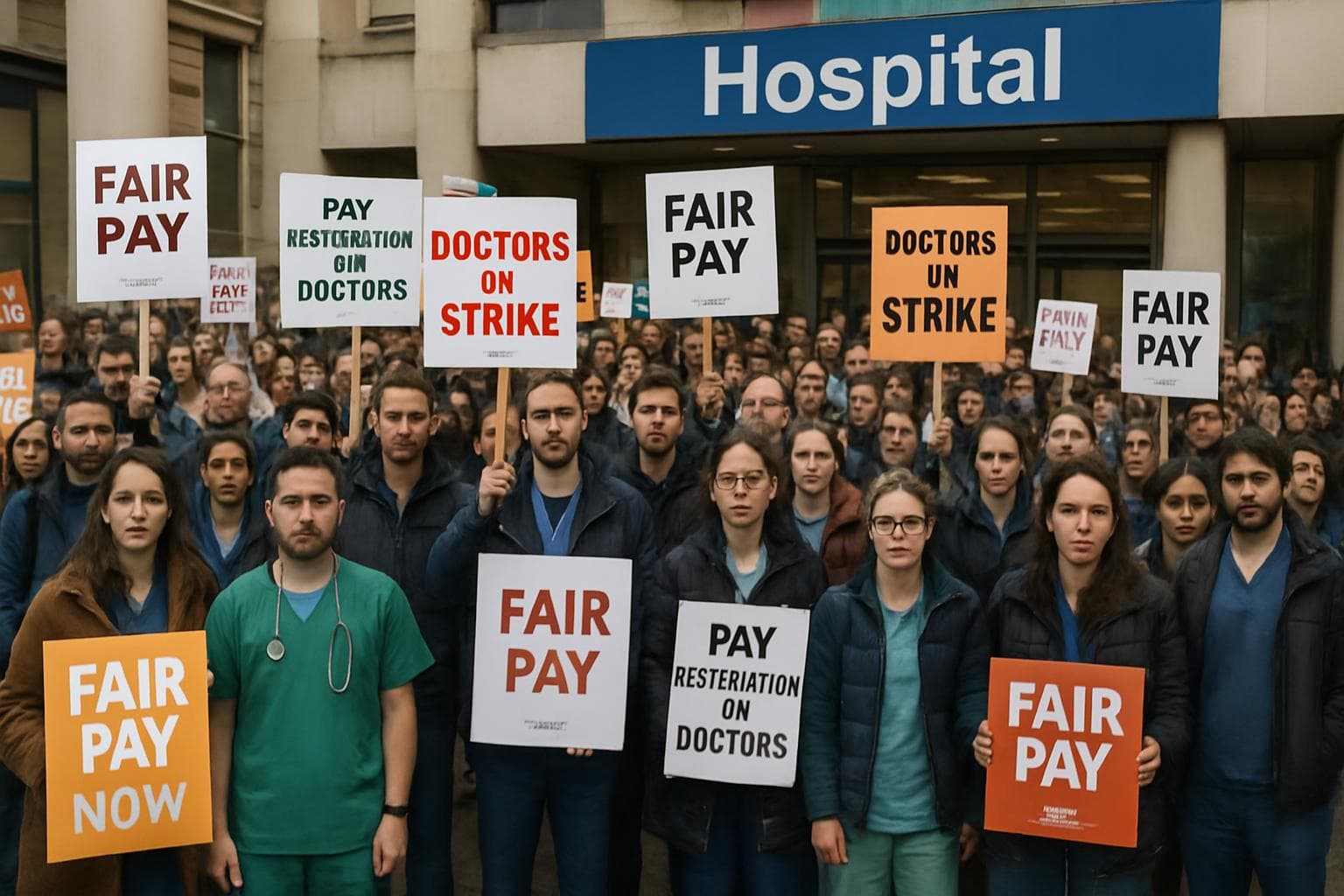
Resident doctors in England have overwhelmingly voted in favor of strike action, marking a significant escalation in their ongoing pay dispute with the government. The British Medical Association (BMA) announced that 90% of its voting members supported the strike, with a turnout of 55% among the 48,000 resident doctors. This decision comes after a series of strikes over the past two years, which have already disrupted NHS services.
Pay Dispute and Government Stance
The BMA is demanding "pay restoration," arguing that doctors' wages have fallen by 20% in real terms since 2008. Despite a 5.4% pay increase awarded for this financial year, the union insists that it is insufficient. "Our pay may have declined, but our will to fight remains strong," said Dr. Melissa Ryan and Dr. Ross Nieuwoudt, co-chairs of the BMA's resident doctors committee. The government, however, has refused to reopen pay negotiations, citing financial constraints. A Downing Street spokesperson stated, "We can't be more generous than we already have."
Impact on NHS Services
The potential strikes pose a significant threat to NHS operations, with the risk of hundreds of thousands of appointments and procedures being canceled. Matthew Taylor, chief executive of the NHS Confederation, expressed concern that the strikes could jeopardize efforts to reduce waiting lists, a key government pledge. "Hitting the 92% target is a difficult enough ambition without further industrial action," he noted.
Broader Implications for the NHS
The looming strikes could also embolden other NHS staff, including nurses, to consider industrial action over pay. The Royal College of Nursing and Unison are already conducting indicative ballots to gauge their members' willingness to strike. Health service bosses fear that the resident doctors' actions could lead to a broader wave of industrial unrest within the NHS.
WHAT THIS MIGHT MEAN
The upcoming strikes by resident doctors could have far-reaching implications for the NHS and the government. If the strikes proceed, they could severely disrupt healthcare services, delaying the government's goal of reducing waiting times. Additionally, the strikes may inspire other NHS staff to demand higher pay, potentially leading to a broader wave of industrial action.
Politically, the strikes present a challenge for the government, which must balance fiscal constraints with the need to maintain public services. The BMA's demand for "pay restoration" highlights the ongoing dissatisfaction among healthcare workers, which could influence future negotiations and policy decisions. As the situation unfolds, the government may need to explore alternative solutions to address the concerns of NHS staff while managing budgetary limitations.
Related Articles

UK Government to Reform Asylum Seeker Support and Employment Policies
Persistent Safety Concerns in Nottingham Maternity Services Amidst Calls for Systemic Reform

Diplomatic Tensions Rise as Trump Criticizes Starmer's Iran Policy
Nottingham Attacks Inquiry: Families Demand Accountability and Truth

Birmingham's Proactive Approach to Measles Outbreak Offers Lessons for North London

Starmer Condemns Reform UK's Plan to Repeal Equality Act as Un-British
Resident Doctors in England Vote to Strike Amid Pay Dispute
In This Article
 Ethan Brooks| Published
 HIGHLIGHTS
- Resident doctors in England have voted for strike action, with 90% supporting it on a 55% turnout, amid ongoing pay disputes.
- The British Medical Association (BMA) demands "pay restoration," arguing that doctors' wages are 20% lower in real terms than in 2008.
- The government has awarded a 5.4% pay rise for this year but refuses to reopen negotiations, citing financial constraints.
- Strikes could disrupt NHS services, risking the cancellation of appointments and operations, and potentially emboldening other staff to strike.
- The NHS Confederation warns that strikes could hinder efforts to reduce waiting lists, a key government pledge.
Resident doctors in England have overwhelmingly voted in favor of strike action, marking a significant escalation in their ongoing pay dispute with the government. The British Medical Association (BMA) announced that 90% of its voting members supported the strike, with a turnout of 55% among the 48,000 resident doctors. This decision comes after a series of strikes over the past two years, which have already disrupted NHS services.
Pay Dispute and Government Stance
The BMA is demanding "pay restoration," arguing that doctors' wages have fallen by 20% in real terms since 2008. Despite a 5.4% pay increase awarded for this financial year, the union insists that it is insufficient. "Our pay may have declined, but our will to fight remains strong," said Dr. Melissa Ryan and Dr. Ross Nieuwoudt, co-chairs of the BMA's resident doctors committee. The government, however, has refused to reopen pay negotiations, citing financial constraints. A Downing Street spokesperson stated, "We can't be more generous than we already have."
Impact on NHS Services
The potential strikes pose a significant threat to NHS operations, with the risk of hundreds of thousands of appointments and procedures being canceled. Matthew Taylor, chief executive of the NHS Confederation, expressed concern that the strikes could jeopardize efforts to reduce waiting lists, a key government pledge. "Hitting the 92% target is a difficult enough ambition without further industrial action," he noted.
Broader Implications for the NHS
The looming strikes could also embolden other NHS staff, including nurses, to consider industrial action over pay. The Royal College of Nursing and Unison are already conducting indicative ballots to gauge their members' willingness to strike. Health service bosses fear that the resident doctors' actions could lead to a broader wave of industrial unrest within the NHS.
WHAT THIS MIGHT MEAN
The upcoming strikes by resident doctors could have far-reaching implications for the NHS and the government. If the strikes proceed, they could severely disrupt healthcare services, delaying the government's goal of reducing waiting times. Additionally, the strikes may inspire other NHS staff to demand higher pay, potentially leading to a broader wave of industrial action.
Politically, the strikes present a challenge for the government, which must balance fiscal constraints with the need to maintain public services. The BMA's demand for "pay restoration" highlights the ongoing dissatisfaction among healthcare workers, which could influence future negotiations and policy decisions. As the situation unfolds, the government may need to explore alternative solutions to address the concerns of NHS staff while managing budgetary limitations.
Related Articles
UK Government to Reform Asylum Seeker Support and Employment Policies
Persistent Safety Concerns in Nottingham Maternity Services Amidst Calls for Systemic Reform
Diplomatic Tensions Rise as Trump Criticizes Starmer's Iran Policy
Nottingham Attacks Inquiry: Families Demand Accountability and Truth
Birmingham's Proactive Approach to Measles Outbreak Offers Lessons for North London
Starmer Condemns Reform UK's Plan to Repeal Equality Act as Un-British