
Erin Patterson Appeals Convictions in Notorious Mushroom Poisoning Case
In This Article
HIGHLIGHTS
- Erin Patterson, convicted of murdering three relatives with toxic mushrooms, has filed an appeal against her convictions.
- Patterson was sentenced to life imprisonment with a non-parole period of 33 years for the murders and attempted murder of her relatives.
- The appeal was lodged under new procedural rules allowing an extended filing period, with Patterson's legal team citing potential trial errors.
- The case drew significant public interest, with allegations of premeditation and attempts to conceal the crime.
- Prosecutors have also appealed, arguing that the sentence was "manifestly inadequate."
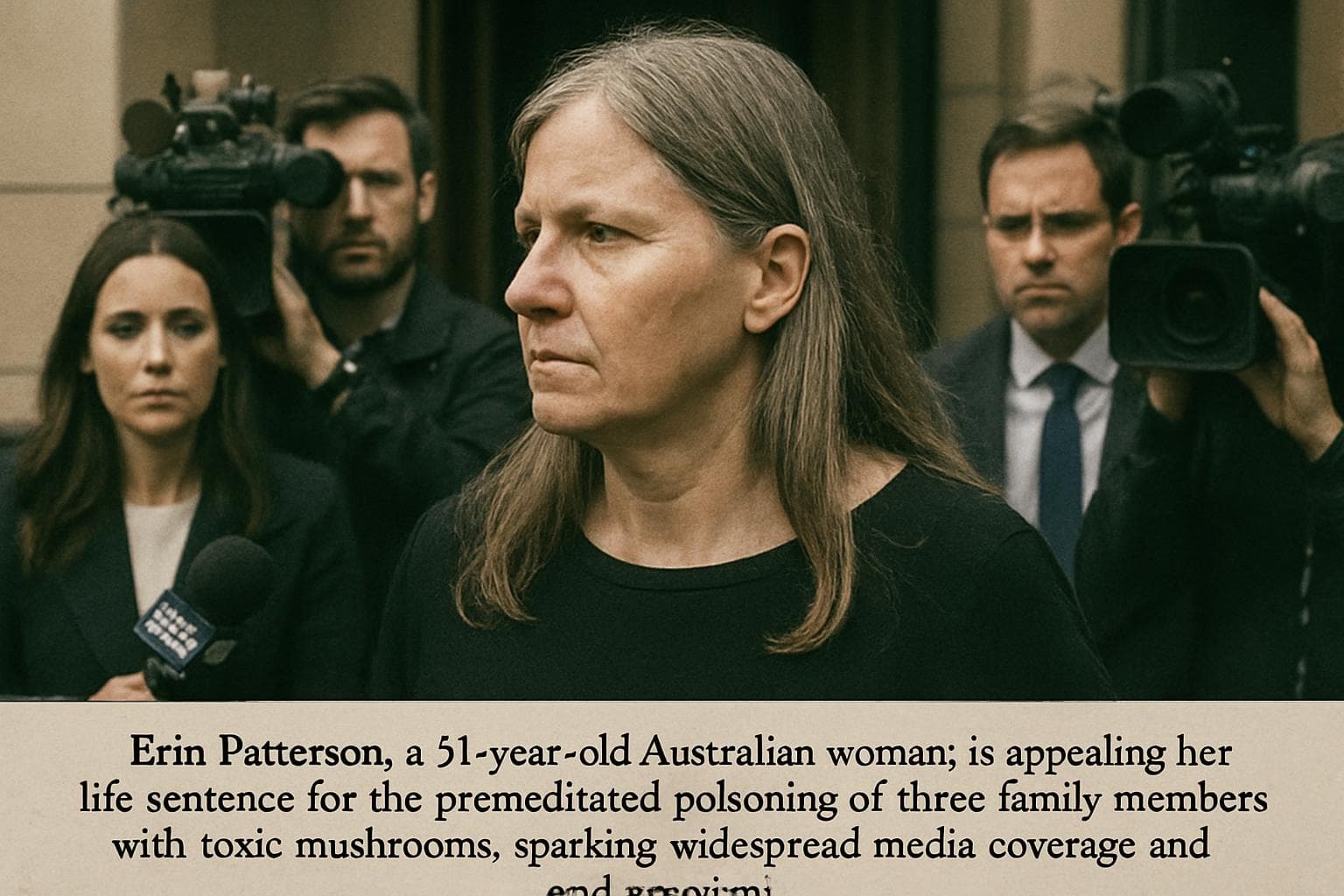
Erin Patterson, the Australian woman convicted of murdering three family members with a toxic mushroom meal, has officially lodged an appeal against her convictions. The 51-year-old was sentenced to life imprisonment with a non-parole period of 33 years following a high-profile trial in Victoria, which captivated public attention due to its shocking details and alleged premeditation.
Legal Appeal Process
Patterson's legal team, now including barristers Richard Edney and Veronika Drago, filed the appeal just before the deadline, utilizing new procedural guidelines that extend the filing period. The grounds for the appeal have not been disclosed, but her lawyers are expected to argue potential legal errors during the trial. Under Australian law, appeals are not automatically granted, requiring the Court of Appeal to be convinced of possible trial missteps.
The Case and Conviction
The trial, which lasted 11 weeks, concluded with a unanimous guilty verdict from the jury. Patterson was found guilty of murdering her estranged husband's parents, Don and Gail Patterson, and his aunt, Heather Wilkinson, by serving them beef Wellington laced with death cap mushrooms. Heather's husband, Ian Wilkinson, survived but continues to suffer health issues. Justice Christopher Beale, in his sentencing remarks, highlighted the premeditated nature of the crime and the profound betrayal of trust involved.
Public and Legal Reactions
The case has been a focal point of media attention, with intense public interest in the details of the mushroom poisoning. Allegations emerged during the trial that Patterson had foraged the deadly mushrooms and attempted to cover up her actions by lying to authorities. Her estranged husband, Simon Patterson, who was also invited to the fatal lunch but did not attend, had previously suffered severe health issues allegedly linked to meals prepared by Erin.
Prosecutors have also filed an appeal, contending that the life sentence with a 33-year non-parole period is insufficient given the gravity of the crimes.
WHAT THIS MIGHT MEAN
The appeal process could potentially lead to a retrial if the Court of Appeal finds merit in Patterson's claims of trial errors. This would reopen the case to further scrutiny and possibly new evidence. Legal experts suggest that the appeal might focus on procedural aspects or the interpretation of evidence presented during the trial.
If the appeal is successful, it could set a precedent in the Australian legal system regarding the handling of complex poisoning cases. Conversely, if the appeal is dismissed, Patterson will continue to serve her sentence, with the possibility of parole only in her 80s. The prosecutor's appeal on the sentence could also lead to a reassessment of the punishment, potentially resulting in a longer non-parole period.
Related Articles

Prince Andrew's Arrest Raises Questions About Royal Succession and Monarchy's Future

Queensland Man Faces 596 Child Abuse Charges in Global Online Grooming Case

Canada and Australia Forge Strategic Partnership Amid Global Uncertainty

Canada Calls for De-escalation Amid US-Israel Strikes on Iran

Trump's New Tariff Strategy Sparks Global Trade Uncertainty

Trump Raises Import Tariffs to 15% After Supreme Court Setback
Erin Patterson Appeals Convictions in Notorious Mushroom Poisoning Case
In This Article
 Sofia Romano| Published
 HIGHLIGHTS
- Erin Patterson, convicted of murdering three relatives with toxic mushrooms, has filed an appeal against her convictions.
- Patterson was sentenced to life imprisonment with a non-parole period of 33 years for the murders and attempted murder of her relatives.
- The appeal was lodged under new procedural rules allowing an extended filing period, with Patterson's legal team citing potential trial errors.
- The case drew significant public interest, with allegations of premeditation and attempts to conceal the crime.
- Prosecutors have also appealed, arguing that the sentence was "manifestly inadequate."
Erin Patterson, the Australian woman convicted of murdering three family members with a toxic mushroom meal, has officially lodged an appeal against her convictions. The 51-year-old was sentenced to life imprisonment with a non-parole period of 33 years following a high-profile trial in Victoria, which captivated public attention due to its shocking details and alleged premeditation.
Legal Appeal Process
Patterson's legal team, now including barristers Richard Edney and Veronika Drago, filed the appeal just before the deadline, utilizing new procedural guidelines that extend the filing period. The grounds for the appeal have not been disclosed, but her lawyers are expected to argue potential legal errors during the trial. Under Australian law, appeals are not automatically granted, requiring the Court of Appeal to be convinced of possible trial missteps.
The Case and Conviction
The trial, which lasted 11 weeks, concluded with a unanimous guilty verdict from the jury. Patterson was found guilty of murdering her estranged husband's parents, Don and Gail Patterson, and his aunt, Heather Wilkinson, by serving them beef Wellington laced with death cap mushrooms. Heather's husband, Ian Wilkinson, survived but continues to suffer health issues. Justice Christopher Beale, in his sentencing remarks, highlighted the premeditated nature of the crime and the profound betrayal of trust involved.
Public and Legal Reactions
The case has been a focal point of media attention, with intense public interest in the details of the mushroom poisoning. Allegations emerged during the trial that Patterson had foraged the deadly mushrooms and attempted to cover up her actions by lying to authorities. Her estranged husband, Simon Patterson, who was also invited to the fatal lunch but did not attend, had previously suffered severe health issues allegedly linked to meals prepared by Erin.
Prosecutors have also filed an appeal, contending that the life sentence with a 33-year non-parole period is insufficient given the gravity of the crimes.
WHAT THIS MIGHT MEAN
The appeal process could potentially lead to a retrial if the Court of Appeal finds merit in Patterson's claims of trial errors. This would reopen the case to further scrutiny and possibly new evidence. Legal experts suggest that the appeal might focus on procedural aspects or the interpretation of evidence presented during the trial.
If the appeal is successful, it could set a precedent in the Australian legal system regarding the handling of complex poisoning cases. Conversely, if the appeal is dismissed, Patterson will continue to serve her sentence, with the possibility of parole only in her 80s. The prosecutor's appeal on the sentence could also lead to a reassessment of the punishment, potentially resulting in a longer non-parole period.
Related Articles
Prince Andrew's Arrest Raises Questions About Royal Succession and Monarchy's Future
Queensland Man Faces 596 Child Abuse Charges in Global Online Grooming Case
Canada and Australia Forge Strategic Partnership Amid Global Uncertainty
Canada Calls for De-escalation Amid US-Israel Strikes on Iran
Trump's New Tariff Strategy Sparks Global Trade Uncertainty
Trump Raises Import Tariffs to 15% After Supreme Court Setback