
EU Agrees on €90bn Loan to Ukraine Amid Internal Divisions
In This Article
HIGHLIGHTS
- EU leaders agreed on a €90bn loan to Ukraine after a 17-hour summit, highlighting divisions within the bloc.
- The loan, guaranteed by the EU budget, replaces a proposal to use frozen Russian assets, which faced legal and political hurdles.
- Hungary, Slovakia, and the Czech Republic supported the plan only after securing exemptions, reflecting their closer ties to Moscow.
- The financial aid is crucial for Ukraine's military efforts against Russia, with further funds needed by 2026/2027.
- The decision underscores ongoing EU challenges in balancing unity and diverse national interests amid the Ukraine conflict.
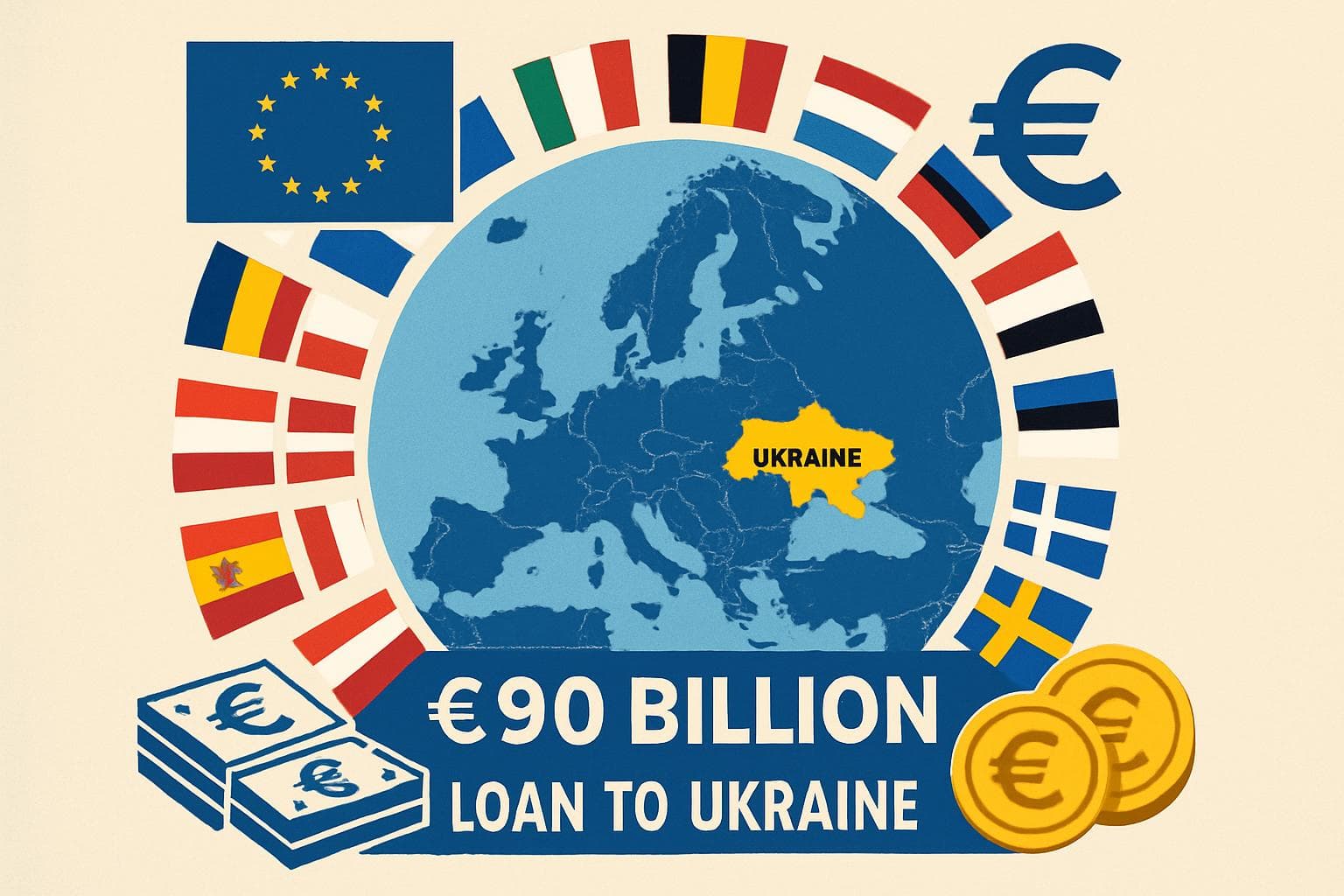
In a marathon 17-hour summit, European Union leaders reached a consensus to provide a €90bn loan to Ukraine, a move critical for the war-torn nation’s financial stability. The agreement, finalized early Friday, underscores both the EU's commitment to supporting Ukraine and the internal divisions that persist within the bloc.
A Contentious Path to Agreement
The decision to extend financial aid to Ukraine was not without controversy. Initially, the EU had proposed a "reparations loan" backed by €210bn of frozen Russian assets held in Europe, primarily in Belgium. This plan, however, was met with resistance due to potential legal repercussions and fears of retaliatory actions by Russia. Belgian Prime Minister Bart De Wever was particularly vocal, citing concerns over asset seizures in Russia-friendly jurisdictions.
Compromise and Concessions
Ultimately, the EU opted for a joint borrowing approach, using unallocated funds from the EU budget as collateral. This alternative required unanimous support, which was secured by exempting Hungary, Slovakia, and the Czech Republic from participation. These countries, known for their closer ties to Moscow, had initially opposed the plan, highlighting the geopolitical complexities within the EU.
Implications for Ukraine and the EU
For Ukraine, the loan is a lifeline, ensuring the government can continue to pay soldiers and procure necessary military equipment. Ukrainian President Volodymyr Zelensky emphasized the urgency of the funds, warning that without them, Ukraine's defense against Russian aggression could falter. The EU's decision also reflects broader concerns about European security, with leaders like Polish Prime Minister Donald Tusk warning of dire consequences if Ukraine were to fall.
Future Financial Needs
While the current loan provides immediate relief, Ukraine will require an additional €45bn by 2026/2027 to cover its costs. The EU hopes that non-EU allies such as the UK, Japan, and Canada will contribute to this financial burden. The possibility of using frozen Russian assets to repay the loan remains on the table, contingent on future peace agreements.
WHAT THIS MIGHT MEAN
The EU's decision to provide a €90bn loan to Ukraine marks a significant step in supporting the country amidst ongoing conflict. However, the internal divisions revealed during the summit highlight the challenges the EU faces in maintaining a unified front. As the situation evolves, the EU will need to navigate these complexities while ensuring continued support for Ukraine.
Looking ahead, the potential use of frozen Russian assets to repay the loan could become a contentious issue, particularly if legal challenges arise. Additionally, the EU's reliance on external allies to share the financial burden underscores the need for broader international cooperation in addressing the crisis.
The outcome of this decision will likely influence EU-Russia relations and could set a precedent for how the bloc handles similar geopolitical challenges in the future. As the conflict continues, the EU's ability to balance unity with diverse national interests will be crucial in shaping its role on the global stage.
Related Articles
Russian LNG Tanker Sinks in Mediterranean Amid Accusations of Ukrainian Drone Attack
Canada and Australia Forge Strategic Partnership Amid Global Uncertainty
US Supreme Court Ruling Sparks Trade Uncertainty in Asia and Beyond
UK Government to Reform Asylum Seeker Support and Employment Policies
Middle East Conflict Drives UK Energy Prices to New Highs

UK Faces Dilemmas Amid Iran Conflict and China Spying Allegations
EU Agrees on €90bn Loan to Ukraine Amid Internal Divisions
In This Article
 Alex Carter| Published
 HIGHLIGHTS
- EU leaders agreed on a €90bn loan to Ukraine after a 17-hour summit, highlighting divisions within the bloc.
- The loan, guaranteed by the EU budget, replaces a proposal to use frozen Russian assets, which faced legal and political hurdles.
- Hungary, Slovakia, and the Czech Republic supported the plan only after securing exemptions, reflecting their closer ties to Moscow.
- The financial aid is crucial for Ukraine's military efforts against Russia, with further funds needed by 2026/2027.
- The decision underscores ongoing EU challenges in balancing unity and diverse national interests amid the Ukraine conflict.
In a marathon 17-hour summit, European Union leaders reached a consensus to provide a €90bn loan to Ukraine, a move critical for the war-torn nation’s financial stability. The agreement, finalized early Friday, underscores both the EU's commitment to supporting Ukraine and the internal divisions that persist within the bloc.
A Contentious Path to Agreement
The decision to extend financial aid to Ukraine was not without controversy. Initially, the EU had proposed a "reparations loan" backed by €210bn of frozen Russian assets held in Europe, primarily in Belgium. This plan, however, was met with resistance due to potential legal repercussions and fears of retaliatory actions by Russia. Belgian Prime Minister Bart De Wever was particularly vocal, citing concerns over asset seizures in Russia-friendly jurisdictions.
Compromise and Concessions
Ultimately, the EU opted for a joint borrowing approach, using unallocated funds from the EU budget as collateral. This alternative required unanimous support, which was secured by exempting Hungary, Slovakia, and the Czech Republic from participation. These countries, known for their closer ties to Moscow, had initially opposed the plan, highlighting the geopolitical complexities within the EU.
Implications for Ukraine and the EU
For Ukraine, the loan is a lifeline, ensuring the government can continue to pay soldiers and procure necessary military equipment. Ukrainian President Volodymyr Zelensky emphasized the urgency of the funds, warning that without them, Ukraine's defense against Russian aggression could falter. The EU's decision also reflects broader concerns about European security, with leaders like Polish Prime Minister Donald Tusk warning of dire consequences if Ukraine were to fall.
Future Financial Needs
While the current loan provides immediate relief, Ukraine will require an additional €45bn by 2026/2027 to cover its costs. The EU hopes that non-EU allies such as the UK, Japan, and Canada will contribute to this financial burden. The possibility of using frozen Russian assets to repay the loan remains on the table, contingent on future peace agreements.
WHAT THIS MIGHT MEAN
The EU's decision to provide a €90bn loan to Ukraine marks a significant step in supporting the country amidst ongoing conflict. However, the internal divisions revealed during the summit highlight the challenges the EU faces in maintaining a unified front. As the situation evolves, the EU will need to navigate these complexities while ensuring continued support for Ukraine.
Looking ahead, the potential use of frozen Russian assets to repay the loan could become a contentious issue, particularly if legal challenges arise. Additionally, the EU's reliance on external allies to share the financial burden underscores the need for broader international cooperation in addressing the crisis.
The outcome of this decision will likely influence EU-Russia relations and could set a precedent for how the bloc handles similar geopolitical challenges in the future. As the conflict continues, the EU's ability to balance unity with diverse national interests will be crucial in shaping its role on the global stage.
Related Articles
Russian LNG Tanker Sinks in Mediterranean Amid Accusations of Ukrainian Drone Attack
Canada and Australia Forge Strategic Partnership Amid Global Uncertainty
US Supreme Court Ruling Sparks Trade Uncertainty in Asia and Beyond
UK Government to Reform Asylum Seeker Support and Employment Policies
Middle East Conflict Drives UK Energy Prices to New Highs
UK Faces Dilemmas Amid Iran Conflict and China Spying Allegations