
EU Investigates Google's Use of AI-Generated Summaries in Search Results
In This Article
HIGHLIGHTS
- The European Commission has launched an investigation into Google's use of AI-generated summaries in search results, focusing on potential breaches of competition rules.
- Concerns have been raised about Google's use of online content from publishers and YouTube creators without appropriate compensation or opt-out options.
- The investigation will assess whether Google's practices disadvantage rival AI developers by imposing unfair terms on content creators.
- Google argues that the investigation could hinder innovation in a competitive market, emphasizing the benefits of AI technologies for Europeans.
- The probe is part of broader EU efforts to regulate big tech companies, following a recent €3 billion fine against Google for favoring its own advertising services.
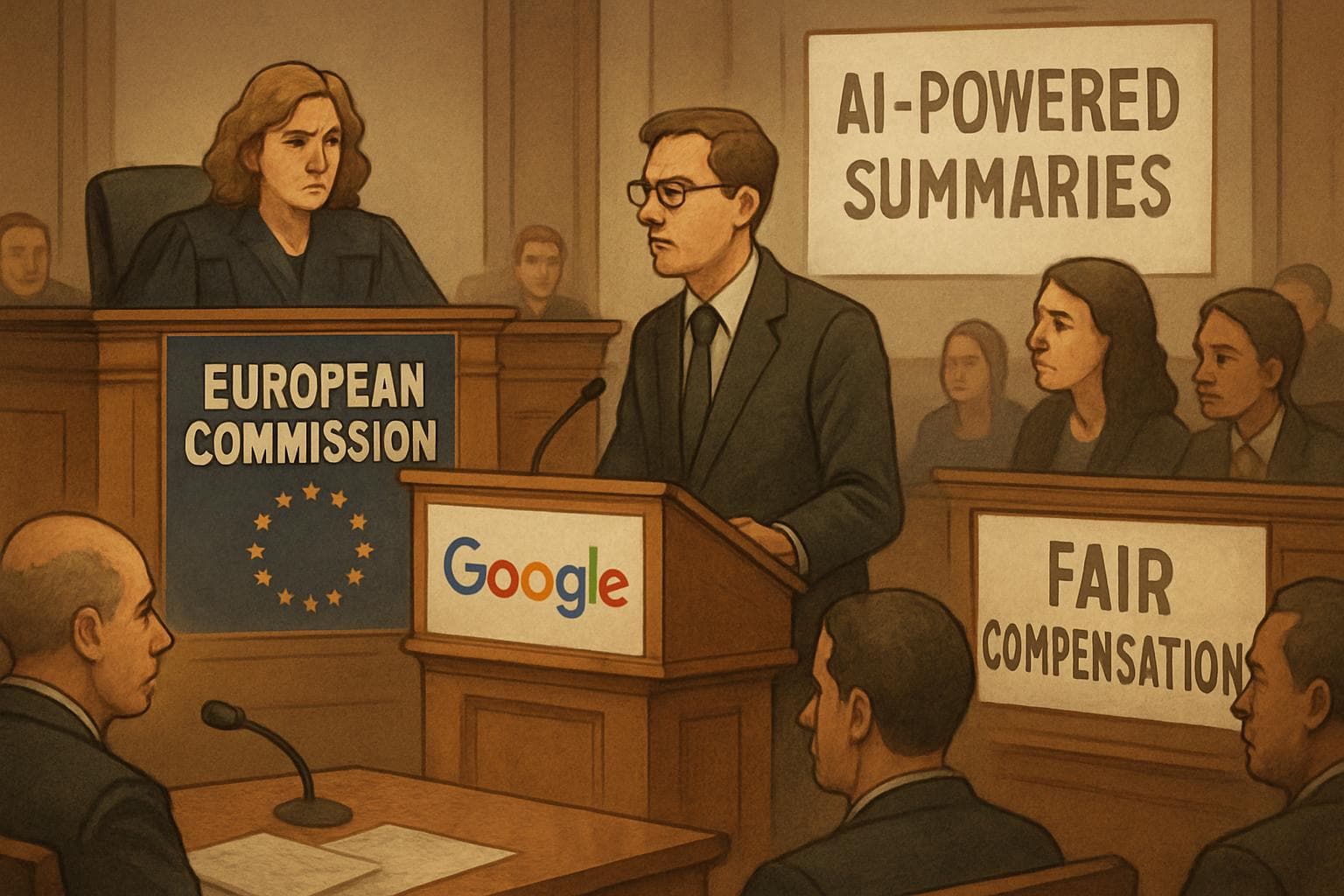
The European Commission has initiated an investigation into Google's use of artificial intelligence (AI) to generate summaries that appear above search results. This inquiry aims to determine whether the tech giant is violating European competition rules by utilizing online content from publishers and YouTube creators without offering fair compensation or the ability to opt-out.
Concerns Over Content Use and Compensation
The Commission's investigation will scrutinize whether Google has been using content from web publishers and YouTube creators to enhance its AI-powered services without providing appropriate compensation. This practice has raised concerns among content creators, who argue that Google's actions could lead to reduced website traffic and advertising revenue. The Daily Mail, for instance, reported a 50% drop in clicks from Google search results since the introduction of AI-generated summaries.
Impact on Rival AI Developers
A key focus of the investigation is whether Google's practices place rival AI developers at a disadvantage. The Commission is examining if Google has imposed unfair terms on content creators or granted itself privileged access to their content. This scrutiny extends to Google's Gemini AI model, which reportedly uses YouTube videos for training purposes. While Google allows creators to enable or disable third-party use of their content, it acknowledges using a subset of videos to improve its AI systems.
Google's Response and Broader Implications
Google has expressed concern that the investigation could stifle innovation in an increasingly competitive market. A spokesperson emphasized the importance of AI technologies for Europeans and reiterated the company's commitment to collaborating with news and creative industries during the AI transition. The investigation is part of a broader EU effort to regulate major tech companies, following a recent €3 billion fine against Google for favoring its own digital advertising services.
WHAT THIS MIGHT MEAN
The outcome of the EU's investigation into Google's use of AI-generated summaries could have significant implications for the tech industry. If the Commission finds that Google has breached competition rules, it may lead to stricter regulations on how tech companies use online content for AI training. This could prompt other jurisdictions to adopt similar measures, potentially reshaping the landscape of AI development and content creation.
Moreover, the investigation highlights the ongoing tension between innovation and fair compensation in the digital age. As AI technologies continue to evolve, balancing the interests of tech companies, content creators, and consumers will be crucial to ensuring a fair and competitive market. Experts suggest that clearer guidelines and opt-out mechanisms for content creators could help address these concerns while fostering innovation.
Related Articles

Zuckerberg Defends Meta in Landmark Social Media Addiction Trial

Google Faces Legal Battle Over AI Chatbot's Alleged Role in Tragic Death

US Supreme Court Ruling on Tariffs Sparks Uncertainty for UK and Global Trade
BBC Faces Major Budget Cuts Amid Declining Licence Fee Income

Instagram CEO Defends Platform Amidst Addiction Allegations in Landmark Trial
Tech Giants Pledge to Cover AI Data Center Energy Costs Amid Rising Electricity Concerns
EU Investigates Google's Use of AI-Generated Summaries in Search Results
In This Article
 Marcus Blake| Published
 HIGHLIGHTS
- The European Commission has launched an investigation into Google's use of AI-generated summaries in search results, focusing on potential breaches of competition rules.
- Concerns have been raised about Google's use of online content from publishers and YouTube creators without appropriate compensation or opt-out options.
- The investigation will assess whether Google's practices disadvantage rival AI developers by imposing unfair terms on content creators.
- Google argues that the investigation could hinder innovation in a competitive market, emphasizing the benefits of AI technologies for Europeans.
- The probe is part of broader EU efforts to regulate big tech companies, following a recent €3 billion fine against Google for favoring its own advertising services.
The European Commission has initiated an investigation into Google's use of artificial intelligence (AI) to generate summaries that appear above search results. This inquiry aims to determine whether the tech giant is violating European competition rules by utilizing online content from publishers and YouTube creators without offering fair compensation or the ability to opt-out.
Concerns Over Content Use and Compensation
The Commission's investigation will scrutinize whether Google has been using content from web publishers and YouTube creators to enhance its AI-powered services without providing appropriate compensation. This practice has raised concerns among content creators, who argue that Google's actions could lead to reduced website traffic and advertising revenue. The Daily Mail, for instance, reported a 50% drop in clicks from Google search results since the introduction of AI-generated summaries.
Impact on Rival AI Developers
A key focus of the investigation is whether Google's practices place rival AI developers at a disadvantage. The Commission is examining if Google has imposed unfair terms on content creators or granted itself privileged access to their content. This scrutiny extends to Google's Gemini AI model, which reportedly uses YouTube videos for training purposes. While Google allows creators to enable or disable third-party use of their content, it acknowledges using a subset of videos to improve its AI systems.
Google's Response and Broader Implications
Google has expressed concern that the investigation could stifle innovation in an increasingly competitive market. A spokesperson emphasized the importance of AI technologies for Europeans and reiterated the company's commitment to collaborating with news and creative industries during the AI transition. The investigation is part of a broader EU effort to regulate major tech companies, following a recent €3 billion fine against Google for favoring its own digital advertising services.
WHAT THIS MIGHT MEAN
The outcome of the EU's investigation into Google's use of AI-generated summaries could have significant implications for the tech industry. If the Commission finds that Google has breached competition rules, it may lead to stricter regulations on how tech companies use online content for AI training. This could prompt other jurisdictions to adopt similar measures, potentially reshaping the landscape of AI development and content creation.
Moreover, the investigation highlights the ongoing tension between innovation and fair compensation in the digital age. As AI technologies continue to evolve, balancing the interests of tech companies, content creators, and consumers will be crucial to ensuring a fair and competitive market. Experts suggest that clearer guidelines and opt-out mechanisms for content creators could help address these concerns while fostering innovation.
Related Articles
Zuckerberg Defends Meta in Landmark Social Media Addiction Trial
Google Faces Legal Battle Over AI Chatbot's Alleged Role in Tragic Death
US Supreme Court Ruling on Tariffs Sparks Uncertainty for UK and Global Trade
BBC Faces Major Budget Cuts Amid Declining Licence Fee Income
Instagram CEO Defends Platform Amidst Addiction Allegations in Landmark Trial
Tech Giants Pledge to Cover AI Data Center Energy Costs Amid Rising Electricity Concerns