
Youth Unemployment in the UK Reaches Alarming Levels Amid Economic Challenges
In This Article
HIGHLIGHTS
- Youth unemployment in the UK has reached 16.1%, surpassing the EU average for the first time since 2014.
- Rising costs and AI adoption are leading businesses to reduce entry-level positions, impacting young jobseekers.
- Many young people, like Lucy Gabb and Poppy Blackman, report applying for numerous jobs with little success.
- Former MP Alan Milburn warns of long-term consequences if youth unemployment remains high.
- The sluggish economy and increased minimum wage are cited as factors contributing to the challenging job market.
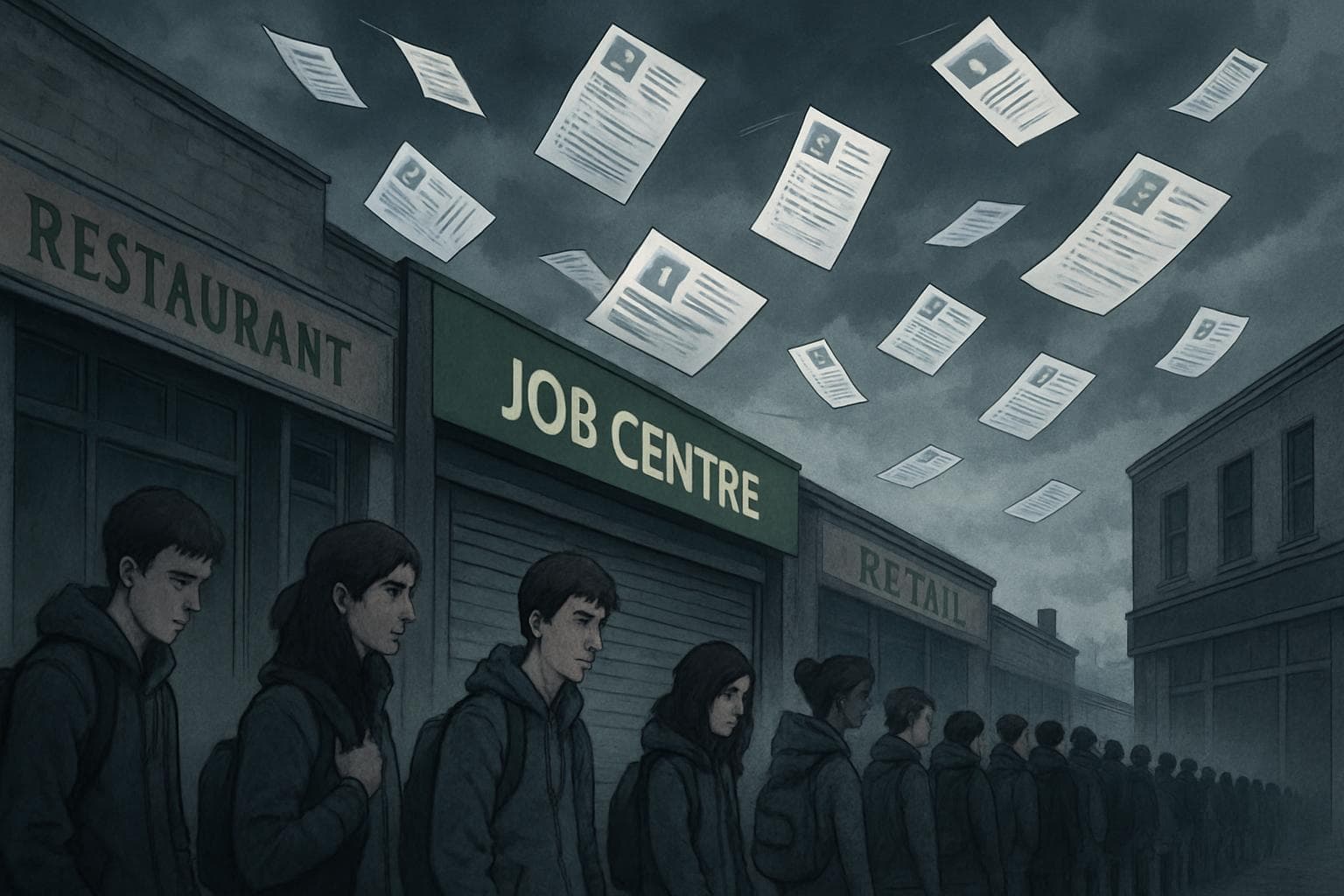
The UK is witnessing a troubling rise in youth unemployment, with figures from the Office for National Statistics (ONS) indicating that 16.1% of individuals aged 16 to 24 are unable to find work. This rate surpasses the EU average of 14.9% and marks the highest level since 2014, excluding the pandemic spike in 2020.
Economic Pressures and AI Impact
Businesses across sectors traditionally offering entry-level roles, such as retail and hospitality, are feeling the pinch of rising costs, including increased minimum wages. This has led to a reduction in hiring, particularly affecting young jobseekers. Additionally, the integration of artificial intelligence (AI) in the hiring process is further complicating the landscape. AI is increasingly used for tasks like data processing and CV screening, which were once entry-level roles, thus reducing opportunities for young applicants.
Personal Struggles in the Job Market
The personal stories of young jobseekers highlight the challenges faced in this bleak job market. Lucy Gabb, a Cambridge University graduate, has applied for over 50 roles in the publishing industry with minimal success. Similarly, Poppy Blackman, who studied fashion and art design, applies to an average of 50 jobs monthly, often without hearing back. Both express the emotional toll of the relentless job search, describing it as "soul-destroying" and "soul-crushing."
Long-term Implications and Expert Warnings
Former MP Alan Milburn, chairing the Young People and Work review, has raised concerns about the long-term effects of high youth unemployment. He warns that failing to address this issue could result in a generation facing prolonged joblessness and reliance on benefits. Economists, including Martin Beck from WPI Strategy, attribute the rise in youth unemployment to a sluggish economy and employers' reluctance to open new entry-level positions.
WHAT THIS MIGHT MEAN
The current trajectory of youth unemployment in the UK poses significant challenges for policymakers and the economy. If the trend continues, it could lead to a generation of young people facing long-term unemployment and economic hardship. Addressing these issues may require targeted government interventions, such as incentives for businesses to create entry-level jobs and support for young jobseekers in acquiring relevant skills. Additionally, the role of AI in the hiring process needs careful consideration to ensure it does not disproportionately disadvantage young applicants. As the Young People and Work review prepares to report its findings, its recommendations could play a crucial role in shaping future employment policies.
Images from the Web



Related Articles

Trump's New Tariff Strategy Sparks Global Trade Uncertainty

US Supreme Court Ruling on Tariffs Sparks Uncertainty for UK and Global Trade
US Supreme Court Ruling Sparks Trade Uncertainty in Asia and Beyond

Canada and Australia Forge Strategic Partnership Amid Global Uncertainty

UK Government to Reform Asylum Seeker Support and Employment Policies
Middle East Conflict Drives UK Energy Prices to New Highs
Youth Unemployment in the UK Reaches Alarming Levels Amid Economic Challenges
In This Article
 Daniel Rivera| Published
 HIGHLIGHTS
- Youth unemployment in the UK has reached 16.1%, surpassing the EU average for the first time since 2014.
- Rising costs and AI adoption are leading businesses to reduce entry-level positions, impacting young jobseekers.
- Many young people, like Lucy Gabb and Poppy Blackman, report applying for numerous jobs with little success.
- Former MP Alan Milburn warns of long-term consequences if youth unemployment remains high.
- The sluggish economy and increased minimum wage are cited as factors contributing to the challenging job market.
The UK is witnessing a troubling rise in youth unemployment, with figures from the Office for National Statistics (ONS) indicating that 16.1% of individuals aged 16 to 24 are unable to find work. This rate surpasses the EU average of 14.9% and marks the highest level since 2014, excluding the pandemic spike in 2020.
Economic Pressures and AI Impact
Businesses across sectors traditionally offering entry-level roles, such as retail and hospitality, are feeling the pinch of rising costs, including increased minimum wages. This has led to a reduction in hiring, particularly affecting young jobseekers. Additionally, the integration of artificial intelligence (AI) in the hiring process is further complicating the landscape. AI is increasingly used for tasks like data processing and CV screening, which were once entry-level roles, thus reducing opportunities for young applicants.
Personal Struggles in the Job Market
The personal stories of young jobseekers highlight the challenges faced in this bleak job market. Lucy Gabb, a Cambridge University graduate, has applied for over 50 roles in the publishing industry with minimal success. Similarly, Poppy Blackman, who studied fashion and art design, applies to an average of 50 jobs monthly, often without hearing back. Both express the emotional toll of the relentless job search, describing it as "soul-destroying" and "soul-crushing."
Long-term Implications and Expert Warnings
Former MP Alan Milburn, chairing the Young People and Work review, has raised concerns about the long-term effects of high youth unemployment. He warns that failing to address this issue could result in a generation facing prolonged joblessness and reliance on benefits. Economists, including Martin Beck from WPI Strategy, attribute the rise in youth unemployment to a sluggish economy and employers' reluctance to open new entry-level positions.
WHAT THIS MIGHT MEAN
The current trajectory of youth unemployment in the UK poses significant challenges for policymakers and the economy. If the trend continues, it could lead to a generation of young people facing long-term unemployment and economic hardship. Addressing these issues may require targeted government interventions, such as incentives for businesses to create entry-level jobs and support for young jobseekers in acquiring relevant skills. Additionally, the role of AI in the hiring process needs careful consideration to ensure it does not disproportionately disadvantage young applicants. As the Young People and Work review prepares to report its findings, its recommendations could play a crucial role in shaping future employment policies.
Images from the Web
Related Articles
Trump's New Tariff Strategy Sparks Global Trade Uncertainty
US Supreme Court Ruling on Tariffs Sparks Uncertainty for UK and Global Trade
US Supreme Court Ruling Sparks Trade Uncertainty in Asia and Beyond
Canada and Australia Forge Strategic Partnership Amid Global Uncertainty
UK Government to Reform Asylum Seeker Support and Employment Policies
Middle East Conflict Drives UK Energy Prices to New Highs