
EU Demands TikTok Overhaul 'Addictive Design' or Face Hefty Fines
In This Article
HIGHLIGHTS
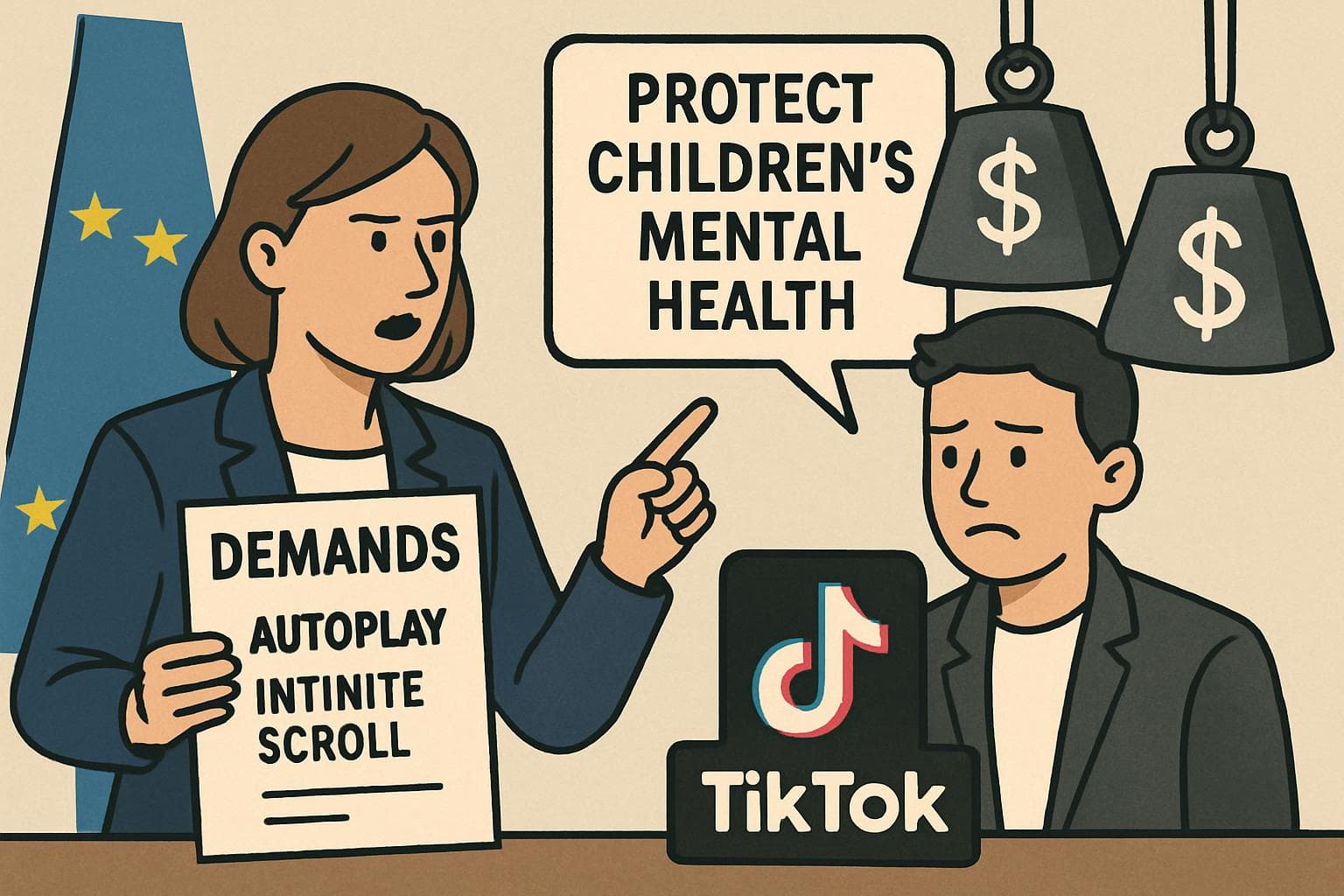
- The European Commission has found TikTok in breach of the Digital Services Act due to its "addictive design," potentially leading to significant fines.
- TikTok is accused of not adequately assessing the impact of features like autoplay on users' wellbeing, including children.
- The EU suggests changes such as disabling "infinite scroll" and implementing "screen time breaks" to mitigate risks.
- TikTok disputes the findings, calling them "categorically false," and plans to challenge the ruling.
- Breaches of the DSA could result in fines up to 6% of TikTok's global annual turnover, estimated at $35 billion.
The European Commission has issued a stern warning to TikTok, demanding changes to the platform's "addictive design" or face substantial fines. This follows a preliminary investigation that found the popular video-sharing app in violation of the EU's Digital Services Act (DSA). The Commission's findings highlight concerns over TikTok's failure to adequately assess how features like autoplay could harm users' mental and physical wellbeing, particularly among children and vulnerable adults.
Concerns Over User Wellbeing
The investigation, initiated in February 2024, revealed that TikTok's design encourages compulsive behavior by constantly rewarding users with new content, pushing them into "autopilot mode." This design, according to the Commission, diminishes users' self-control and increases screen time, especially at night. The EU has proposed several changes, including disabling the "infinite scroll" feature and implementing "screen time breaks" to help users manage their usage more effectively.
TikTok's Response and Potential Consequences
TikTok has strongly refuted the Commission's findings, describing them as "categorically false and entirely meritless." A spokesperson for the platform stated that TikTok intends to challenge the ruling through all available means. Despite TikTok's objections, the EU's tech chief, Henna Virkkunen, emphasized the importance of protecting users, particularly children, from harmful online practices. If TikTok fails to comply, it could face fines amounting to 6% of its global annual turnover, which is estimated to be around $35 billion.
Broader Implications for Social Media Regulation
This case marks a significant shift in how regulators are addressing issues with social media platforms. Previously, the focus was primarily on toxic content; however, the EU's findings suggest a growing concern over "toxic design." Social media expert Matt Navarra noted that this could represent a "seismic shift" in regulatory approaches, emphasizing the need for platforms to prioritize user wellbeing over profit.
WHAT THIS MIGHT MEAN
The outcome of this investigation could set a precedent for how social media platforms are regulated in the future. If TikTok is forced to make changes, it may prompt other platforms to reevaluate their designs to avoid similar scrutiny. Experts suggest that this could lead to a broader movement towards more user-centric design practices in the tech industry. Politically, the EU's actions may encourage other regions to adopt stricter regulations on social media, potentially leading to a more unified global approach to online safety.
Related Articles

EU Launches Investigation into Shein Over Alleged Digital Law Breaches

US Supreme Court Ruling on Tariffs Sparks Uncertainty for UK and Global Trade
Zuckerberg Defends Meta in Landmark Social Media Addiction Trial
US Supreme Court Ruling Sparks Trade Uncertainty in Asia and Beyond
Trump's New Tariff Strategy Sparks Global Trade Uncertainty
Youth Unemployment in the UK Reaches Alarming Levels Amid Economic Challenges
EU Demands TikTok Overhaul 'Addictive Design' or Face Hefty Fines
In This Article
 Himanshu Kaushik| Published
 HIGHLIGHTS
- The European Commission has found TikTok in breach of the Digital Services Act due to its "addictive design," potentially leading to significant fines.
- TikTok is accused of not adequately assessing the impact of features like autoplay on users' wellbeing, including children.
- The EU suggests changes such as disabling "infinite scroll" and implementing "screen time breaks" to mitigate risks.
- TikTok disputes the findings, calling them "categorically false," and plans to challenge the ruling.
- Breaches of the DSA could result in fines up to 6% of TikTok's global annual turnover, estimated at $35 billion.
The European Commission has issued a stern warning to TikTok, demanding changes to the platform's "addictive design" or face substantial fines. This follows a preliminary investigation that found the popular video-sharing app in violation of the EU's Digital Services Act (DSA). The Commission's findings highlight concerns over TikTok's failure to adequately assess how features like autoplay could harm users' mental and physical wellbeing, particularly among children and vulnerable adults.
Concerns Over User Wellbeing
The investigation, initiated in February 2024, revealed that TikTok's design encourages compulsive behavior by constantly rewarding users with new content, pushing them into "autopilot mode." This design, according to the Commission, diminishes users' self-control and increases screen time, especially at night. The EU has proposed several changes, including disabling the "infinite scroll" feature and implementing "screen time breaks" to help users manage their usage more effectively.
TikTok's Response and Potential Consequences
TikTok has strongly refuted the Commission's findings, describing them as "categorically false and entirely meritless." A spokesperson for the platform stated that TikTok intends to challenge the ruling through all available means. Despite TikTok's objections, the EU's tech chief, Henna Virkkunen, emphasized the importance of protecting users, particularly children, from harmful online practices. If TikTok fails to comply, it could face fines amounting to 6% of its global annual turnover, which is estimated to be around $35 billion.
Broader Implications for Social Media Regulation
This case marks a significant shift in how regulators are addressing issues with social media platforms. Previously, the focus was primarily on toxic content; however, the EU's findings suggest a growing concern over "toxic design." Social media expert Matt Navarra noted that this could represent a "seismic shift" in regulatory approaches, emphasizing the need for platforms to prioritize user wellbeing over profit.
WHAT THIS MIGHT MEAN
The outcome of this investigation could set a precedent for how social media platforms are regulated in the future. If TikTok is forced to make changes, it may prompt other platforms to reevaluate their designs to avoid similar scrutiny. Experts suggest that this could lead to a broader movement towards more user-centric design practices in the tech industry. Politically, the EU's actions may encourage other regions to adopt stricter regulations on social media, potentially leading to a more unified global approach to online safety.
Related Articles
EU Launches Investigation into Shein Over Alleged Digital Law Breaches
US Supreme Court Ruling on Tariffs Sparks Uncertainty for UK and Global Trade
Zuckerberg Defends Meta in Landmark Social Media Addiction Trial
US Supreme Court Ruling Sparks Trade Uncertainty in Asia and Beyond
Trump's New Tariff Strategy Sparks Global Trade Uncertainty
Youth Unemployment in the UK Reaches Alarming Levels Amid Economic Challenges