
Europe Swelters Under Record-Breaking Heatwave
In This Article
HIGHLIGHTS
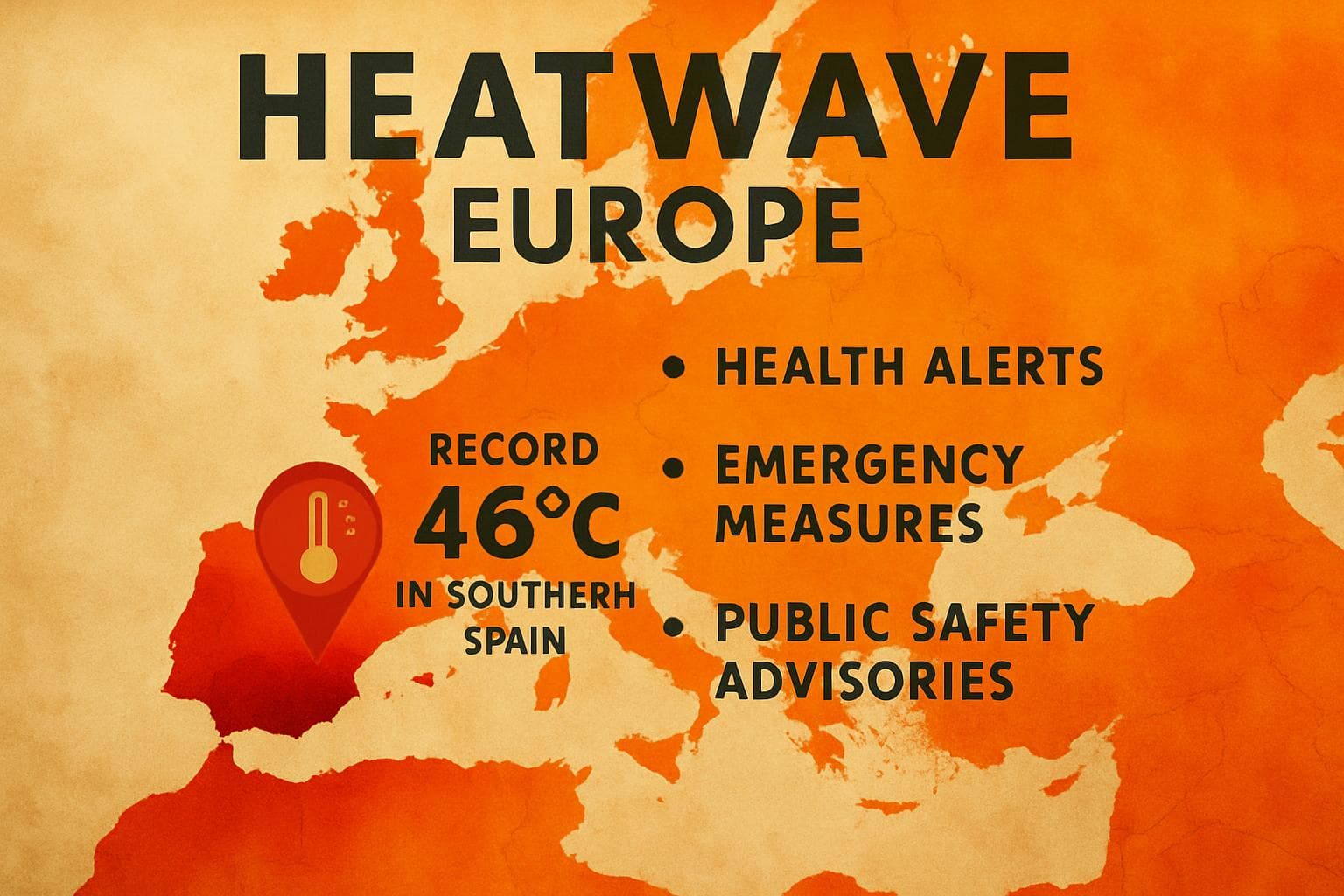
- Southern Europe is experiencing a severe heatwave, with Spain recording a new June high of 46°C in El Granado.
- The UK is under an amber heat health alert, with temperatures expected to reach 34°C in London.
- Italy and France have issued high-level heat alerts, with emergency services reporting increased cases of heat-related illnesses.
- Climate scientists suggest that such extreme weather events are becoming more frequent due to climate change.
- Authorities across Europe are implementing measures to protect vulnerable populations from the heat.
Large swathes of Europe are enduring a punishing heatwave, with temperatures soaring to unprecedented levels. Southern Spain has been particularly hard-hit, recording a new June high of 46°C in the town of El Granado, according to Spain's national weather service. This extreme heat has prompted red alerts in parts of Portugal, Italy, and Croatia, while amber warnings are in place across much of Spain, France, and other European nations.
Health Alerts and Emergency Measures
In the UK, an amber heat health alert is in effect, with temperatures in London expected to peak at 34°C. The UK Health Security Agency has advised the public to check on vulnerable individuals and take precautions to mitigate the heat's impact. Similarly, Italy has placed 27 cities on high alert, with hospitals reporting a surge in heatstroke cases, particularly among the elderly and those with pre-existing health conditions. In response, cities like Bologna have established climate shelters, and Rome is offering free access to swimming pools for seniors.
Climate Change and Extreme Weather
The current heatwave underscores the growing impact of climate change on weather patterns. Scientists from World Weather Attribution highlight that such extreme events are now ten times more likely compared to pre-industrial times. The persistent high pressure system responsible for the heat is expected to move eastward, potentially affecting more regions in the coming days.
Local Impact and Responses
Across Europe, local authorities are taking steps to protect residents. In Portugal, pharmacists are advising people to stay indoors during peak heat hours, while in France, 84 mainland departments are under an "orange" heat alert. The heatwave has also impacted major events, with Glastonbury Festival attendees advised to leave early to avoid the heat, and Wimbledon preparing for its hottest opening day on record.
WHAT THIS MIGHT MEAN
As the heatwave continues, European governments may need to reassess their emergency preparedness for extreme weather events. The increasing frequency of such heatwaves could prompt more robust climate adaptation strategies, including infrastructure improvements and public health initiatives. Experts warn that without significant action to address climate change, these extreme weather patterns are likely to become the norm, posing ongoing challenges to public health and safety.
Related Articles

Saharan Dust to Illuminate UK Skies with Vivid Sunrises and Sunsets

Canada and Australia Forge Strategic Partnership Amid Global Uncertainty

UK Government to Reform Asylum Seeker Support and Employment Policies

Middle East Conflict Drives UK Energy Prices to New Highs

UK Faces Dilemmas Amid Iran Conflict and China Spying Allegations

South West Water Faces Legal Repercussions Over Devon Parasite Outbreak
Europe Swelters Under Record-Breaking Heatwave
In This Article
 Leila Hassan| Published
 HIGHLIGHTS
- Southern Europe is experiencing a severe heatwave, with Spain recording a new June high of 46°C in El Granado.
- The UK is under an amber heat health alert, with temperatures expected to reach 34°C in London.
- Italy and France have issued high-level heat alerts, with emergency services reporting increased cases of heat-related illnesses.
- Climate scientists suggest that such extreme weather events are becoming more frequent due to climate change.
- Authorities across Europe are implementing measures to protect vulnerable populations from the heat.
Large swathes of Europe are enduring a punishing heatwave, with temperatures soaring to unprecedented levels. Southern Spain has been particularly hard-hit, recording a new June high of 46°C in the town of El Granado, according to Spain's national weather service. This extreme heat has prompted red alerts in parts of Portugal, Italy, and Croatia, while amber warnings are in place across much of Spain, France, and other European nations.
Health Alerts and Emergency Measures
In the UK, an amber heat health alert is in effect, with temperatures in London expected to peak at 34°C. The UK Health Security Agency has advised the public to check on vulnerable individuals and take precautions to mitigate the heat's impact. Similarly, Italy has placed 27 cities on high alert, with hospitals reporting a surge in heatstroke cases, particularly among the elderly and those with pre-existing health conditions. In response, cities like Bologna have established climate shelters, and Rome is offering free access to swimming pools for seniors.
Climate Change and Extreme Weather
The current heatwave underscores the growing impact of climate change on weather patterns. Scientists from World Weather Attribution highlight that such extreme events are now ten times more likely compared to pre-industrial times. The persistent high pressure system responsible for the heat is expected to move eastward, potentially affecting more regions in the coming days.
Local Impact and Responses
Across Europe, local authorities are taking steps to protect residents. In Portugal, pharmacists are advising people to stay indoors during peak heat hours, while in France, 84 mainland departments are under an "orange" heat alert. The heatwave has also impacted major events, with Glastonbury Festival attendees advised to leave early to avoid the heat, and Wimbledon preparing for its hottest opening day on record.
WHAT THIS MIGHT MEAN
As the heatwave continues, European governments may need to reassess their emergency preparedness for extreme weather events. The increasing frequency of such heatwaves could prompt more robust climate adaptation strategies, including infrastructure improvements and public health initiatives. Experts warn that without significant action to address climate change, these extreme weather patterns are likely to become the norm, posing ongoing challenges to public health and safety.
Related Articles
Saharan Dust to Illuminate UK Skies with Vivid Sunrises and Sunsets
Canada and Australia Forge Strategic Partnership Amid Global Uncertainty
UK Government to Reform Asylum Seeker Support and Employment Policies
Middle East Conflict Drives UK Energy Prices to New Highs
UK Faces Dilemmas Amid Iran Conflict and China Spying Allegations
South West Water Faces Legal Repercussions Over Devon Parasite Outbreak