
Families Sue Camp Mystic Over Fatal Texas Floods, Alleging Negligence
In This Article
HIGHLIGHTS
- Families of victims from the Camp Mystic flood have filed lawsuits against the camp, citing gross negligence and failure to protect.
- The lawsuits claim the camp ignored known flood risks and failed to evacuate campers and counselors, resulting in 27 deaths.
- Plaintiffs seek over $1 million in damages, alleging the camp prioritized profit over safety.
- The lawsuits follow Camp Mystic's controversial announcement to partially reopen next year.
- Texas lawmakers have since passed legislation to restrict camps in flood-risk zones and mandate emergency training.
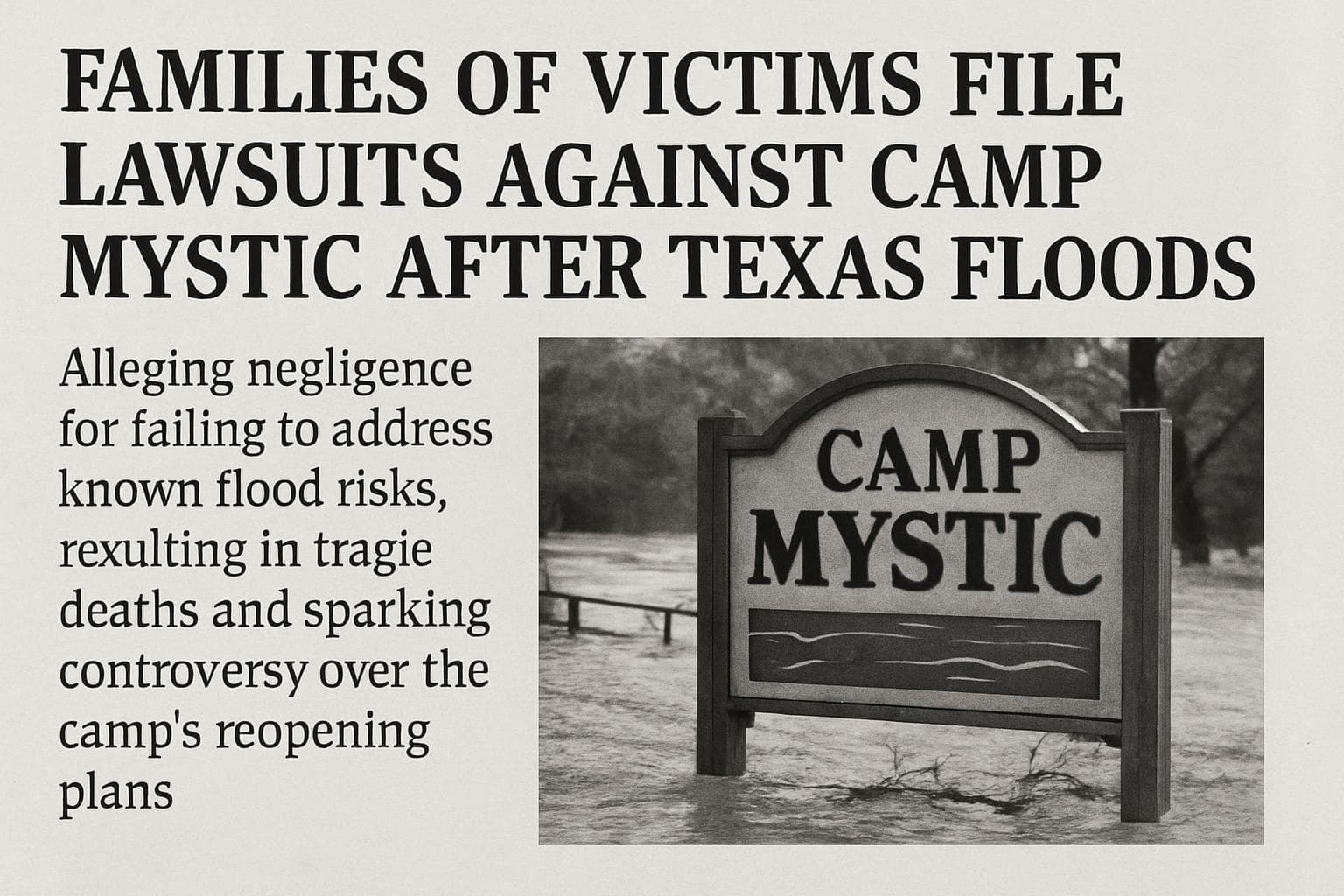
In the aftermath of one of the deadliest floods in Texas history, families of victims from Camp Mystic have filed lawsuits against the camp's owners, accusing them of gross negligence. The catastrophic floods on July 4 claimed the lives of 27 young campers and counselors, including the camp's co-owner, Dick Eastland. The lawsuits, filed in Austin state court, allege that the camp ignored known flood risks and failed to implement adequate safety measures.
Allegations of Negligence
The lawsuits assert that Camp Mystic, located along the flood-prone Guadalupe River, neglected warnings about the impending storm and rising floodwaters. Families claim that the camp prioritized profit over safety by housing campers in vulnerable cabins and failing to evacuate them in time. "These young girls died because a for-profit camp put profit over safety," states one lawsuit. The plaintiffs are seeking over $1 million in damages, accusing the camp of negligence, wrongful death, and breach of fiduciary duty.
Controversial Reopening Plans
The legal actions come amid Camp Mystic's announcement to partially reopen next summer, a decision that has sparked outrage among victims' families. Some lawsuits accuse the camp of using the deceased girls as a recruiting tool, promoting a memorial without consulting the parents. The camp's attorney, Jeff Ray, contends that the flood was unprecedented and that no adequate warning systems were in place.
Legislative Response
In response to the tragedy, Texas lawmakers have enacted legislation to prevent similar incidents. The new laws restrict the establishment of camps in flood-risk zones and require emergency training for camp staff. These measures aim to address the emergency warning failures highlighted by the Hill Country floods, which claimed over 130 lives across the region.
WHAT THIS MIGHT MEAN
The lawsuits against Camp Mystic could set a precedent for how camps in flood-prone areas are held accountable for safety measures. If the plaintiffs succeed, it may lead to stricter regulations and increased scrutiny of camp operations in Texas and beyond. The camp's controversial reopening plans could further complicate its legal and public relations challenges. As the case unfolds, it will be crucial to monitor how the court addresses the balance between natural disaster unpredictability and the responsibility of camp operators to ensure safety.
Related Articles

James Talarico Secures Democratic Nomination in Texas Senate Race Amidst Republican Runoff

House Passes Controversial SAVE America Act Amid Voter Suppression Concerns

El Paso Airspace Closure Sparks Confusion Amid Drone Concerns

British Woman's Death in Texas Ruled Unlawful Killing by Coroner
Buddhist Monks Conclude 2,300-Mile Walk for Peace in Washington DC

Supreme Court Upholds California's New Voting Map, Boosting Democratic Prospects
Families Sue Camp Mystic Over Fatal Texas Floods, Alleging Negligence
In This Article
 Leila Hassan| Published
 HIGHLIGHTS
- Families of victims from the Camp Mystic flood have filed lawsuits against the camp, citing gross negligence and failure to protect.
- The lawsuits claim the camp ignored known flood risks and failed to evacuate campers and counselors, resulting in 27 deaths.
- Plaintiffs seek over $1 million in damages, alleging the camp prioritized profit over safety.
- The lawsuits follow Camp Mystic's controversial announcement to partially reopen next year.
- Texas lawmakers have since passed legislation to restrict camps in flood-risk zones and mandate emergency training.
In the aftermath of one of the deadliest floods in Texas history, families of victims from Camp Mystic have filed lawsuits against the camp's owners, accusing them of gross negligence. The catastrophic floods on July 4 claimed the lives of 27 young campers and counselors, including the camp's co-owner, Dick Eastland. The lawsuits, filed in Austin state court, allege that the camp ignored known flood risks and failed to implement adequate safety measures.
Allegations of Negligence
The lawsuits assert that Camp Mystic, located along the flood-prone Guadalupe River, neglected warnings about the impending storm and rising floodwaters. Families claim that the camp prioritized profit over safety by housing campers in vulnerable cabins and failing to evacuate them in time. "These young girls died because a for-profit camp put profit over safety," states one lawsuit. The plaintiffs are seeking over $1 million in damages, accusing the camp of negligence, wrongful death, and breach of fiduciary duty.
Controversial Reopening Plans
The legal actions come amid Camp Mystic's announcement to partially reopen next summer, a decision that has sparked outrage among victims' families. Some lawsuits accuse the camp of using the deceased girls as a recruiting tool, promoting a memorial without consulting the parents. The camp's attorney, Jeff Ray, contends that the flood was unprecedented and that no adequate warning systems were in place.
Legislative Response
In response to the tragedy, Texas lawmakers have enacted legislation to prevent similar incidents. The new laws restrict the establishment of camps in flood-risk zones and require emergency training for camp staff. These measures aim to address the emergency warning failures highlighted by the Hill Country floods, which claimed over 130 lives across the region.
WHAT THIS MIGHT MEAN
The lawsuits against Camp Mystic could set a precedent for how camps in flood-prone areas are held accountable for safety measures. If the plaintiffs succeed, it may lead to stricter regulations and increased scrutiny of camp operations in Texas and beyond. The camp's controversial reopening plans could further complicate its legal and public relations challenges. As the case unfolds, it will be crucial to monitor how the court addresses the balance between natural disaster unpredictability and the responsibility of camp operators to ensure safety.
Related Articles
James Talarico Secures Democratic Nomination in Texas Senate Race Amidst Republican Runoff
House Passes Controversial SAVE America Act Amid Voter Suppression Concerns
El Paso Airspace Closure Sparks Confusion Amid Drone Concerns
British Woman's Death in Texas Ruled Unlawful Killing by Coroner
Buddhist Monks Conclude 2,300-Mile Walk for Peace in Washington DC
Supreme Court Upholds California's New Voting Map, Boosting Democratic Prospects