
Supreme Court Upholds California's New Voting Map, Boosting Democratic Prospects
In This Article
HIGHLIGHTS
- The US Supreme Court has allowed California to implement a new voting map, potentially increasing Democratic seats by up to five.
- The decision comes amid a broader redistricting battle initiated by former President Donald Trump to bolster Republican seats.
- California's new map was approved by voters through Proposition 50, contrasting with Texas's legislature-driven redistricting.
- The Supreme Court's ruling rejected claims that the California map was racially gerrymandered, aligning with a previous decision on Texas's map.
- The ruling could impact the Republican party's efforts to maintain its slim majority in the US House during the upcoming midterm elections.
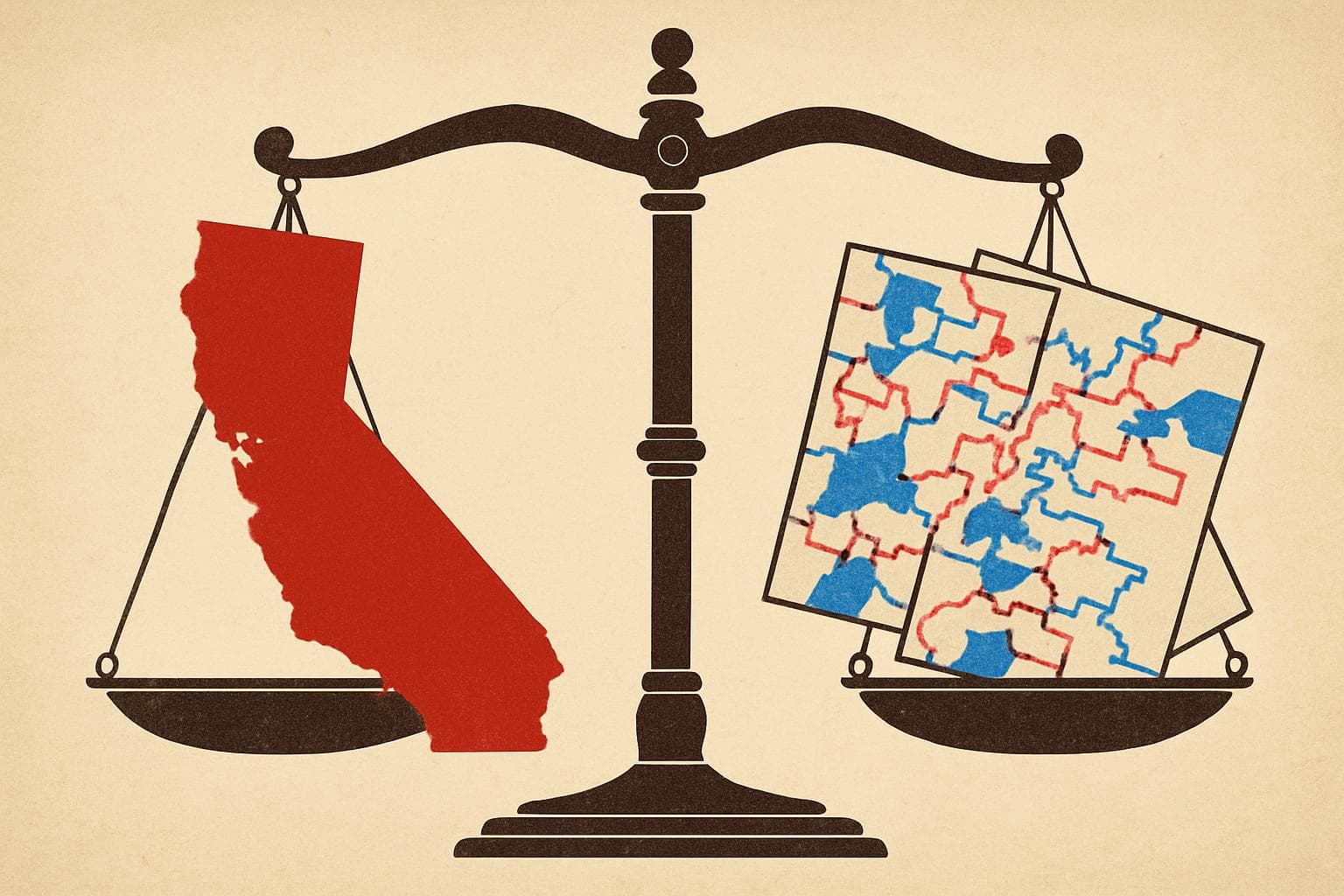
In a significant development for the upcoming midterm elections, the US Supreme Court has sanctioned the use of a new congressional voting map in California, potentially enhancing Democratic representation by up to five seats. This decision, delivered in an unsigned order without dissent, marks a pivotal moment in the ongoing national redistricting saga.
Background of the Redistricting Battle
The Supreme Court's ruling comes in the wake of a contentious redistricting effort spearheaded by former President Donald Trump, aimed at securing Republican dominance in the US House. California's new map, approved by voters through Proposition 50 in November, stands in stark contrast to Texas's legislature-driven redistricting, which was also upheld by the Supreme Court despite accusations of racial gerrymandering.
Legal and Political Implications
The California Republican Party, supported by the Trump administration, had sought to block the new map, arguing it was racially biased. However, both a lower federal court and the Supreme Court dismissed these claims. Governor Gavin Newsom, a key advocate for the redistricting initiative, hailed the decision as a victory against Trump's efforts to manipulate electoral boundaries for partisan gain.
Impact on the Midterm Elections
With the midterm elections approaching, the Supreme Court's decision could significantly influence the balance of power in the US House. Historically, the party of the sitting president tends to lose seats during midterms, a trend Democrats hope to counteract with the new map. Currently, Democrats hold 43 of California's 52 congressional seats, with Republicans occupying only eight.
Broader National Context
This ruling is part of a broader national trend where states like Missouri, Ohio, and North Carolina are also embroiled in redistricting disputes. The Supreme Court's stance on these matters underscores the complex interplay between legal frameworks and political strategies in shaping electoral landscapes.
WHAT THIS MIGHT MEAN
The Supreme Court's decision to uphold California's new voting map could set a precedent for future redistricting cases, potentially encouraging other states to pursue similar strategies. As the midterm elections draw near, the ruling may bolster Democratic efforts to regain control of the House, especially if Trump's influence continues to wane amid economic challenges and historical voting patterns. Legal experts suggest that the ruling could also prompt further scrutiny of gerrymandering practices, particularly those perceived as racially motivated, thereby shaping the future of electoral politics in the United States.
Related Articles

James Talarico Secures Democratic Nomination in Texas Senate Race Amidst Republican Runoff

Congress Subpoenas Attorney General Bondi in Epstein Investigation

Tech Giants Pledge to Cover AI Data Center Energy Costs Amid Rising Electricity Concerns

Senate Blocks Resolution to Limit Trump's Military Actions in Iran

US Supreme Court Ruling Sparks Trade Uncertainty in Asia and Beyond

Cuba Faces Widespread Blackout Amid Deepening Fuel Crisis
Supreme Court Upholds California's New Voting Map, Boosting Democratic Prospects
In This Article
 Alex Carter| Published
 HIGHLIGHTS
- The US Supreme Court has allowed California to implement a new voting map, potentially increasing Democratic seats by up to five.
- The decision comes amid a broader redistricting battle initiated by former President Donald Trump to bolster Republican seats.
- California's new map was approved by voters through Proposition 50, contrasting with Texas's legislature-driven redistricting.
- The Supreme Court's ruling rejected claims that the California map was racially gerrymandered, aligning with a previous decision on Texas's map.
- The ruling could impact the Republican party's efforts to maintain its slim majority in the US House during the upcoming midterm elections.
In a significant development for the upcoming midterm elections, the US Supreme Court has sanctioned the use of a new congressional voting map in California, potentially enhancing Democratic representation by up to five seats. This decision, delivered in an unsigned order without dissent, marks a pivotal moment in the ongoing national redistricting saga.
Background of the Redistricting Battle
The Supreme Court's ruling comes in the wake of a contentious redistricting effort spearheaded by former President Donald Trump, aimed at securing Republican dominance in the US House. California's new map, approved by voters through Proposition 50 in November, stands in stark contrast to Texas's legislature-driven redistricting, which was also upheld by the Supreme Court despite accusations of racial gerrymandering.
Legal and Political Implications
The California Republican Party, supported by the Trump administration, had sought to block the new map, arguing it was racially biased. However, both a lower federal court and the Supreme Court dismissed these claims. Governor Gavin Newsom, a key advocate for the redistricting initiative, hailed the decision as a victory against Trump's efforts to manipulate electoral boundaries for partisan gain.
Impact on the Midterm Elections
With the midterm elections approaching, the Supreme Court's decision could significantly influence the balance of power in the US House. Historically, the party of the sitting president tends to lose seats during midterms, a trend Democrats hope to counteract with the new map. Currently, Democrats hold 43 of California's 52 congressional seats, with Republicans occupying only eight.
Broader National Context
This ruling is part of a broader national trend where states like Missouri, Ohio, and North Carolina are also embroiled in redistricting disputes. The Supreme Court's stance on these matters underscores the complex interplay between legal frameworks and political strategies in shaping electoral landscapes.
WHAT THIS MIGHT MEAN
The Supreme Court's decision to uphold California's new voting map could set a precedent for future redistricting cases, potentially encouraging other states to pursue similar strategies. As the midterm elections draw near, the ruling may bolster Democratic efforts to regain control of the House, especially if Trump's influence continues to wane amid economic challenges and historical voting patterns. Legal experts suggest that the ruling could also prompt further scrutiny of gerrymandering practices, particularly those perceived as racially motivated, thereby shaping the future of electoral politics in the United States.
Related Articles
James Talarico Secures Democratic Nomination in Texas Senate Race Amidst Republican Runoff
Congress Subpoenas Attorney General Bondi in Epstein Investigation
Tech Giants Pledge to Cover AI Data Center Energy Costs Amid Rising Electricity Concerns
Senate Blocks Resolution to Limit Trump's Military Actions in Iran
US Supreme Court Ruling Sparks Trade Uncertainty in Asia and Beyond
Cuba Faces Widespread Blackout Amid Deepening Fuel Crisis