
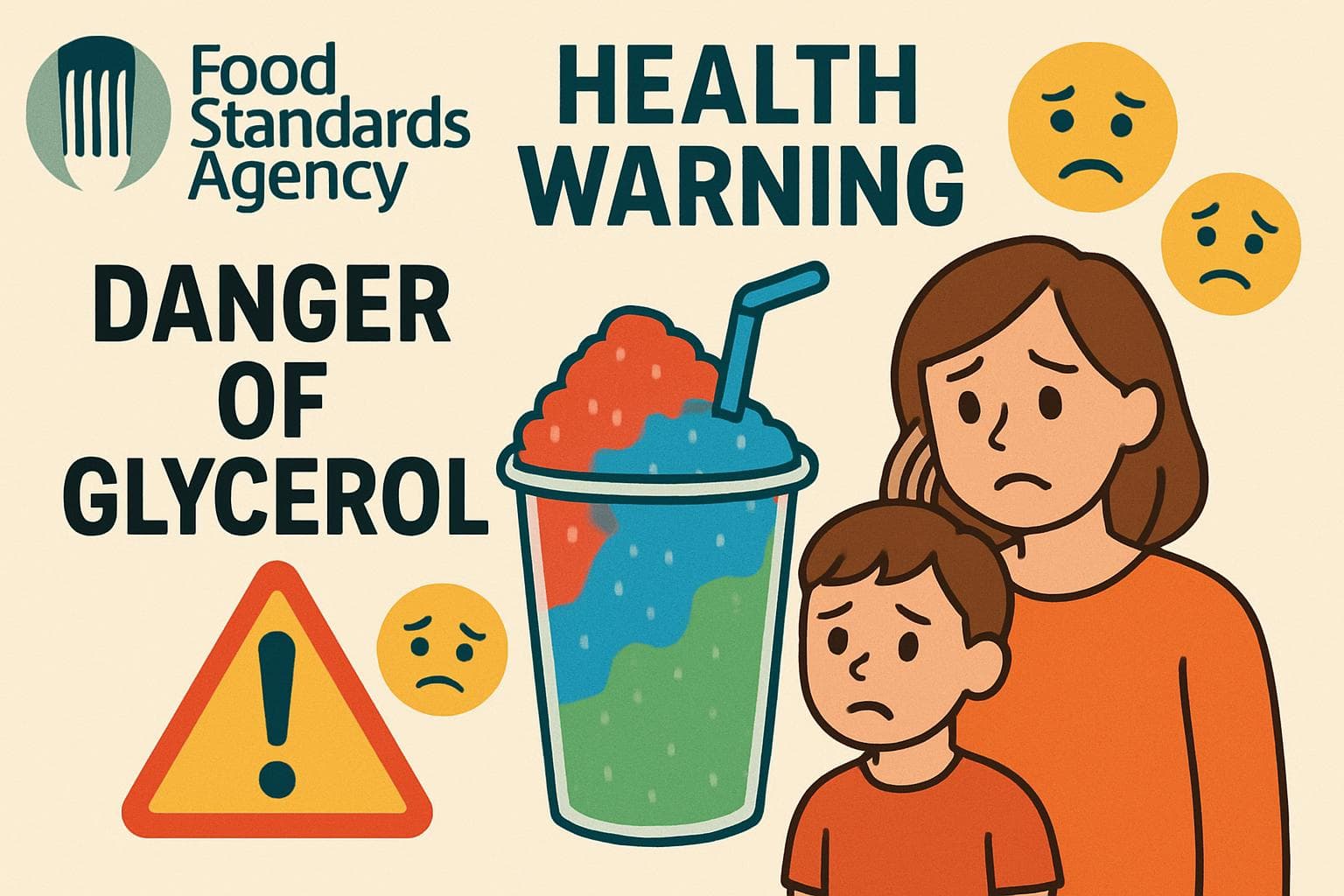
FSA Warns Against Slushies for Young Children Amid Health Concerns
In This Article
HIGHLIGHTS
- The Food Standards Agency (FSA) advises that children under seven should avoid slushies containing glycerol due to potential health risks.
- Glycerol, used to prevent slushies from freezing solid, can cause symptoms like headaches, low blood sugar, and loss of consciousness in children.
- The FSA's updated guidance recommends limiting slushie consumption to one 350ml serving per day for children aged seven to 10.
- Recent studies highlighted cases where children required medical attention after consuming slushies, prompting stricter FSA guidelines.
- The FSA urges vendors to display warnings and minimize glycerol content in slushies, especially during warmer months.
As summer approaches, the Food Standards Agency (FSA) has issued new guidance advising that children under seven should avoid slushies containing glycerol due to potential health risks. Glycerol, a naturally occurring alcohol and sugar substitute, is commonly used in slushies to maintain their semi-frozen texture. However, excessive consumption can lead to symptoms such as headaches, low blood sugar, and even loss of consciousness in young children.
Health Risks and New Guidelines
The FSA's updated recommendations come after a review of medical cases involving children who fell ill after consuming slushies. Between 2018 and 2024, 21 children aged two to seven in the UK and Ireland required emergency treatment after experiencing acute symptoms within an hour of drinking slushies. Although all children recovered, the incidents have prompted the FSA to revise its guidelines.
Previously, the FSA advised that children under four should avoid slushies, with limited consumption for those aged five to 10. The new guidance now recommends that children under seven should not consume these drinks at all, while those aged seven to 10 should limit intake to one 350ml serving per day.
Industry and Parental Responsibilities
Prof Robin May, the FSA's chief scientific advisor, emphasized the importance of parental vigilance, especially during the warmer months when slushie consumption typically increases. "While these drinks may seem harmless, they can pose serious health risks when consumed in large quantities over a short time," he stated.
The FSA is working with the industry to ensure that appropriate warnings are displayed at points of sale. Vendors are encouraged to use the minimum amount of glycerol necessary to achieve the desired slush effect and to avoid offering free refills in venues frequented by young children.
Expert Opinions
Dr. Duane Mellor from the British Dietetic Association noted that while severe reactions are relatively rare, factors such as heat and dehydration can exacerbate symptoms. He suggested alternatives like water, cold milk, or low-sugar ice lollies for children seeking a refreshing drink.
WHAT THIS MIGHT MEAN
The FSA's revised guidelines could lead to increased scrutiny of children's beverages, potentially prompting further research into the safety of other popular drinks. As awareness grows, parents may become more cautious about the ingredients in their children's refreshments, influencing consumer behavior and industry practices. Additionally, the emphasis on clear labeling and warnings could set a precedent for similar measures in other food and beverage sectors, enhancing overall consumer safety.
Related Articles
UK Clinical Trial on Puberty Blockers Paused Amid Safety Concerns

Persistent Safety Concerns in Nottingham Maternity Services Amidst Calls for Systemic Reform

Canada and Australia Forge Strategic Partnership Amid Global Uncertainty

UK Government to Reform Asylum Seeker Support and Employment Policies

Middle East Conflict Drives UK Energy Prices to New Highs

UK Faces Dilemmas Amid Iran Conflict and China Spying Allegations
FSA Warns Against Slushies for Young Children Amid Health Concerns
In This Article
 Maya Singh| Published
 HIGHLIGHTS
- The Food Standards Agency (FSA) advises that children under seven should avoid slushies containing glycerol due to potential health risks.
- Glycerol, used to prevent slushies from freezing solid, can cause symptoms like headaches, low blood sugar, and loss of consciousness in children.
- The FSA's updated guidance recommends limiting slushie consumption to one 350ml serving per day for children aged seven to 10.
- Recent studies highlighted cases where children required medical attention after consuming slushies, prompting stricter FSA guidelines.
- The FSA urges vendors to display warnings and minimize glycerol content in slushies, especially during warmer months.
As summer approaches, the Food Standards Agency (FSA) has issued new guidance advising that children under seven should avoid slushies containing glycerol due to potential health risks. Glycerol, a naturally occurring alcohol and sugar substitute, is commonly used in slushies to maintain their semi-frozen texture. However, excessive consumption can lead to symptoms such as headaches, low blood sugar, and even loss of consciousness in young children.
Health Risks and New Guidelines
The FSA's updated recommendations come after a review of medical cases involving children who fell ill after consuming slushies. Between 2018 and 2024, 21 children aged two to seven in the UK and Ireland required emergency treatment after experiencing acute symptoms within an hour of drinking slushies. Although all children recovered, the incidents have prompted the FSA to revise its guidelines.
Previously, the FSA advised that children under four should avoid slushies, with limited consumption for those aged five to 10. The new guidance now recommends that children under seven should not consume these drinks at all, while those aged seven to 10 should limit intake to one 350ml serving per day.
Industry and Parental Responsibilities
Prof Robin May, the FSA's chief scientific advisor, emphasized the importance of parental vigilance, especially during the warmer months when slushie consumption typically increases. "While these drinks may seem harmless, they can pose serious health risks when consumed in large quantities over a short time," he stated.
The FSA is working with the industry to ensure that appropriate warnings are displayed at points of sale. Vendors are encouraged to use the minimum amount of glycerol necessary to achieve the desired slush effect and to avoid offering free refills in venues frequented by young children.
Expert Opinions
Dr. Duane Mellor from the British Dietetic Association noted that while severe reactions are relatively rare, factors such as heat and dehydration can exacerbate symptoms. He suggested alternatives like water, cold milk, or low-sugar ice lollies for children seeking a refreshing drink.
WHAT THIS MIGHT MEAN
The FSA's revised guidelines could lead to increased scrutiny of children's beverages, potentially prompting further research into the safety of other popular drinks. As awareness grows, parents may become more cautious about the ingredients in their children's refreshments, influencing consumer behavior and industry practices. Additionally, the emphasis on clear labeling and warnings could set a precedent for similar measures in other food and beverage sectors, enhancing overall consumer safety.
Related Articles
UK Clinical Trial on Puberty Blockers Paused Amid Safety Concerns
Persistent Safety Concerns in Nottingham Maternity Services Amidst Calls for Systemic Reform
Canada and Australia Forge Strategic Partnership Amid Global Uncertainty
UK Government to Reform Asylum Seeker Support and Employment Policies
Middle East Conflict Drives UK Energy Prices to New Highs
UK Faces Dilemmas Amid Iran Conflict and China Spying Allegations