
German 'Hammer Gang' Faces Trial Amidst Terrorist Designation
In This Article
HIGHLIGHTS
- Seven alleged members of the far-left group Antifa Ost are on trial in Dresden, Germany, for violent attacks on right-wing extremists.
- The group, known as the "hammer gang," is accused of attempted murder, aggravated assault, and property damage.
- Antifa Ost was recently designated a terrorist organization by the United States, impacting members' international legal status.
- The trial is expected to last until mid-2024, with potential extensions into 2027.
- Key figures Johann G and Paul M are accused of planning attacks and organizing combat training for the group.
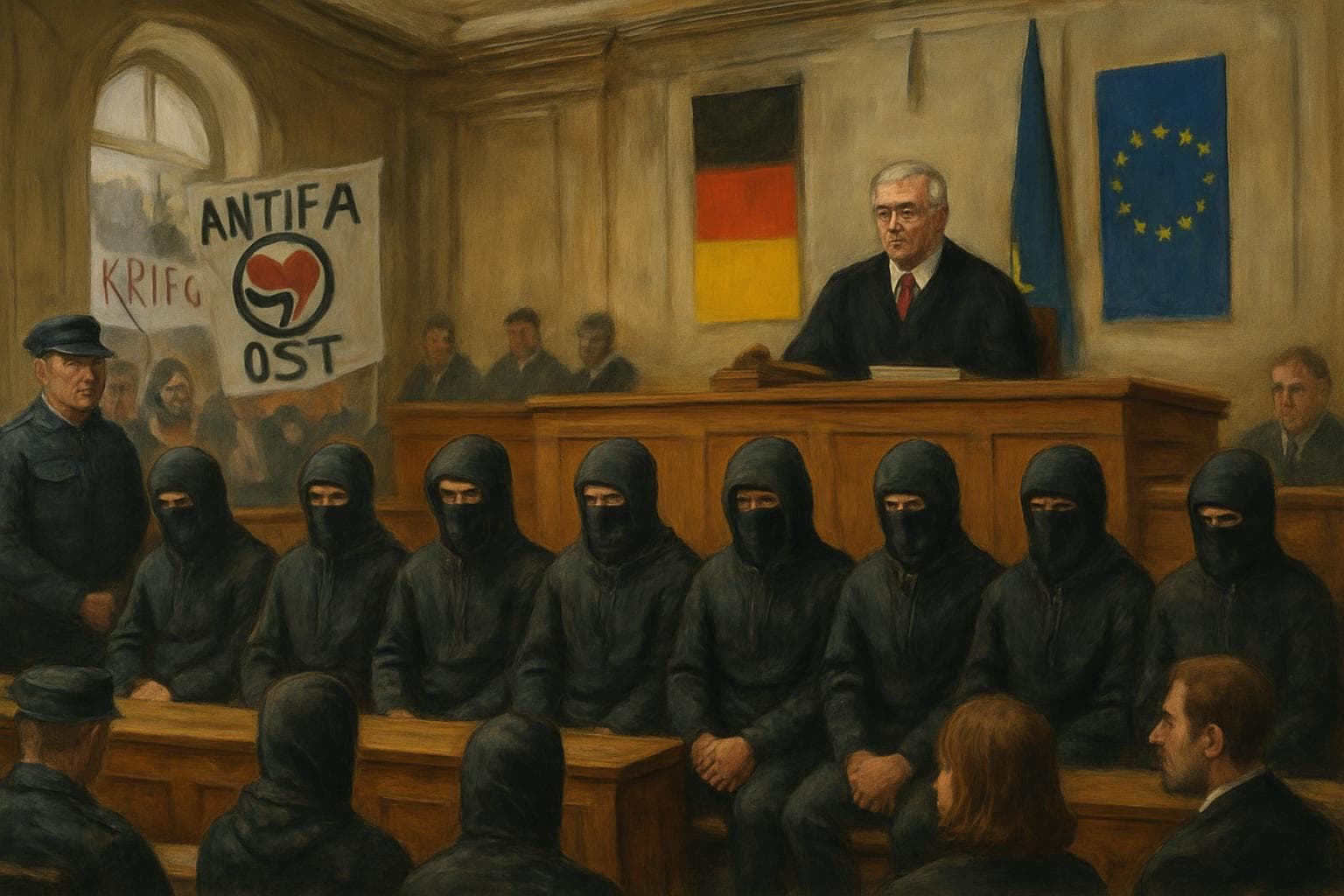
Seven individuals, alleged members of the militant far-left group Antifa Ost, have begun their trial in Dresden, Germany, facing serious charges including attempted murder and aggravated assault. The group, infamously dubbed the "hammer gang," is accused of orchestrating violent attacks against right-wing extremists across Germany and Hungary from 2018 to 2023.
Background and Charges
The defendants, six men and one woman, have been identified only by their first names and initials—Henry A, Tobias E, Johann G, Thomas J, Melissa K, Paul M, and Julian W—due to German privacy laws. Prosecutors allege that the group meticulously planned their attacks, which involved severe beatings with hammers and batons, leaving several victims with life-threatening injuries.
Johann G is alleged to have played a pivotal role in the group, orchestrating attacks and recruiting members. Paul M is accused of organizing combat training sessions and managing depots stocked with weapons and disguises. Notably, the group is charged with attacking four individuals at Dessau-Rosslau train station in January 2019 and participating in violent incidents during the "Day of Honour" event in Budapest in February 2023.
International Implications
Earlier this month, the United States designated Antifa Ost as a terrorist organization, a move that bars its members from entering the U.S., freezes their assets, and criminalizes providing them with material support. This designation is part of a broader crackdown on extreme-left groups by the Trump administration, a decision welcomed by Germany's far-right Alternative for Germany (AfD) party.
Trial and Public Reaction
The trial, which began with supporters rallying outside the Dresden courtroom, is expected to continue until at least mid-2024, with possibilities of extending into 2027. The proceedings have drawn significant attention, highlighting the ongoing tensions between far-left and far-right factions in Germany.
WHAT THIS MIGHT MEAN
As the trial progresses, the legal and political ramifications could be significant. A conviction could lead to harsher penalties for similar groups and potentially influence Germany's domestic policies on handling extremist activities. The U.S. terrorist designation may also strain diplomatic relations, as it pressures European nations to adopt similar stances against far-left groups. Experts suggest that the trial's outcome could either embolden or deter militant activities, depending on the perceived fairness and severity of the judicial process.
Related Articles

Venezuelan Political Prisoners Seek Amnesty Amidst Hopes for Democratic Transition

China Sets Lowest GDP Growth Target in Decades Amid Economic Challenges

Tech Giants Pledge to Cover AI Data Center Energy Costs Amid Rising Electricity Concerns

Cuba Faces Widespread Blackout Amid Deepening Fuel Crisis

UK Faces Dilemmas Amid Iran Conflict and China Spying Allegations

Google Faces Legal Battle Over AI Chatbot's Alleged Role in Tragic Death
German 'Hammer Gang' Faces Trial Amidst Terrorist Designation
In This Article
 Sofia Romano| Published
 HIGHLIGHTS
- Seven alleged members of the far-left group Antifa Ost are on trial in Dresden, Germany, for violent attacks on right-wing extremists.
- The group, known as the "hammer gang," is accused of attempted murder, aggravated assault, and property damage.
- Antifa Ost was recently designated a terrorist organization by the United States, impacting members' international legal status.
- The trial is expected to last until mid-2024, with potential extensions into 2027.
- Key figures Johann G and Paul M are accused of planning attacks and organizing combat training for the group.
Seven individuals, alleged members of the militant far-left group Antifa Ost, have begun their trial in Dresden, Germany, facing serious charges including attempted murder and aggravated assault. The group, infamously dubbed the "hammer gang," is accused of orchestrating violent attacks against right-wing extremists across Germany and Hungary from 2018 to 2023.
Background and Charges
The defendants, six men and one woman, have been identified only by their first names and initials—Henry A, Tobias E, Johann G, Thomas J, Melissa K, Paul M, and Julian W—due to German privacy laws. Prosecutors allege that the group meticulously planned their attacks, which involved severe beatings with hammers and batons, leaving several victims with life-threatening injuries.
Johann G is alleged to have played a pivotal role in the group, orchestrating attacks and recruiting members. Paul M is accused of organizing combat training sessions and managing depots stocked with weapons and disguises. Notably, the group is charged with attacking four individuals at Dessau-Rosslau train station in January 2019 and participating in violent incidents during the "Day of Honour" event in Budapest in February 2023.
International Implications
Earlier this month, the United States designated Antifa Ost as a terrorist organization, a move that bars its members from entering the U.S., freezes their assets, and criminalizes providing them with material support. This designation is part of a broader crackdown on extreme-left groups by the Trump administration, a decision welcomed by Germany's far-right Alternative for Germany (AfD) party.
Trial and Public Reaction
The trial, which began with supporters rallying outside the Dresden courtroom, is expected to continue until at least mid-2024, with possibilities of extending into 2027. The proceedings have drawn significant attention, highlighting the ongoing tensions between far-left and far-right factions in Germany.
WHAT THIS MIGHT MEAN
As the trial progresses, the legal and political ramifications could be significant. A conviction could lead to harsher penalties for similar groups and potentially influence Germany's domestic policies on handling extremist activities. The U.S. terrorist designation may also strain diplomatic relations, as it pressures European nations to adopt similar stances against far-left groups. Experts suggest that the trial's outcome could either embolden or deter militant activities, depending on the perceived fairness and severity of the judicial process.
Related Articles
Venezuelan Political Prisoners Seek Amnesty Amidst Hopes for Democratic Transition
China Sets Lowest GDP Growth Target in Decades Amid Economic Challenges
Tech Giants Pledge to Cover AI Data Center Energy Costs Amid Rising Electricity Concerns
Cuba Faces Widespread Blackout Amid Deepening Fuel Crisis
UK Faces Dilemmas Amid Iran Conflict and China Spying Allegations
Google Faces Legal Battle Over AI Chatbot's Alleged Role in Tragic Death