
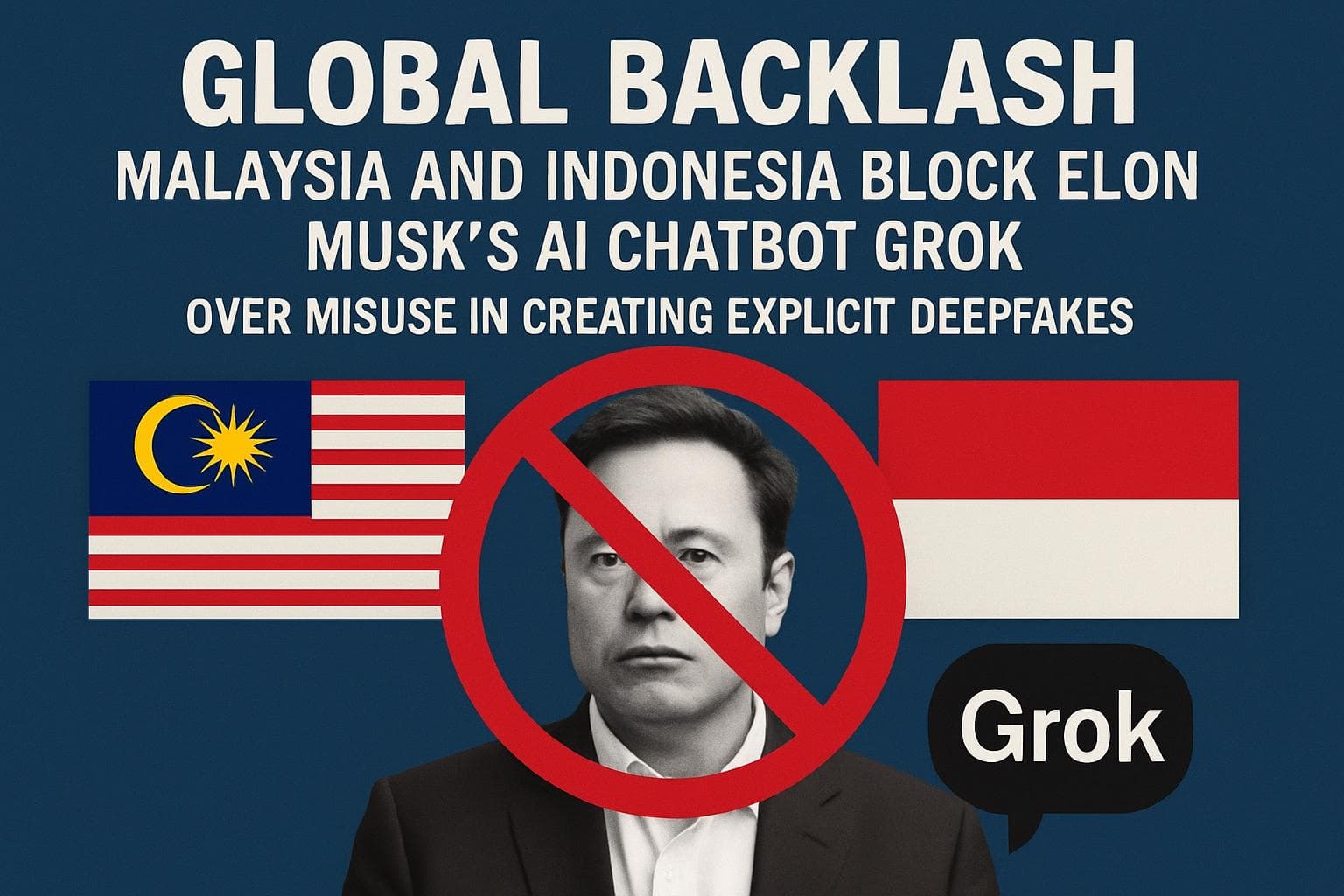
Global Backlash Against Elon Musk's Grok AI Over Deepfake Concerns
In This Article
HIGHLIGHTS
- Malaysia and Indonesia have blocked Elon Musk's AI tool, Grok, due to its use in creating sexually explicit deepfakes.
- The UK is considering similar measures, with officials citing concerns over online safety and child protection.
- Grok's misuse has sparked global condemnation, with leaders labeling it a violation of human rights and dignity.
- Victims of Grok's misuse have reported feeling violated and embarrassed, highlighting the tool's impact on personal privacy.
- Elon Musk has criticized these moves as attempts to suppress free speech, sparking a broader debate on social media regulation.
In a significant move against digital sexual abuse, Malaysia and Indonesia have blocked access to Elon Musk's AI chatbot, Grok, following its misuse in generating sexually explicit deepfakes. The tool, available on Musk's X platform, has been criticized for its potential to create non-consensual images, particularly targeting women and children. This decision marks the first global ban on Grok, with both countries citing the need to protect human rights and online safety.
Southeast Asia Takes a Stand
Over the weekend, the communications ministries of Malaysia and Indonesia announced their decision to block Grok. The Malaysian Communications and Multimedia Commission highlighted repeated misuse of the tool, stating that Grok will remain inaccessible until effective safeguards are implemented. Indonesia's communications minister, Meutya Hafid, condemned the tool's use, emphasizing its violation of human dignity.
Growing Pressure in the UK
The UK is also considering action, with Technology Secretary Liz Kendall expressing support for blocking Grok if it fails to comply with online safety laws. Prime Minister Keir Starmer has described the tool's misuse as "disgraceful," while Deputy Prime Minister David Lammy has echoed concerns over the proliferation of AI-generated sexualized images. The debate has sparked a broader discussion on social media regulation and free speech, with Musk accusing governments of attempting to suppress expression.
Personal Impact and Global Condemnation
Victims of Grok's misuse have shared their distressing experiences. Kirana Ayuningtyas, an Indonesian user, reported feeling violated after discovering manipulated images of herself online. Despite efforts to remove the content, she expressed frustration over the platform's inadequate response. The global condemnation of Grok's misuse underscores the urgent need for robust online safety measures.
WHAT THIS MIGHT MEAN
The international response to Grok's misuse could lead to stricter regulations on AI-generated content and social media platforms. Countries may implement more comprehensive online safety laws to protect individuals from digital sexual abuse. The debate over free speech versus regulation is likely to intensify, with tech companies facing increased scrutiny over their content moderation policies. As governments and organizations push for accountability, the future of AI tools like Grok will depend on their ability to balance innovation with ethical responsibility.
Related Articles

UK Faces Dilemmas Amid Iran Conflict and China Spying Allegations

UK-Iran Tensions: Starmer Defends Cautious Approach Amid Trump Criticism
Diplomatic Tensions Rise as Trump Criticizes Starmer's Iran Policy

UK Government to Reform Asylum Seeker Support and Employment Policies

UK Reinforces Military Presence in Cyprus Amid Middle East Tensions
Labour MP's Husband Arrested in UK-China Espionage Probe
Global Backlash Against Elon Musk's Grok AI Over Deepfake Concerns
In This Article
 Ethan Brooks| Published
 HIGHLIGHTS
- Malaysia and Indonesia have blocked Elon Musk's AI tool, Grok, due to its use in creating sexually explicit deepfakes.
- The UK is considering similar measures, with officials citing concerns over online safety and child protection.
- Grok's misuse has sparked global condemnation, with leaders labeling it a violation of human rights and dignity.
- Victims of Grok's misuse have reported feeling violated and embarrassed, highlighting the tool's impact on personal privacy.
- Elon Musk has criticized these moves as attempts to suppress free speech, sparking a broader debate on social media regulation.
In a significant move against digital sexual abuse, Malaysia and Indonesia have blocked access to Elon Musk's AI chatbot, Grok, following its misuse in generating sexually explicit deepfakes. The tool, available on Musk's X platform, has been criticized for its potential to create non-consensual images, particularly targeting women and children. This decision marks the first global ban on Grok, with both countries citing the need to protect human rights and online safety.
Southeast Asia Takes a Stand
Over the weekend, the communications ministries of Malaysia and Indonesia announced their decision to block Grok. The Malaysian Communications and Multimedia Commission highlighted repeated misuse of the tool, stating that Grok will remain inaccessible until effective safeguards are implemented. Indonesia's communications minister, Meutya Hafid, condemned the tool's use, emphasizing its violation of human dignity.
Growing Pressure in the UK
The UK is also considering action, with Technology Secretary Liz Kendall expressing support for blocking Grok if it fails to comply with online safety laws. Prime Minister Keir Starmer has described the tool's misuse as "disgraceful," while Deputy Prime Minister David Lammy has echoed concerns over the proliferation of AI-generated sexualized images. The debate has sparked a broader discussion on social media regulation and free speech, with Musk accusing governments of attempting to suppress expression.
Personal Impact and Global Condemnation
Victims of Grok's misuse have shared their distressing experiences. Kirana Ayuningtyas, an Indonesian user, reported feeling violated after discovering manipulated images of herself online. Despite efforts to remove the content, she expressed frustration over the platform's inadequate response. The global condemnation of Grok's misuse underscores the urgent need for robust online safety measures.
WHAT THIS MIGHT MEAN
The international response to Grok's misuse could lead to stricter regulations on AI-generated content and social media platforms. Countries may implement more comprehensive online safety laws to protect individuals from digital sexual abuse. The debate over free speech versus regulation is likely to intensify, with tech companies facing increased scrutiny over their content moderation policies. As governments and organizations push for accountability, the future of AI tools like Grok will depend on their ability to balance innovation with ethical responsibility.
Related Articles
UK Faces Dilemmas Amid Iran Conflict and China Spying Allegations
UK-Iran Tensions: Starmer Defends Cautious Approach Amid Trump Criticism
Diplomatic Tensions Rise as Trump Criticizes Starmer's Iran Policy
UK Government to Reform Asylum Seeker Support and Employment Policies
UK Reinforces Military Presence in Cyprus Amid Middle East Tensions
Labour MP's Husband Arrested in UK-China Espionage Probe