
International Outcry Over Israeli Plan for Gaza Relocation Amid Calls for Palestinian State Recognition
In This Article
HIGHLIGHTS
- Israel's Defence Minister proposed a plan to relocate Gazans to a "humanitarian city" in Rafah, sparking international criticism.
- Nearly 60 Labour MPs urged the UK government to recognize Palestine as a state, citing concerns over potential ethnic cleansing in Gaza.
- The proposed Rafah camp plan has faced opposition within Israel, including from the IDF, due to ethical and strategic concerns.
- Human rights groups and legal experts have condemned the plan, labeling it a potential crime against humanity.
- The UK government is under pressure to take a stronger stance on the Israeli-Palestinian conflict, including imposing trade blockades on Israeli settlements.
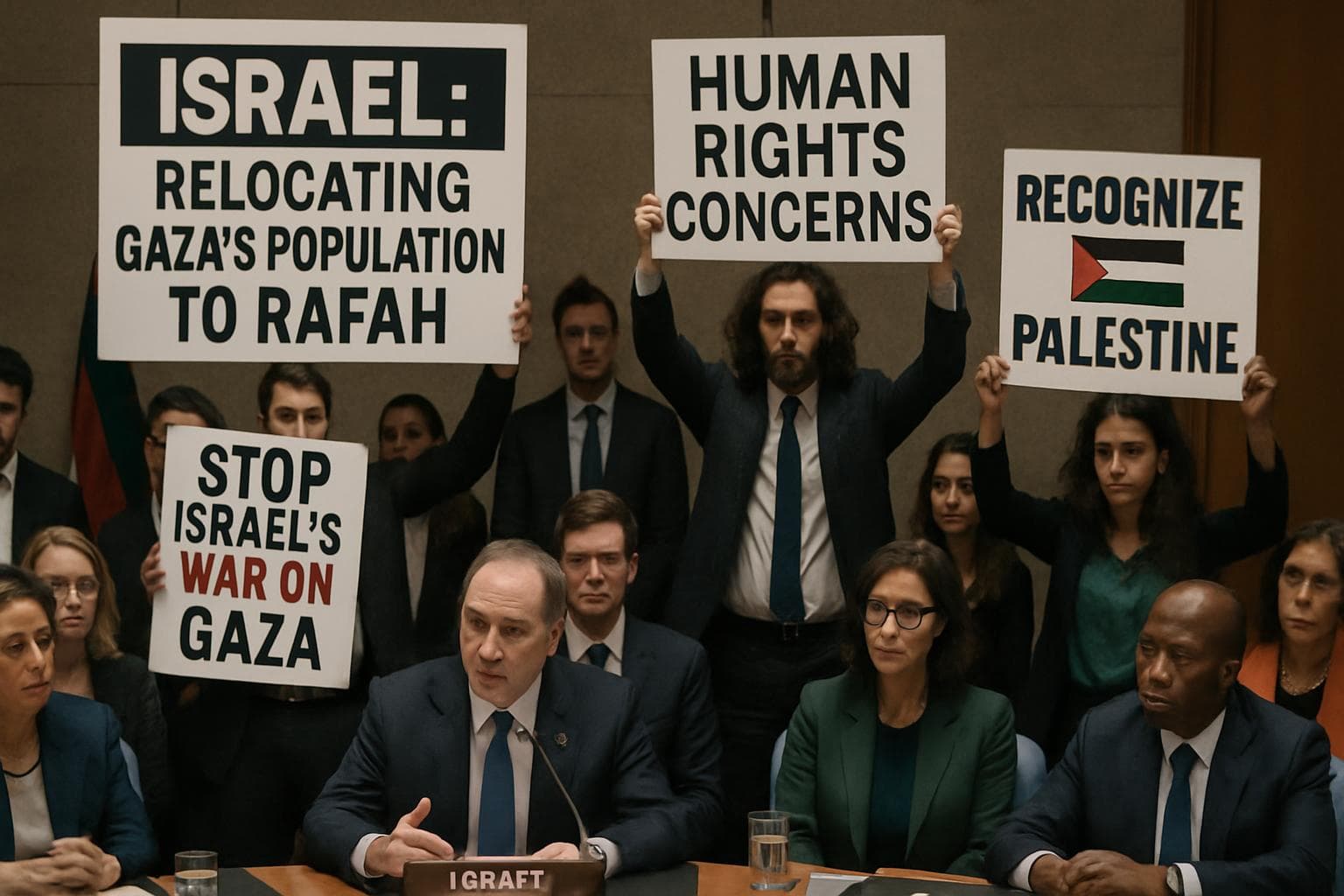
A controversial proposal by Israel's Defence Minister, Israel Katz, to relocate the entire population of Gaza to a "humanitarian city" in Rafah has ignited a storm of criticism both domestically and internationally. The plan, which would involve security screening and restrict movement, has been likened to a "concentration camp" by human rights advocates and legal experts. This proposal comes as negotiations for a 60-day ceasefire between Israel and Hamas are underway, aiming to alleviate the dire humanitarian situation in Gaza.
Domestic and International Backlash
The plan has not only faced backlash from human rights groups but also from within Israel's own military ranks. Reports indicate a heated exchange between Prime Minister Benjamin Netanyahu and IDF Chief of Staff Lt Gen Eyal Zamir, who opposed the forced relocation of civilians. IDF reservist Yotam Vilk, among others, has publicly criticized the plan, calling it a form of ethnic cleansing and genocide.
Political Pressure in the UK
In the UK, nearly 60 Labour MPs have called on the government to immediately recognize Palestine as a state. In a letter to Foreign Secretary David Lammy, the MPs expressed grave concerns over the potential for ethnic cleansing in Gaza, urging the UK to take decisive action against Israel's Rafah plan. This plea aligns with similar calls from French President Emmanuel Macron, who has also advocated for Palestinian statehood.
Humanitarian and Legal Concerns
The proposed Rafah camp would initially house 600,000 Palestinians, eventually expanding to accommodate the entire 2.1 million population of Gaza. Critics argue that this plan lacks a clear post-war strategy for Gaza and could lead to severe humanitarian consequences. Michael Sfard, a prominent Israeli human rights lawyer, described the plan as an "operational plan for crimes against humanity."
WHAT THIS MIGHT MEAN
The unfolding situation in Gaza and the international response could significantly impact the Israeli-Palestinian conflict's trajectory. If Israel proceeds with the Rafah plan, it may face increased diplomatic isolation and potential sanctions. The UK's recognition of Palestinian statehood could shift the geopolitical landscape, influencing other Western nations to follow suit. As ceasefire negotiations continue, the international community's role in mediating a sustainable peace process will be crucial, with potential implications for regional stability and humanitarian relief efforts.
Images from the Web

Related Articles

UK Faces Dilemmas Amid Iran Conflict and China Spying Allegations

UK Government to Reform Asylum Seeker Support and Employment Policies

UK Reinforces Military Presence in Cyprus Amid Middle East Tensions

UK-Iran Tensions: Starmer Defends Cautious Approach Amid Trump Criticism
Iran Postpones Khamenei Funeral Amid Escalating US-Israeli Strikes
Persistent Safety Concerns in Nottingham Maternity Services Amidst Calls for Systemic Reform
International Outcry Over Israeli Plan for Gaza Relocation Amid Calls for Palestinian State Recognition
In This Article
 Ethan Brooks| Published
 HIGHLIGHTS
- Israel's Defence Minister proposed a plan to relocate Gazans to a "humanitarian city" in Rafah, sparking international criticism.
- Nearly 60 Labour MPs urged the UK government to recognize Palestine as a state, citing concerns over potential ethnic cleansing in Gaza.
- The proposed Rafah camp plan has faced opposition within Israel, including from the IDF, due to ethical and strategic concerns.
- Human rights groups and legal experts have condemned the plan, labeling it a potential crime against humanity.
- The UK government is under pressure to take a stronger stance on the Israeli-Palestinian conflict, including imposing trade blockades on Israeli settlements.
A controversial proposal by Israel's Defence Minister, Israel Katz, to relocate the entire population of Gaza to a "humanitarian city" in Rafah has ignited a storm of criticism both domestically and internationally. The plan, which would involve security screening and restrict movement, has been likened to a "concentration camp" by human rights advocates and legal experts. This proposal comes as negotiations for a 60-day ceasefire between Israel and Hamas are underway, aiming to alleviate the dire humanitarian situation in Gaza.
Domestic and International Backlash
The plan has not only faced backlash from human rights groups but also from within Israel's own military ranks. Reports indicate a heated exchange between Prime Minister Benjamin Netanyahu and IDF Chief of Staff Lt Gen Eyal Zamir, who opposed the forced relocation of civilians. IDF reservist Yotam Vilk, among others, has publicly criticized the plan, calling it a form of ethnic cleansing and genocide.
Political Pressure in the UK
In the UK, nearly 60 Labour MPs have called on the government to immediately recognize Palestine as a state. In a letter to Foreign Secretary David Lammy, the MPs expressed grave concerns over the potential for ethnic cleansing in Gaza, urging the UK to take decisive action against Israel's Rafah plan. This plea aligns with similar calls from French President Emmanuel Macron, who has also advocated for Palestinian statehood.
Humanitarian and Legal Concerns
The proposed Rafah camp would initially house 600,000 Palestinians, eventually expanding to accommodate the entire 2.1 million population of Gaza. Critics argue that this plan lacks a clear post-war strategy for Gaza and could lead to severe humanitarian consequences. Michael Sfard, a prominent Israeli human rights lawyer, described the plan as an "operational plan for crimes against humanity."
WHAT THIS MIGHT MEAN
The unfolding situation in Gaza and the international response could significantly impact the Israeli-Palestinian conflict's trajectory. If Israel proceeds with the Rafah plan, it may face increased diplomatic isolation and potential sanctions. The UK's recognition of Palestinian statehood could shift the geopolitical landscape, influencing other Western nations to follow suit. As ceasefire negotiations continue, the international community's role in mediating a sustainable peace process will be crucial, with potential implications for regional stability and humanitarian relief efforts.
Images from the Web
Related Articles
UK Faces Dilemmas Amid Iran Conflict and China Spying Allegations
UK Government to Reform Asylum Seeker Support and Employment Policies
UK Reinforces Military Presence in Cyprus Amid Middle East Tensions
UK-Iran Tensions: Starmer Defends Cautious Approach Amid Trump Criticism
Iran Postpones Khamenei Funeral Amid Escalating US-Israeli Strikes
Persistent Safety Concerns in Nottingham Maternity Services Amidst Calls for Systemic Reform