
High Court Ruling on Epping Hotel Sparks Nationwide Legal Challenges
In This Article
HIGHLIGHTS
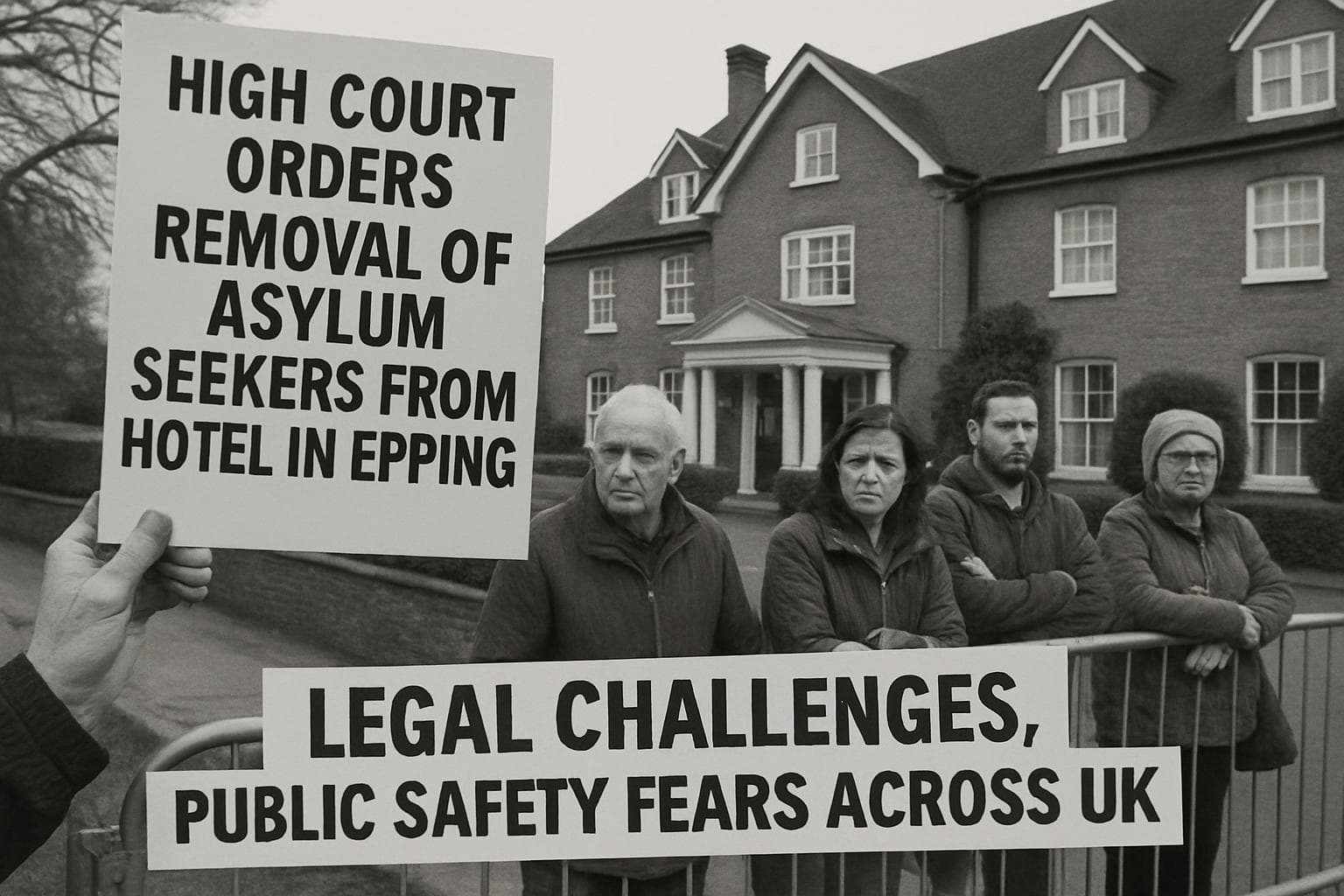
- The High Court ruled that asylum seekers must be removed from The Bell Hotel in Epping by 12 September, citing planning law breaches.
- The ruling has prompted other councils across England to consider similar legal challenges against asylum seeker hotels.
- The Home Office faces pressure to find alternative accommodation for asylum seekers as protests and legal actions increase.
- Reform UK and Conservative councils are actively exploring legal options to block the use of hotels for asylum seekers.
- Asylum seekers at The Bell Hotel report facing hostility and uncertainty following the court's decision.
The recent High Court decision mandating the removal of asylum seekers from The Bell Hotel in Epping has ignited a wave of potential legal challenges across England. The ruling, which cited breaches of planning laws, has set a precedent that other councils are eager to follow, as they grapple with the pressures of housing asylum seekers in local hotels.
Legal Precedent and Community Impact
The Epping Forest District Council successfully argued that the hotel's use as asylum accommodation violated planning regulations and posed a safety risk. The decision, which requires the relocation of approximately 140 asylum seekers by 12 September, has been hailed by local leaders as a victory for community safety. Chris Whitbread, the council leader, emphasized the importance of addressing public safety concerns, particularly given the hotel's proximity to schools and residential areas.
Nationwide Repercussions
Following the ruling, councils such as Broxbourne and West Northamptonshire are assessing their legal options. Reform UK and Conservative leaders, including Kemi Badenoch, have encouraged councils to pursue similar actions, citing the strain on local services. The Home Office, tasked with finding alternative accommodations, faces increased pressure as protests and legal actions mount.
Voices from the Ground
Asylum seekers at The Bell Hotel, like Khador Mohamed from Somalia, express feelings of hostility and uncertainty. Mohamed described being treated like a criminal and facing verbal abuse from locals. Despite the challenges, he remains hopeful for a resolution that allows him to work and integrate into society.
Government Response and Future Plans
The government, committed to ending the use of hotels for asylum seekers by the end of the current Parliament, is exploring alternative housing solutions. Security Minister Dan Jarvis acknowledged the unsustainability of hotel accommodations and emphasized the need for a comprehensive strategy.
WHAT THIS MIGHT MEAN
The High Court ruling could lead to a cascade of legal challenges from councils across the UK, potentially overwhelming the Home Office's capacity to manage asylum accommodations. If more councils succeed in blocking hotel use, the government may need to expedite its search for alternative housing solutions, such as dispersal accommodation or temporary camps. Experts warn that without a cohesive national strategy, the situation could exacerbate tensions in local communities and strain public services further. The outcome of the Epping case and subsequent appeals will likely shape the future of asylum accommodation policy in the UK.
Images from the Web

Related Articles

UK Government to Reform Asylum Seeker Support and Employment Policies

UK-Iran Tensions: Starmer Defends Cautious Approach Amid Trump Criticism

Reform UK Aims to Reshape Welsh Politics with New Manifesto

UK Faces Dilemmas Amid Iran Conflict and China Spying Allegations

UK Reinforces Military Presence in Cyprus Amid Middle East Tensions
Persistent Safety Concerns in Nottingham Maternity Services Amidst Calls for Systemic Reform
High Court Ruling on Epping Hotel Sparks Nationwide Legal Challenges
In This Article
 Ethan Brooks| Published
 HIGHLIGHTS
- The High Court ruled that asylum seekers must be removed from The Bell Hotel in Epping by 12 September, citing planning law breaches.
- The ruling has prompted other councils across England to consider similar legal challenges against asylum seeker hotels.
- The Home Office faces pressure to find alternative accommodation for asylum seekers as protests and legal actions increase.
- Reform UK and Conservative councils are actively exploring legal options to block the use of hotels for asylum seekers.
- Asylum seekers at The Bell Hotel report facing hostility and uncertainty following the court's decision.
The recent High Court decision mandating the removal of asylum seekers from The Bell Hotel in Epping has ignited a wave of potential legal challenges across England. The ruling, which cited breaches of planning laws, has set a precedent that other councils are eager to follow, as they grapple with the pressures of housing asylum seekers in local hotels.
Legal Precedent and Community Impact
The Epping Forest District Council successfully argued that the hotel's use as asylum accommodation violated planning regulations and posed a safety risk. The decision, which requires the relocation of approximately 140 asylum seekers by 12 September, has been hailed by local leaders as a victory for community safety. Chris Whitbread, the council leader, emphasized the importance of addressing public safety concerns, particularly given the hotel's proximity to schools and residential areas.
Nationwide Repercussions
Following the ruling, councils such as Broxbourne and West Northamptonshire are assessing their legal options. Reform UK and Conservative leaders, including Kemi Badenoch, have encouraged councils to pursue similar actions, citing the strain on local services. The Home Office, tasked with finding alternative accommodations, faces increased pressure as protests and legal actions mount.
Voices from the Ground
Asylum seekers at The Bell Hotel, like Khador Mohamed from Somalia, express feelings of hostility and uncertainty. Mohamed described being treated like a criminal and facing verbal abuse from locals. Despite the challenges, he remains hopeful for a resolution that allows him to work and integrate into society.
Government Response and Future Plans
The government, committed to ending the use of hotels for asylum seekers by the end of the current Parliament, is exploring alternative housing solutions. Security Minister Dan Jarvis acknowledged the unsustainability of hotel accommodations and emphasized the need for a comprehensive strategy.
WHAT THIS MIGHT MEAN
The High Court ruling could lead to a cascade of legal challenges from councils across the UK, potentially overwhelming the Home Office's capacity to manage asylum accommodations. If more councils succeed in blocking hotel use, the government may need to expedite its search for alternative housing solutions, such as dispersal accommodation or temporary camps. Experts warn that without a cohesive national strategy, the situation could exacerbate tensions in local communities and strain public services further. The outcome of the Epping case and subsequent appeals will likely shape the future of asylum accommodation policy in the UK.
Images from the Web
Related Articles
UK Government to Reform Asylum Seeker Support and Employment Policies
UK-Iran Tensions: Starmer Defends Cautious Approach Amid Trump Criticism
Reform UK Aims to Reshape Welsh Politics with New Manifesto
UK Faces Dilemmas Amid Iran Conflict and China Spying Allegations
UK Reinforces Military Presence in Cyprus Amid Middle East Tensions
Persistent Safety Concerns in Nottingham Maternity Services Amidst Calls for Systemic Reform