
Honduras Election: Asfura Leads Amid Trump’s Aid Threats
In This Article
HIGHLIGHTS
- Nasry Asfura leads the Honduran presidential race with 40.6% of the vote, closely followed by Salvador Nasralla at 38.8%.
- Donald Trump has threatened to cut US aid to Honduras if Asfura, his preferred candidate, does not win.
- Rixi Moncada, the ruling Libre party candidate, has accused Trump of interventionism in the election.
- The election is seen as a pivotal moment for Honduras, potentially shifting the country's political landscape to the right.
- Pre-emptive fraud accusations have raised concerns about potential post-election unrest.
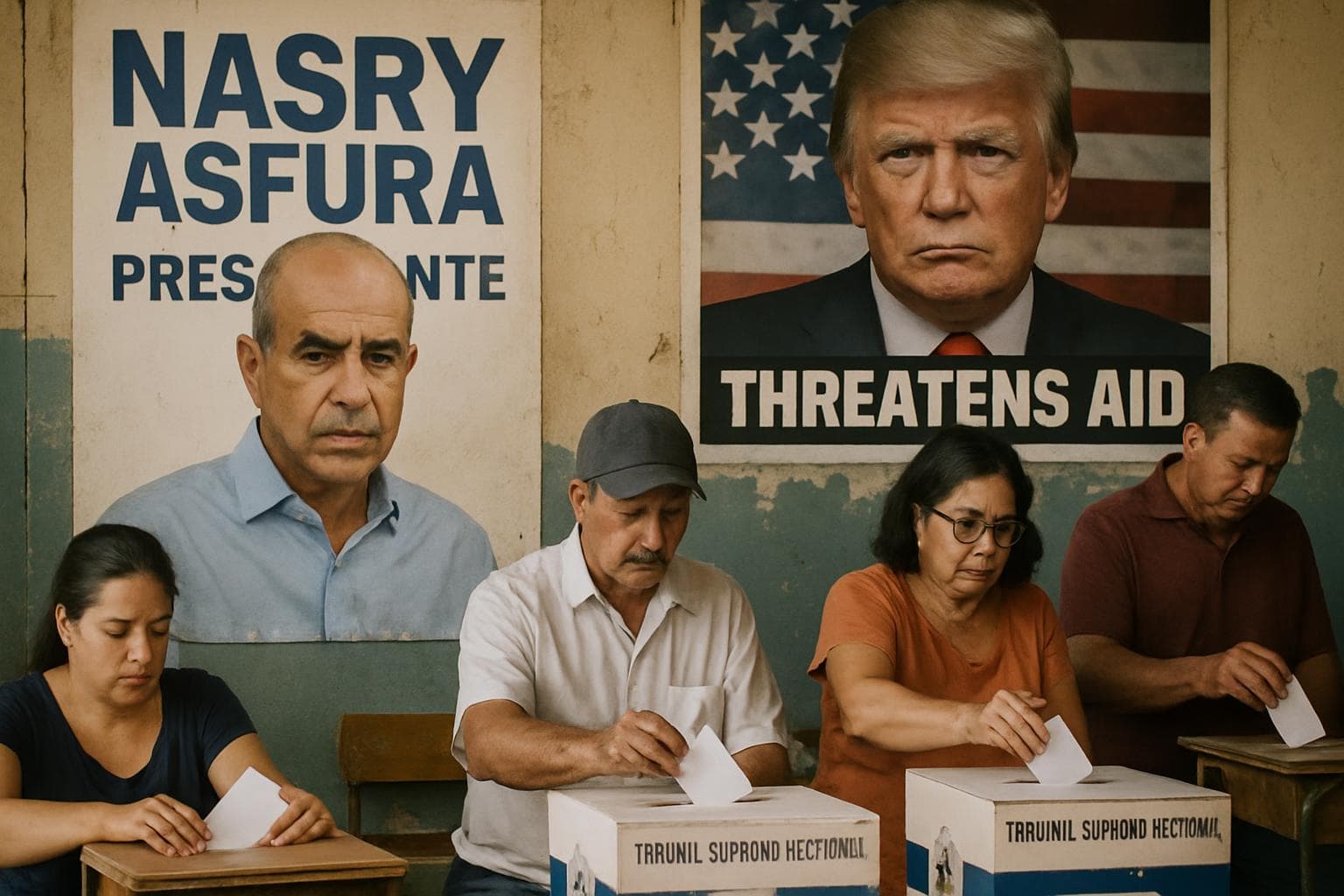
Early results from the Honduran presidential election show Nasry Asfura, the right-wing National Party candidate, narrowly leading with 40.6% of the vote. His closest rival, Salvador Nasralla, trails slightly with 38.8%, according to the electoral council's initial update. The election, which could mark a significant shift in Honduras' political landscape, has been closely watched due to former US President Donald Trump's involvement.
Trump's Influence and Aid Threats
Trump has openly backed Asfura, warning that US financial aid to Honduras could be cut if his preferred candidate does not win. "If he doesn't win, the United States will not be throwing good money after bad," Trump stated on his social media platform, Truth Social. The US has already reduced its aid to Honduras, with $167 million in economic and governance aid earmarked for 2024 and 2025 reportedly cut.
Candidates and Political Context
The election is a three-way race involving Asfura, Nasralla, and Rixi Moncada of the ruling Libre party. Moncada, a 60-year-old lawyer, has accused Trump of meddling in the election, calling his endorsement of Asfura "totally interventionist." Moncada has positioned herself as a defender of Honduras' natural resources and a staunch opponent of corruption.
Potential for Political Shift
This election could see Honduras joining other Latin American countries like Argentina and Bolivia in a rightward political shift after years of left-wing governance. The incumbent president, Xiomara Castro, who was not on the ballot, has endorsed Moncada as her successor. The election has been marked by accusations of potential fraud, raising fears of unrest once the final results are announced.
WHAT THIS MIGHT MEAN
As the vote count continues, the political future of Honduras hangs in the balance. If Asfura secures victory, it could lead to strengthened ties with the US under Trump's influence, potentially impacting Honduras' domestic policies and international relations. Conversely, a win for Moncada might maintain the current left-wing trajectory, focusing on social reforms and anti-corruption measures. The looming threat of aid cuts could exacerbate economic challenges, influencing voter sentiment and political stability in the region. Experts warn that pre-emptive fraud accusations could lead to post-election unrest, underscoring the need for transparent and fair electoral processes.
Related Articles
Cuba Faces Widespread Blackout Amid Deepening Fuel Crisis
Spain's Sánchez Stands Firm Against Trump's Trade Threat Over Iran Stance

Greenland Politely Declines Trump's Hospital Ship Offer Amid Healthcare Debate

Tech Giants Pledge to Cover AI Data Center Energy Costs Amid Rising Electricity Concerns
Congress Subpoenas Attorney General Bondi in Epstein Investigation

UK Faces Dilemmas Amid Iran Conflict and China Spying Allegations
Honduras Election: Asfura Leads Amid Trump’s Aid Threats
In This Article
HIGHLIGHTS
- Nasry Asfura leads the Honduran presidential race with 40.6% of the vote, closely followed by Salvador Nasralla at 38.8%.
- Donald Trump has threatened to cut US aid to Honduras if Asfura, his preferred candidate, does not win.
- Rixi Moncada, the ruling Libre party candidate, has accused Trump of interventionism in the election.
- The election is seen as a pivotal moment for Honduras, potentially shifting the country's political landscape to the right.
- Pre-emptive fraud accusations have raised concerns about potential post-election unrest.
Early results from the Honduran presidential election show Nasry Asfura, the right-wing National Party candidate, narrowly leading with 40.6% of the vote. His closest rival, Salvador Nasralla, trails slightly with 38.8%, according to the electoral council's initial update. The election, which could mark a significant shift in Honduras' political landscape, has been closely watched due to former US President Donald Trump's involvement.
Trump's Influence and Aid Threats
Trump has openly backed Asfura, warning that US financial aid to Honduras could be cut if his preferred candidate does not win. "If he doesn't win, the United States will not be throwing good money after bad," Trump stated on his social media platform, Truth Social. The US has already reduced its aid to Honduras, with $167 million in economic and governance aid earmarked for 2024 and 2025 reportedly cut.
Candidates and Political Context
The election is a three-way race involving Asfura, Nasralla, and Rixi Moncada of the ruling Libre party. Moncada, a 60-year-old lawyer, has accused Trump of meddling in the election, calling his endorsement of Asfura "totally interventionist." Moncada has positioned herself as a defender of Honduras' natural resources and a staunch opponent of corruption.
Potential for Political Shift
This election could see Honduras joining other Latin American countries like Argentina and Bolivia in a rightward political shift after years of left-wing governance. The incumbent president, Xiomara Castro, who was not on the ballot, has endorsed Moncada as her successor. The election has been marked by accusations of potential fraud, raising fears of unrest once the final results are announced.
WHAT THIS MIGHT MEAN
As the vote count continues, the political future of Honduras hangs in the balance. If Asfura secures victory, it could lead to strengthened ties with the US under Trump's influence, potentially impacting Honduras' domestic policies and international relations. Conversely, a win for Moncada might maintain the current left-wing trajectory, focusing on social reforms and anti-corruption measures. The looming threat of aid cuts could exacerbate economic challenges, influencing voter sentiment and political stability in the region. Experts warn that pre-emptive fraud accusations could lead to post-election unrest, underscoring the need for transparent and fair electoral processes.
Related Articles
Cuba Faces Widespread Blackout Amid Deepening Fuel Crisis
Spain's Sánchez Stands Firm Against Trump's Trade Threat Over Iran Stance
Greenland Politely Declines Trump's Hospital Ship Offer Amid Healthcare Debate
Tech Giants Pledge to Cover AI Data Center Energy Costs Amid Rising Electricity Concerns
Congress Subpoenas Attorney General Bondi in Epstein Investigation
UK Faces Dilemmas Amid Iran Conflict and China Spying Allegations