
Indonesia Grapples with Devastating Floods as Cyclone Senyar Wreaks Havoc
In This Article
HIGHLIGHTS
- Cyclone Senyar has caused catastrophic flooding in Indonesia, with over 442 confirmed deaths and hundreds missing.
- Nearly 300,000 people have been displaced, and aid distribution has been hampered by damaged infrastructure and bureaucratic delays.
- Criticism mounts against the Indonesian government for its slow response, with calls for a state of emergency in Sumatra.
- Rescuers are struggling to reach isolated areas, with some residents resorting to looting due to lack of supplies.
- The climate crisis is exacerbating storm patterns, leading to more severe weather events across Southeast Asia.
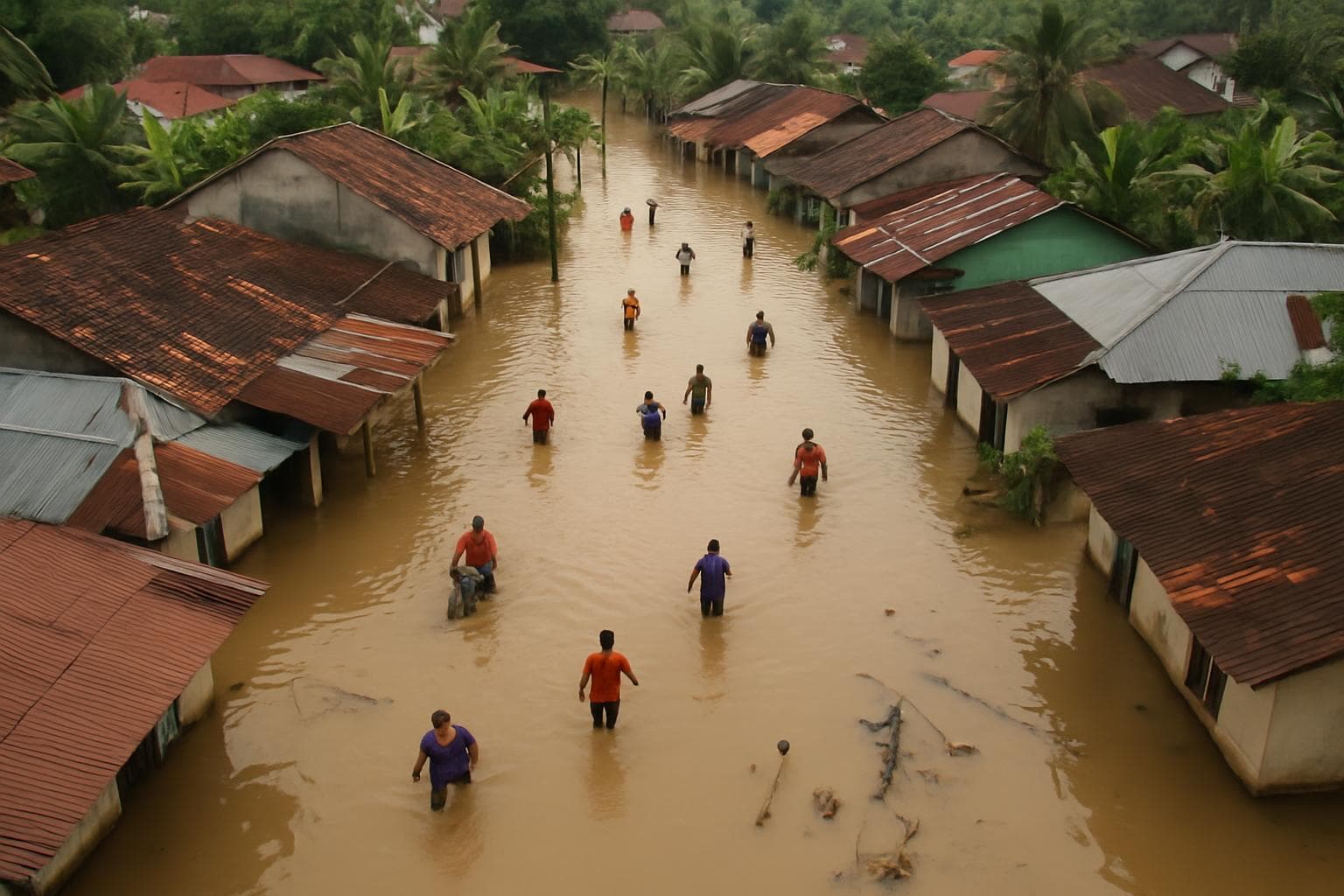
Indonesia is facing a humanitarian crisis as Cyclone Senyar has unleashed devastating floods across the island of Sumatra, resulting in over 442 deaths and leaving hundreds missing. The cyclone, a rare occurrence in the region, has displaced nearly 300,000 people and caused widespread destruction, with thousands of homes damaged or destroyed.
Government Response Under Scrutiny
The Indonesian government, led by President Joko Widodo, is under intense scrutiny for its handling of the disaster. Critics argue that the response has been sluggish, with bureaucratic hurdles delaying the distribution of essential aid. Suharyanto, head of the National Disaster Management Agency, has acknowledged the challenges, stating that efforts are underway to reach the hardest-hit areas, including Central Tapanuli and Sibolga.
Struggles in Isolated Regions
In many affected regions, roads remain impassable, complicating rescue and relief operations. Reports of looting have emerged as desperate residents, cut off from aid, struggle to find food and water. Police spokesperson Ferry Walintukan confirmed that law enforcement has been deployed to restore order in areas like Sumatra, where looting occurred before aid could arrive.
Climate Crisis Intensifies Weather Patterns
The impact of the climate crisis is evident, with experts noting that the severity of Cyclone Senyar and other recent weather events in Southeast Asia are linked to changing storm patterns. Andri Ramdhani from Indonesia's Meteorology, Climatology, and Geophysics Agency highlighted the increasing frequency of such cyclones, which are bringing more intense rainfall and flooding.
International Aid and Local Efforts
While the Indonesian government has not formally requested international assistance, neighboring countries like Malaysia have sent medical supplies to aid the relief efforts. Volunteers on the ground are working tirelessly to distribute aid, often on foot or by motorcycle, as they navigate the challenging terrain.
WHAT THIS MIGHT MEAN
As Indonesia continues to grapple with the aftermath of Cyclone Senyar, the focus will likely shift to long-term recovery and rebuilding efforts. The government may face increased pressure to improve disaster preparedness and infrastructure resilience to mitigate future risks. Additionally, the international community could play a crucial role in supporting Indonesia's recovery, particularly if the government decides to seek external assistance. The situation underscores the urgent need for global action on climate change to address the root causes of increasingly severe weather events.
Related Articles

US Military Intervention in Venezuela: Maduro Captured Amidst Global Controversy
US Supreme Court Ruling Sparks Trade Uncertainty in Asia and Beyond

Indonesia Prepares Historic Troop Deployment to Gaza Under US Peace Plan

California Launches Investigation into Elon Musk's Grok AI Over Deepfake Controversy

Global Backlash Forces X to Restrict Grok AI Amid Deepfake Controversy

UK Investigates Elon Musk's X Over Grok AI Deepfake Concerns
Indonesia Grapples with Devastating Floods as Cyclone Senyar Wreaks Havoc
In This Article
 Ethan Brooks| Published
 HIGHLIGHTS
- Cyclone Senyar has caused catastrophic flooding in Indonesia, with over 442 confirmed deaths and hundreds missing.
- Nearly 300,000 people have been displaced, and aid distribution has been hampered by damaged infrastructure and bureaucratic delays.
- Criticism mounts against the Indonesian government for its slow response, with calls for a state of emergency in Sumatra.
- Rescuers are struggling to reach isolated areas, with some residents resorting to looting due to lack of supplies.
- The climate crisis is exacerbating storm patterns, leading to more severe weather events across Southeast Asia.
Indonesia is facing a humanitarian crisis as Cyclone Senyar has unleashed devastating floods across the island of Sumatra, resulting in over 442 deaths and leaving hundreds missing. The cyclone, a rare occurrence in the region, has displaced nearly 300,000 people and caused widespread destruction, with thousands of homes damaged or destroyed.
Government Response Under Scrutiny
The Indonesian government, led by President Joko Widodo, is under intense scrutiny for its handling of the disaster. Critics argue that the response has been sluggish, with bureaucratic hurdles delaying the distribution of essential aid. Suharyanto, head of the National Disaster Management Agency, has acknowledged the challenges, stating that efforts are underway to reach the hardest-hit areas, including Central Tapanuli and Sibolga.
Struggles in Isolated Regions
In many affected regions, roads remain impassable, complicating rescue and relief operations. Reports of looting have emerged as desperate residents, cut off from aid, struggle to find food and water. Police spokesperson Ferry Walintukan confirmed that law enforcement has been deployed to restore order in areas like Sumatra, where looting occurred before aid could arrive.
Climate Crisis Intensifies Weather Patterns
The impact of the climate crisis is evident, with experts noting that the severity of Cyclone Senyar and other recent weather events in Southeast Asia are linked to changing storm patterns. Andri Ramdhani from Indonesia's Meteorology, Climatology, and Geophysics Agency highlighted the increasing frequency of such cyclones, which are bringing more intense rainfall and flooding.
International Aid and Local Efforts
While the Indonesian government has not formally requested international assistance, neighboring countries like Malaysia have sent medical supplies to aid the relief efforts. Volunteers on the ground are working tirelessly to distribute aid, often on foot or by motorcycle, as they navigate the challenging terrain.
WHAT THIS MIGHT MEAN
As Indonesia continues to grapple with the aftermath of Cyclone Senyar, the focus will likely shift to long-term recovery and rebuilding efforts. The government may face increased pressure to improve disaster preparedness and infrastructure resilience to mitigate future risks. Additionally, the international community could play a crucial role in supporting Indonesia's recovery, particularly if the government decides to seek external assistance. The situation underscores the urgent need for global action on climate change to address the root causes of increasingly severe weather events.
Related Articles
US Military Intervention in Venezuela: Maduro Captured Amidst Global Controversy
US Supreme Court Ruling Sparks Trade Uncertainty in Asia and Beyond
Indonesia Prepares Historic Troop Deployment to Gaza Under US Peace Plan
California Launches Investigation into Elon Musk's Grok AI Over Deepfake Controversy
Global Backlash Forces X to Restrict Grok AI Amid Deepfake Controversy
UK Investigates Elon Musk's X Over Grok AI Deepfake Concerns