
Indonesia's Decision to Honor Suharto as a National Hero Sparks Controversy
In This Article
HIGHLIGHTS
- Indonesia has named former dictator Suharto a national hero, sparking protests and accusations of historical revisionism.
- Suharto's rule from the 1960s to the 1990s was marked by economic growth but also severe human rights violations.
- President Prabowo Subianto, Suharto's former son-in-law, presided over the award ceremony, intensifying public backlash.
- Civil society groups and Amnesty International Indonesia have condemned the move as an attempt to whitewash Suharto's authoritarian legacy.
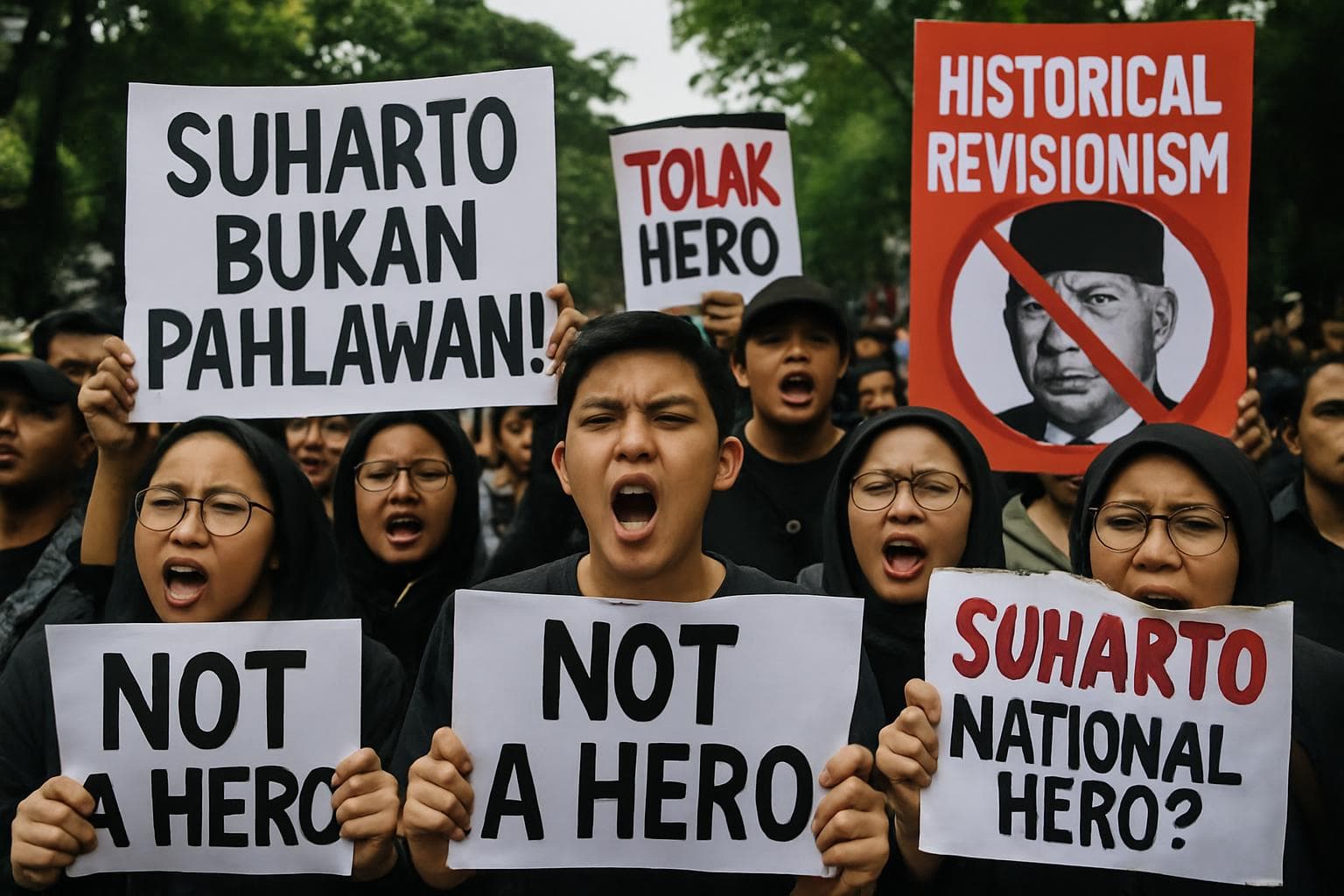
- Protests have erupted in Jakarta, with demonstrators opposing the glorification of Suharto's controversial past.
Indonesia's recent decision to bestow the title of national hero upon former president Suharto has ignited a wave of protests and accusations of historical revisionism. The award, conferred in a ceremony on Monday by President Prabowo Subianto, Suharto's former son-in-law, has been met with significant opposition from civil society groups and human rights activists.
A Controversial Legacy
Suharto's tenure from the 1960s to the 1990s was characterized by rapid economic growth, transforming Indonesia into Southeast Asia's largest economy. However, his rule was also marked by severe political repression, with estimates of hundreds of thousands of political dissenters killed. Despite these human rights violations, the Indonesian government has chosen to honor Suharto for his contributions to the country's development and independence efforts.
Public Backlash and Protests
The decision has sparked outrage among pro-democracy activists and the families of those affected by Suharto's authoritarian regime. Amnesty International Indonesia has criticized the move as an attempt to "whitewash" Suharto's brutal legacy, while protests have erupted in Jakarta, with demonstrators holding signs denouncing the glorification of his past.
Political Implications
President Prabowo Subianto's involvement in the ceremony has further fueled public discontent. As a former special forces commander, Prabowo has faced criticism for his own human rights record, including allegations of involvement in the abduction of pro-democracy activists. His defense of Suharto's hero status has raised concerns about the increasing prominence of the military in Indonesian civilian life.
WHAT THIS MIGHT MEAN
The decision to honor Suharto as a national hero could have significant implications for Indonesia's political landscape. It may embolden those who seek to downplay the human rights abuses of the past, potentially undermining efforts to achieve justice for victims. The protests in Jakarta indicate a strong public sentiment against historical revisionism, which could influence future policy decisions.
Experts suggest that the controversy may also impact President Prabowo Subianto's political standing, as his association with Suharto's legacy could alienate pro-democracy supporters. As Indonesia continues to grapple with its past, the government's actions will likely be scrutinized both domestically and internationally, shaping the country's democratic trajectory.
Related Articles

US Supreme Court Ruling Sparks Trade Uncertainty in Asia and Beyond
Indonesia Prepares Historic Troop Deployment to Gaza Under US Peace Plan

Ancient Hand Stencil in Indonesian Cave Redefines Human Creativity Timeline
Cambodia's Crackdown on Scam Operations Intensifies Amid International Pressure

California Launches Investigation into Elon Musk's Grok AI Over Deepfake Controversy

Global Backlash Forces X to Restrict Grok AI Amid Deepfake Controversy
Indonesia's Decision to Honor Suharto as a National Hero Sparks Controversy
In This Article
 Alex Carter| Published
 HIGHLIGHTS
- Indonesia has named former dictator Suharto a national hero, sparking protests and accusations of historical revisionism.
- Suharto's rule from the 1960s to the 1990s was marked by economic growth but also severe human rights violations.
- President Prabowo Subianto, Suharto's former son-in-law, presided over the award ceremony, intensifying public backlash.
- Civil society groups and Amnesty International Indonesia have condemned the move as an attempt to whitewash Suharto's authoritarian legacy.
- Protests have erupted in Jakarta, with demonstrators opposing the glorification of Suharto's controversial past.
Indonesia's recent decision to bestow the title of national hero upon former president Suharto has ignited a wave of protests and accusations of historical revisionism. The award, conferred in a ceremony on Monday by President Prabowo Subianto, Suharto's former son-in-law, has been met with significant opposition from civil society groups and human rights activists.
A Controversial Legacy
Suharto's tenure from the 1960s to the 1990s was characterized by rapid economic growth, transforming Indonesia into Southeast Asia's largest economy. However, his rule was also marked by severe political repression, with estimates of hundreds of thousands of political dissenters killed. Despite these human rights violations, the Indonesian government has chosen to honor Suharto for his contributions to the country's development and independence efforts.
Public Backlash and Protests
The decision has sparked outrage among pro-democracy activists and the families of those affected by Suharto's authoritarian regime. Amnesty International Indonesia has criticized the move as an attempt to "whitewash" Suharto's brutal legacy, while protests have erupted in Jakarta, with demonstrators holding signs denouncing the glorification of his past.
Political Implications
President Prabowo Subianto's involvement in the ceremony has further fueled public discontent. As a former special forces commander, Prabowo has faced criticism for his own human rights record, including allegations of involvement in the abduction of pro-democracy activists. His defense of Suharto's hero status has raised concerns about the increasing prominence of the military in Indonesian civilian life.
WHAT THIS MIGHT MEAN
The decision to honor Suharto as a national hero could have significant implications for Indonesia's political landscape. It may embolden those who seek to downplay the human rights abuses of the past, potentially undermining efforts to achieve justice for victims. The protests in Jakarta indicate a strong public sentiment against historical revisionism, which could influence future policy decisions.
Experts suggest that the controversy may also impact President Prabowo Subianto's political standing, as his association with Suharto's legacy could alienate pro-democracy supporters. As Indonesia continues to grapple with its past, the government's actions will likely be scrutinized both domestically and internationally, shaping the country's democratic trajectory.
Related Articles
US Supreme Court Ruling Sparks Trade Uncertainty in Asia and Beyond
Indonesia Prepares Historic Troop Deployment to Gaza Under US Peace Plan
Ancient Hand Stencil in Indonesian Cave Redefines Human Creativity Timeline
Cambodia's Crackdown on Scam Operations Intensifies Amid International Pressure
California Launches Investigation into Elon Musk's Grok AI Over Deepfake Controversy
Global Backlash Forces X to Restrict Grok AI Amid Deepfake Controversy