
Nationwide Protests Erupt in Indonesia Following Ride-Sharing Driver's Death
In This Article
HIGHLIGHTS
- Three people died in a fire set by protesters at a council building in Makassar, Indonesia, amid nationwide protests over the death of ride-sharing driver Affan Kurniawan.
- Kurniawan was killed by a police vehicle during demonstrations in Jakarta, sparking widespread unrest and calls for justice.
- President Prabowo Subianto has expressed condolences and ordered a thorough investigation into the incident, as protests test his administration.
- Protests have spread to major cities, including Jakarta, Surabaya, and Bandung, with demonstrators clashing with police and demanding accountability.
- Seven police officers have been detained for questioning in connection with Kurniawan's death, as tensions continue to escalate.
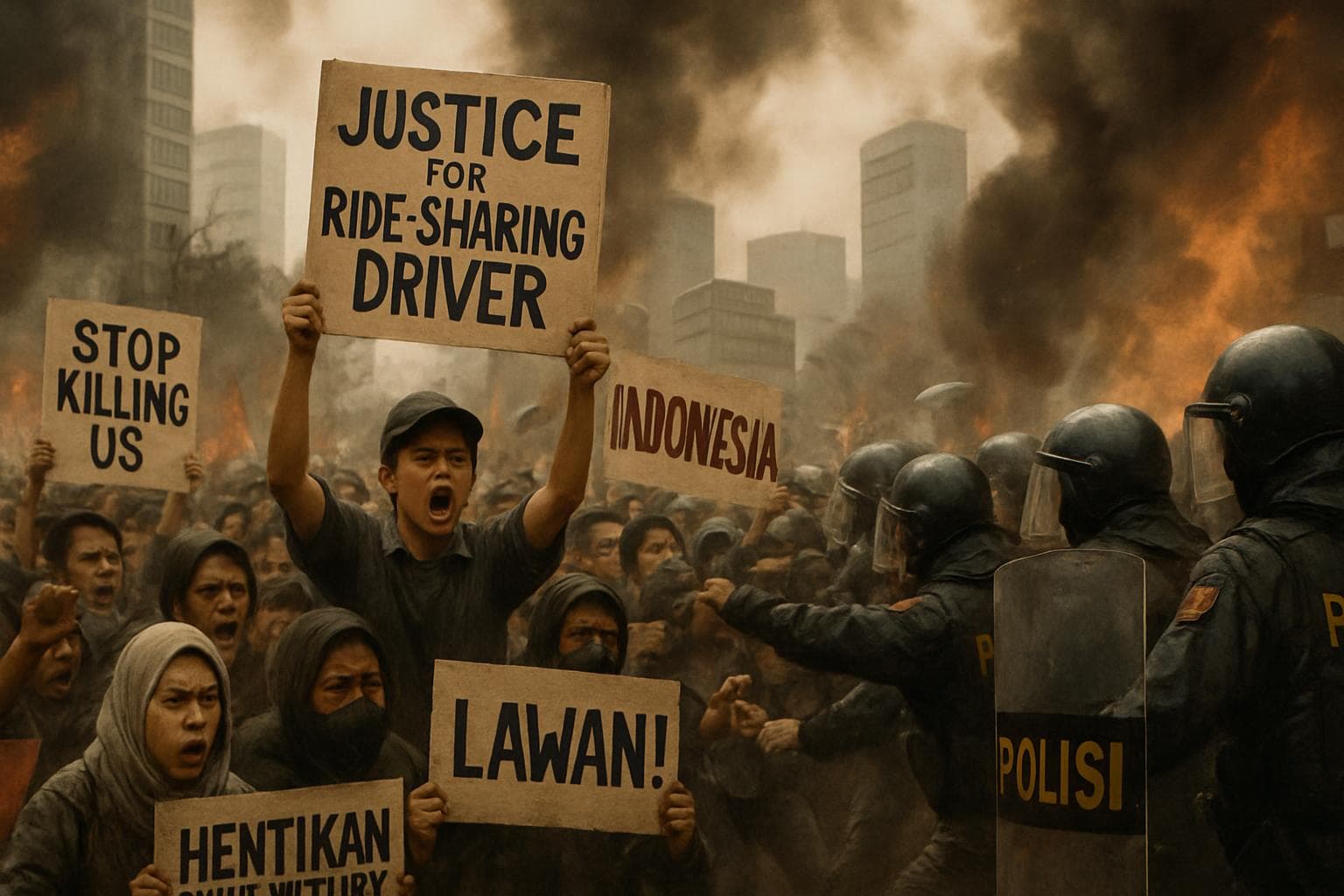
Indonesia is witnessing a wave of protests following the death of Affan Kurniawan, a 21-year-old ride-sharing driver, who was fatally struck by a police vehicle during demonstrations in Jakarta. The incident has sparked widespread unrest, with protests escalating into violence and resulting in the deaths of three individuals in Makassar, eastern Indonesia.
Unrest Across Major Cities
The protests, which began over grievances related to low wages and perceived government excesses, have spread to major cities such as Jakarta, Surabaya, and Bandung. In Makassar, protesters set fire to a council building, leading to the tragic deaths of three people trapped inside. Rahmat Mappatoba, the city council secretary, confirmed the fatalities and accused protesters of storming the building.
Government Response and Public Outcry
President Prabowo Subianto, facing a significant test less than a year into his presidency, has expressed his shock and disappointment over the incident. He has ordered a thorough investigation and visited Kurniawan's family to offer condolences. Meanwhile, Jakarta's police chief, Asep Edi Suheri, has apologized for the incident, and seven officers have been detained for questioning.
Protests and Economic Impact
The protests have seen demonstrators clashing with police, throwing rocks and Molotov cocktails, and attempting to breach police headquarters. The unrest has also impacted the economy, with the rupiah weakening against the US dollar and the stock index experiencing a notable drop. Despite calls for calm, the protests continue to gain momentum, with demonstrators demanding accountability and justice for Kurniawan's death.
WHAT THIS MIGHT MEAN
The ongoing protests in Indonesia present a critical challenge for President Prabowo Subianto's administration. If the government fails to address the public's grievances and ensure a transparent investigation into Kurniawan's death, the unrest could escalate further, potentially destabilizing the political landscape. Experts suggest that Prabowo's response will be crucial in determining whether the protests can be quelled peacefully or if they will spiral into more widespread chaos. The situation also underscores the need for reforms in police conduct and government accountability to restore public trust and prevent future incidents.
Related Articles
Cambodia's Crackdown on Scam Operations Intensifies Amid International Pressure
US Supreme Court Ruling Sparks Trade Uncertainty in Asia and Beyond
Indonesia Prepares Historic Troop Deployment to Gaza Under US Peace Plan

Ancient Hand Stencil in Indonesian Cave Redefines Human Creativity Timeline
Global Solidarity Grows as Iran Faces Unrest and Internet Blackout

California Launches Investigation into Elon Musk's Grok AI Over Deepfake Controversy
Nationwide Protests Erupt in Indonesia Following Ride-Sharing Driver's Death
In This Article
 Sofia Romano| Published
 HIGHLIGHTS
- Three people died in a fire set by protesters at a council building in Makassar, Indonesia, amid nationwide protests over the death of ride-sharing driver Affan Kurniawan.
- Kurniawan was killed by a police vehicle during demonstrations in Jakarta, sparking widespread unrest and calls for justice.
- President Prabowo Subianto has expressed condolences and ordered a thorough investigation into the incident, as protests test his administration.
- Protests have spread to major cities, including Jakarta, Surabaya, and Bandung, with demonstrators clashing with police and demanding accountability.
- Seven police officers have been detained for questioning in connection with Kurniawan's death, as tensions continue to escalate.
Indonesia is witnessing a wave of protests following the death of Affan Kurniawan, a 21-year-old ride-sharing driver, who was fatally struck by a police vehicle during demonstrations in Jakarta. The incident has sparked widespread unrest, with protests escalating into violence and resulting in the deaths of three individuals in Makassar, eastern Indonesia.
Unrest Across Major Cities
The protests, which began over grievances related to low wages and perceived government excesses, have spread to major cities such as Jakarta, Surabaya, and Bandung. In Makassar, protesters set fire to a council building, leading to the tragic deaths of three people trapped inside. Rahmat Mappatoba, the city council secretary, confirmed the fatalities and accused protesters of storming the building.
Government Response and Public Outcry
President Prabowo Subianto, facing a significant test less than a year into his presidency, has expressed his shock and disappointment over the incident. He has ordered a thorough investigation and visited Kurniawan's family to offer condolences. Meanwhile, Jakarta's police chief, Asep Edi Suheri, has apologized for the incident, and seven officers have been detained for questioning.
Protests and Economic Impact
The protests have seen demonstrators clashing with police, throwing rocks and Molotov cocktails, and attempting to breach police headquarters. The unrest has also impacted the economy, with the rupiah weakening against the US dollar and the stock index experiencing a notable drop. Despite calls for calm, the protests continue to gain momentum, with demonstrators demanding accountability and justice for Kurniawan's death.
WHAT THIS MIGHT MEAN
The ongoing protests in Indonesia present a critical challenge for President Prabowo Subianto's administration. If the government fails to address the public's grievances and ensure a transparent investigation into Kurniawan's death, the unrest could escalate further, potentially destabilizing the political landscape. Experts suggest that Prabowo's response will be crucial in determining whether the protests can be quelled peacefully or if they will spiral into more widespread chaos. The situation also underscores the need for reforms in police conduct and government accountability to restore public trust and prevent future incidents.
Related Articles
Cambodia's Crackdown on Scam Operations Intensifies Amid International Pressure
US Supreme Court Ruling Sparks Trade Uncertainty in Asia and Beyond
Indonesia Prepares Historic Troop Deployment to Gaza Under US Peace Plan
Ancient Hand Stencil in Indonesian Cave Redefines Human Creativity Timeline
Global Solidarity Grows as Iran Faces Unrest and Internet Blackout
California Launches Investigation into Elon Musk's Grok AI Over Deepfake Controversy