
Indonesia's Free School Meals Program Faces Scrutiny Amid Food Poisoning Outbreak
In This Article
HIGHLIGHTS
- Over 360 people in Sragen, Central Java, fell ill after consuming meals from President Prabowo Subianto's free school meals program.
- The program, launched in January, has faced multiple food poisoning incidents, affecting over 1,000 people nationwide.
- The Indonesian government has temporarily halted meal distribution in Sragen pending lab results on food contamination.
- The initiative aims to combat child stunting but has led to significant budget cuts in various ministries.
- President Prabowo defends the program, asserting its role in alleviating poverty and hunger in Indonesia.
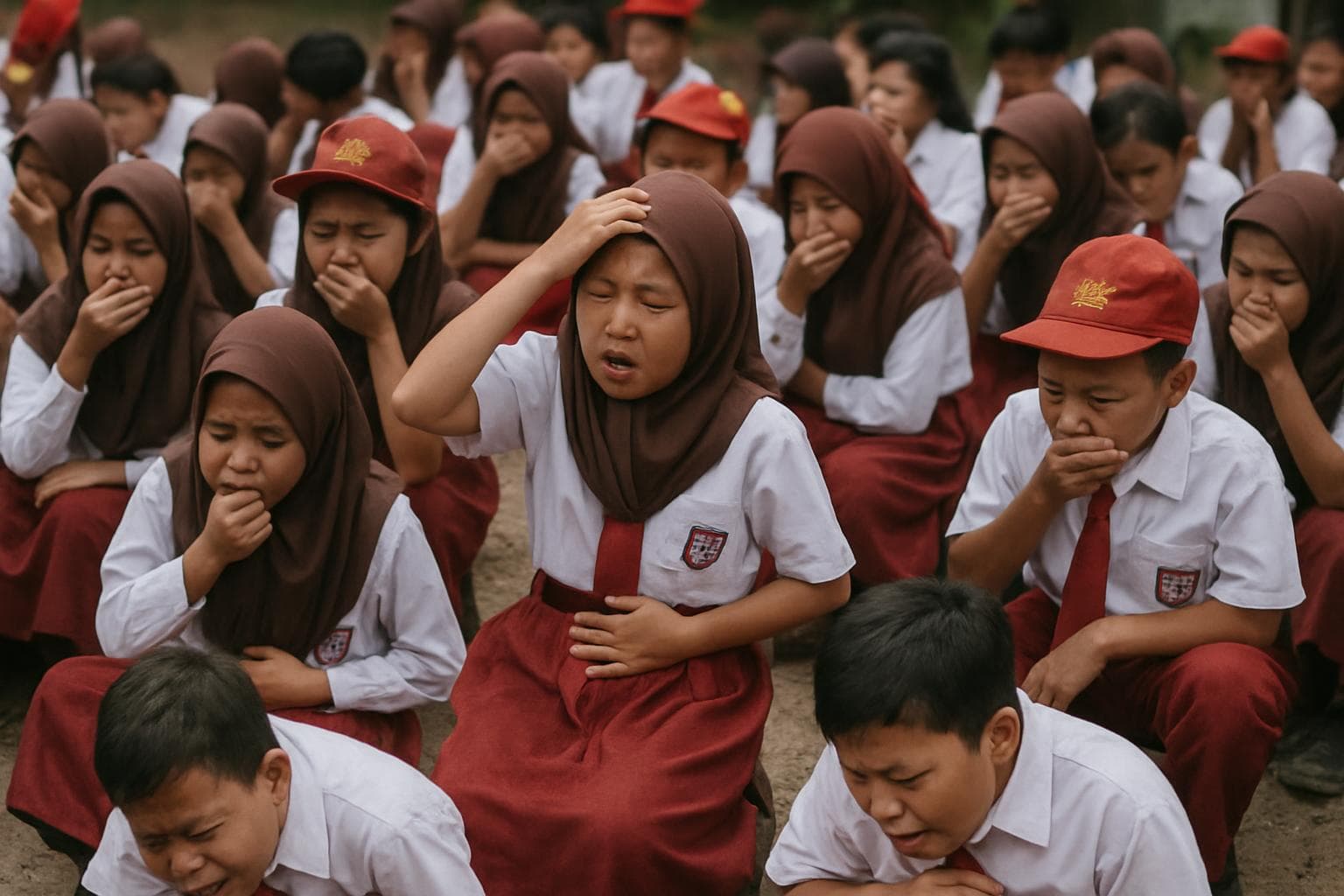
In a troubling development for Indonesia's ambitious free school meals program, more than 360 individuals in Sragen, Central Java, have fallen ill after consuming meals provided under the initiative. This incident marks the largest food poisoning case linked to President Prabowo Subianto's flagship program, which has been operational since January.
Food Safety Concerns
The meals, consisting of turmeric rice, scrambled eggs, fried tempeh, cucumber salad, and milk, were prepared in a central kitchen and distributed to several schools in the area. Following the outbreak, local authorities have suspended meal distribution in Sragen while awaiting laboratory results to determine the cause of contamination. Sigit Pamungkas, the town's government leader, emphasized the need for stricter hygiene standards across the program.
Program's Ambitious Goals and Challenges
The free school meals initiative, a cornerstone of President Prabowo's election campaign, aims to address child stunting and improve nutrition for Indonesia's youth. However, the program's $28 billion cost has led to significant budget reallocations, with several ministries experiencing cuts. Despite these challenges, the government plans to expand the program to reach 83 million children by the end of the year.
Public and Political Reactions
The program's financial implications have sparked public protests, with citizens expressing concerns over the impact on government services. In his State of the National Address, President Prabowo defended the initiative, highlighting its potential to eradicate poverty and hunger in the nation. Meanwhile, the national nutrition agency has pledged to enhance food safety protocols to prevent future incidents.
WHAT THIS MIGHT MEAN
The recent food poisoning outbreak in Sragen underscores the critical need for improved food safety measures within Indonesia's free school meals program. As authorities await lab results, the government faces mounting pressure to ensure the safety and efficacy of the initiative. Should further incidents occur, it could lead to increased public scrutiny and potential political ramifications for President Prabowo's administration. Experts suggest that a comprehensive review of the program's operational standards and budget allocations may be necessary to balance its ambitious goals with public health and fiscal responsibility.
Related Articles

US Supreme Court Ruling Sparks Trade Uncertainty in Asia and Beyond

Indonesia Prepares Historic Troop Deployment to Gaza Under US Peace Plan

Ancient Hand Stencil in Indonesian Cave Redefines Human Creativity Timeline
Cambodia's Crackdown on Scam Operations Intensifies Amid International Pressure

California Launches Investigation into Elon Musk's Grok AI Over Deepfake Controversy

Global Backlash Forces X to Restrict Grok AI Amid Deepfake Controversy
Indonesia's Free School Meals Program Faces Scrutiny Amid Food Poisoning Outbreak
In This Article
 Aya Nakamura| Published
 HIGHLIGHTS
- Over 360 people in Sragen, Central Java, fell ill after consuming meals from President Prabowo Subianto's free school meals program.
- The program, launched in January, has faced multiple food poisoning incidents, affecting over 1,000 people nationwide.
- The Indonesian government has temporarily halted meal distribution in Sragen pending lab results on food contamination.
- The initiative aims to combat child stunting but has led to significant budget cuts in various ministries.
- President Prabowo defends the program, asserting its role in alleviating poverty and hunger in Indonesia.
In a troubling development for Indonesia's ambitious free school meals program, more than 360 individuals in Sragen, Central Java, have fallen ill after consuming meals provided under the initiative. This incident marks the largest food poisoning case linked to President Prabowo Subianto's flagship program, which has been operational since January.
Food Safety Concerns
The meals, consisting of turmeric rice, scrambled eggs, fried tempeh, cucumber salad, and milk, were prepared in a central kitchen and distributed to several schools in the area. Following the outbreak, local authorities have suspended meal distribution in Sragen while awaiting laboratory results to determine the cause of contamination. Sigit Pamungkas, the town's government leader, emphasized the need for stricter hygiene standards across the program.
Program's Ambitious Goals and Challenges
The free school meals initiative, a cornerstone of President Prabowo's election campaign, aims to address child stunting and improve nutrition for Indonesia's youth. However, the program's $28 billion cost has led to significant budget reallocations, with several ministries experiencing cuts. Despite these challenges, the government plans to expand the program to reach 83 million children by the end of the year.
Public and Political Reactions
The program's financial implications have sparked public protests, with citizens expressing concerns over the impact on government services. In his State of the National Address, President Prabowo defended the initiative, highlighting its potential to eradicate poverty and hunger in the nation. Meanwhile, the national nutrition agency has pledged to enhance food safety protocols to prevent future incidents.
WHAT THIS MIGHT MEAN
The recent food poisoning outbreak in Sragen underscores the critical need for improved food safety measures within Indonesia's free school meals program. As authorities await lab results, the government faces mounting pressure to ensure the safety and efficacy of the initiative. Should further incidents occur, it could lead to increased public scrutiny and potential political ramifications for President Prabowo's administration. Experts suggest that a comprehensive review of the program's operational standards and budget allocations may be necessary to balance its ambitious goals with public health and fiscal responsibility.
Related Articles
US Supreme Court Ruling Sparks Trade Uncertainty in Asia and Beyond
Indonesia Prepares Historic Troop Deployment to Gaza Under US Peace Plan
Ancient Hand Stencil in Indonesian Cave Redefines Human Creativity Timeline
Cambodia's Crackdown on Scam Operations Intensifies Amid International Pressure
California Launches Investigation into Elon Musk's Grok AI Over Deepfake Controversy
Global Backlash Forces X to Restrict Grok AI Amid Deepfake Controversy