
Islamabad Suicide Bombing Kills 12 Amid Rising Tensions with Pakistan Taliban
In This Article
HIGHLIGHTS
- A suicide bombing outside Islamabad's district courthouse killed 12 and injured 27, marking a rare attack in the capital.
- The Pakistan Taliban (TTP) claimed responsibility, citing grievances against Pakistan's legal system.
- Pakistani officials accused India of backing extremist groups, a claim India denies.
- The attack underscores a surge in TTP-led violence, with over 600 attacks in Pakistan this year.
- Pakistan's government blames the Afghan Taliban for harboring TTP militants, straining bilateral relations.
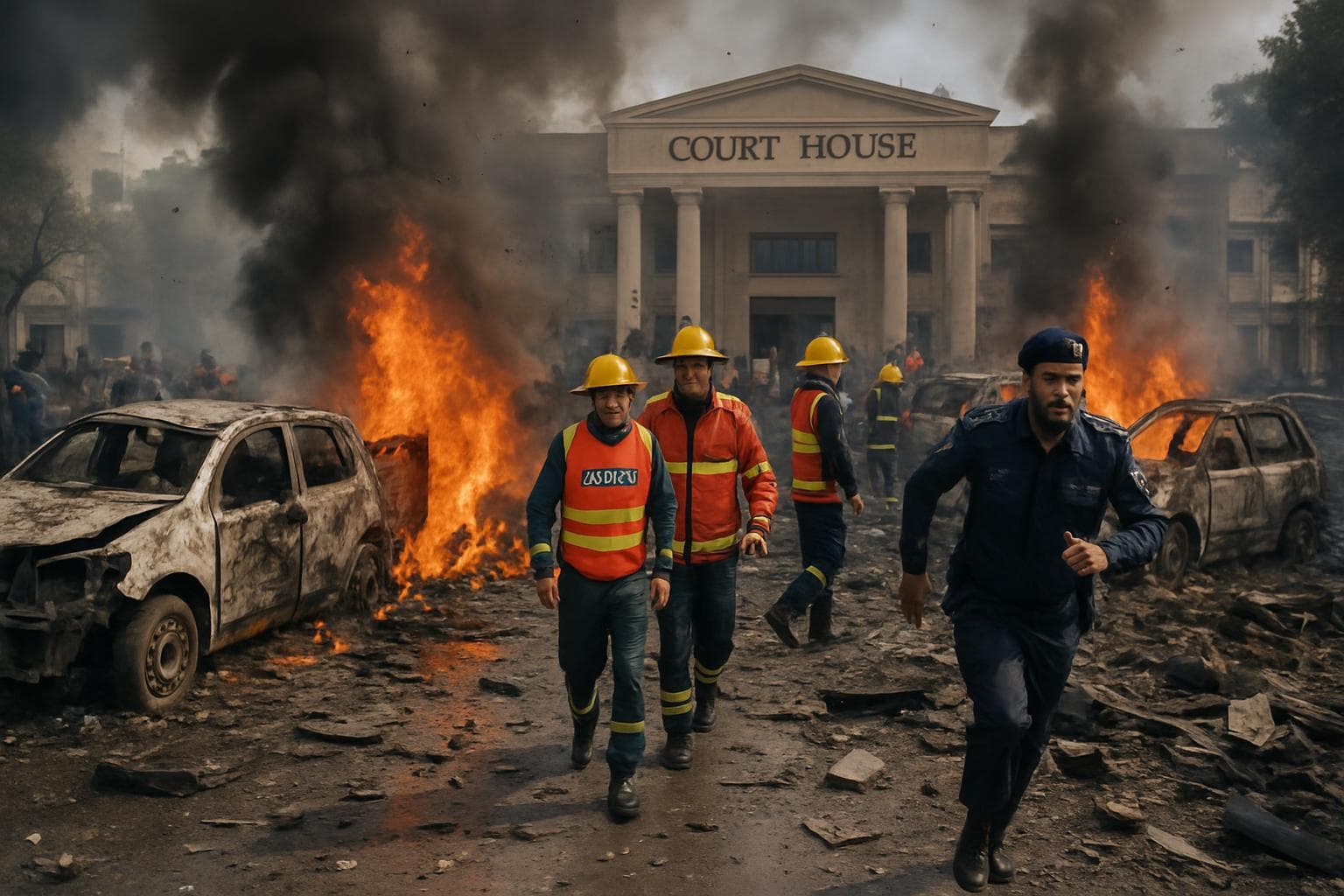
A devastating suicide bombing outside a district courthouse in Islamabad has left 12 dead and at least 27 injured, marking a significant escalation in violence in Pakistan's capital. The attack, which occurred at approximately 12:30 PM local time on Tuesday, has been claimed by the Pakistan Taliban, also known as Tehreek-e-Taliban Pakistan (TTP).
Attack Details and Immediate Response
According to Pakistan's Interior Minister Mohsin Naqvi, the bomber targeted a police vehicle after failing to enter the courthouse premises. The explosion resulted in chaos, with witnesses describing scenes of panic as lawyers and civilians scrambled for safety. Rustam Malik, a lawyer present at the scene, recounted hearing a "loud bang" and seeing "two dead bodies lying on the gate" amidst burning vehicles.
Political Reactions and Accusations
The attack has intensified political tensions, with Prime Minister Shehbaz Sharif accusing India of supporting extremist groups responsible for the violence. These allegations were swiftly denied by Indian officials, who labeled them as "baseless." Meanwhile, Pakistani President Asif Ali Zardari condemned the attack, emphasizing the need for justice.
Broader Security Concerns
The bombing highlights a broader security crisis in Pakistan, with TTP militants conducting over 600 attacks this year, primarily in Khyber Pakhtunkhwa. Defense Minister Khawaja Asif described the situation as a "state of war," urging vigilance against threats on multiple fronts, including the ongoing separatist insurgency in Balochistan.
Cross-Border Tensions
Relations between Pakistan and Afghanistan remain strained, with Islamabad accusing the Afghan Taliban of providing sanctuary to TTP fighters. This has led to deadly clashes along the border, complicating fragile ceasefire talks aimed at addressing cross-border terrorism.
WHAT THIS MIGHT MEAN
The Islamabad bombing could further destabilize Pakistan's security landscape, potentially prompting increased military operations against TTP strongholds. The government's allegations against India may strain diplomatic relations, impacting regional stability. Experts suggest that resolving tensions with Afghanistan is crucial, as continued cross-border terrorism could exacerbate the security crisis. As Pakistan grapples with these challenges, international cooperation and dialogue may be pivotal in curbing the resurgence of extremist violence.
Related Articles

Pakistan's Airstrikes on Afghanistan Escalate Cross-Border Tensions

Sisters Tragically Drown at Eryri National Park's Watkin Path

Prince Andrew Under Scrutiny for Alleged Breach of Confidentiality in Epstein Scandal
Iran Postpones Khamenei Funeral Amid Escalating US-Israeli Strikes
Canada Calls for De-escalation Amid US-Israel Strikes on Iran

US Supreme Court Ruling Sparks Trade Uncertainty in Asia and Beyond
Islamabad Suicide Bombing Kills 12 Amid Rising Tensions with Pakistan Taliban
In This Article
 Ethan Brooks| Published
 HIGHLIGHTS
- A suicide bombing outside Islamabad's district courthouse killed 12 and injured 27, marking a rare attack in the capital.
- The Pakistan Taliban (TTP) claimed responsibility, citing grievances against Pakistan's legal system.
- Pakistani officials accused India of backing extremist groups, a claim India denies.
- The attack underscores a surge in TTP-led violence, with over 600 attacks in Pakistan this year.
- Pakistan's government blames the Afghan Taliban for harboring TTP militants, straining bilateral relations.
A devastating suicide bombing outside a district courthouse in Islamabad has left 12 dead and at least 27 injured, marking a significant escalation in violence in Pakistan's capital. The attack, which occurred at approximately 12:30 PM local time on Tuesday, has been claimed by the Pakistan Taliban, also known as Tehreek-e-Taliban Pakistan (TTP).
Attack Details and Immediate Response
According to Pakistan's Interior Minister Mohsin Naqvi, the bomber targeted a police vehicle after failing to enter the courthouse premises. The explosion resulted in chaos, with witnesses describing scenes of panic as lawyers and civilians scrambled for safety. Rustam Malik, a lawyer present at the scene, recounted hearing a "loud bang" and seeing "two dead bodies lying on the gate" amidst burning vehicles.
Political Reactions and Accusations
The attack has intensified political tensions, with Prime Minister Shehbaz Sharif accusing India of supporting extremist groups responsible for the violence. These allegations were swiftly denied by Indian officials, who labeled them as "baseless." Meanwhile, Pakistani President Asif Ali Zardari condemned the attack, emphasizing the need for justice.
Broader Security Concerns
The bombing highlights a broader security crisis in Pakistan, with TTP militants conducting over 600 attacks this year, primarily in Khyber Pakhtunkhwa. Defense Minister Khawaja Asif described the situation as a "state of war," urging vigilance against threats on multiple fronts, including the ongoing separatist insurgency in Balochistan.
Cross-Border Tensions
Relations between Pakistan and Afghanistan remain strained, with Islamabad accusing the Afghan Taliban of providing sanctuary to TTP fighters. This has led to deadly clashes along the border, complicating fragile ceasefire talks aimed at addressing cross-border terrorism.
WHAT THIS MIGHT MEAN
The Islamabad bombing could further destabilize Pakistan's security landscape, potentially prompting increased military operations against TTP strongholds. The government's allegations against India may strain diplomatic relations, impacting regional stability. Experts suggest that resolving tensions with Afghanistan is crucial, as continued cross-border terrorism could exacerbate the security crisis. As Pakistan grapples with these challenges, international cooperation and dialogue may be pivotal in curbing the resurgence of extremist violence.
Related Articles
Pakistan's Airstrikes on Afghanistan Escalate Cross-Border Tensions
Sisters Tragically Drown at Eryri National Park's Watkin Path
Prince Andrew Under Scrutiny for Alleged Breach of Confidentiality in Epstein Scandal
Iran Postpones Khamenei Funeral Amid Escalating US-Israeli Strikes
Canada Calls for De-escalation Amid US-Israel Strikes on Iran
US Supreme Court Ruling Sparks Trade Uncertainty in Asia and Beyond