
Pakistan's Airstrikes on Afghanistan Escalate Cross-Border Tensions
In This Article
HIGHLIGHTS
- Pakistan launched airstrikes on Afghanistan, targeting alleged militant camps, resulting in at least 18 civilian deaths, including women and children.
- The strikes targeted areas in Nangarhar and Paktika provinces, with Pakistan citing recent suicide bombings as the catalyst for the attacks.
- Afghanistan condemned the strikes as a violation of its territorial integrity and international law, warning of a potential response.
- The attacks follow a fragile ceasefire agreement between the two nations, which has been strained by ongoing violence.
- Pakistan accuses the Afghan Taliban of harboring militants responsible for attacks within its borders, urging international intervention.
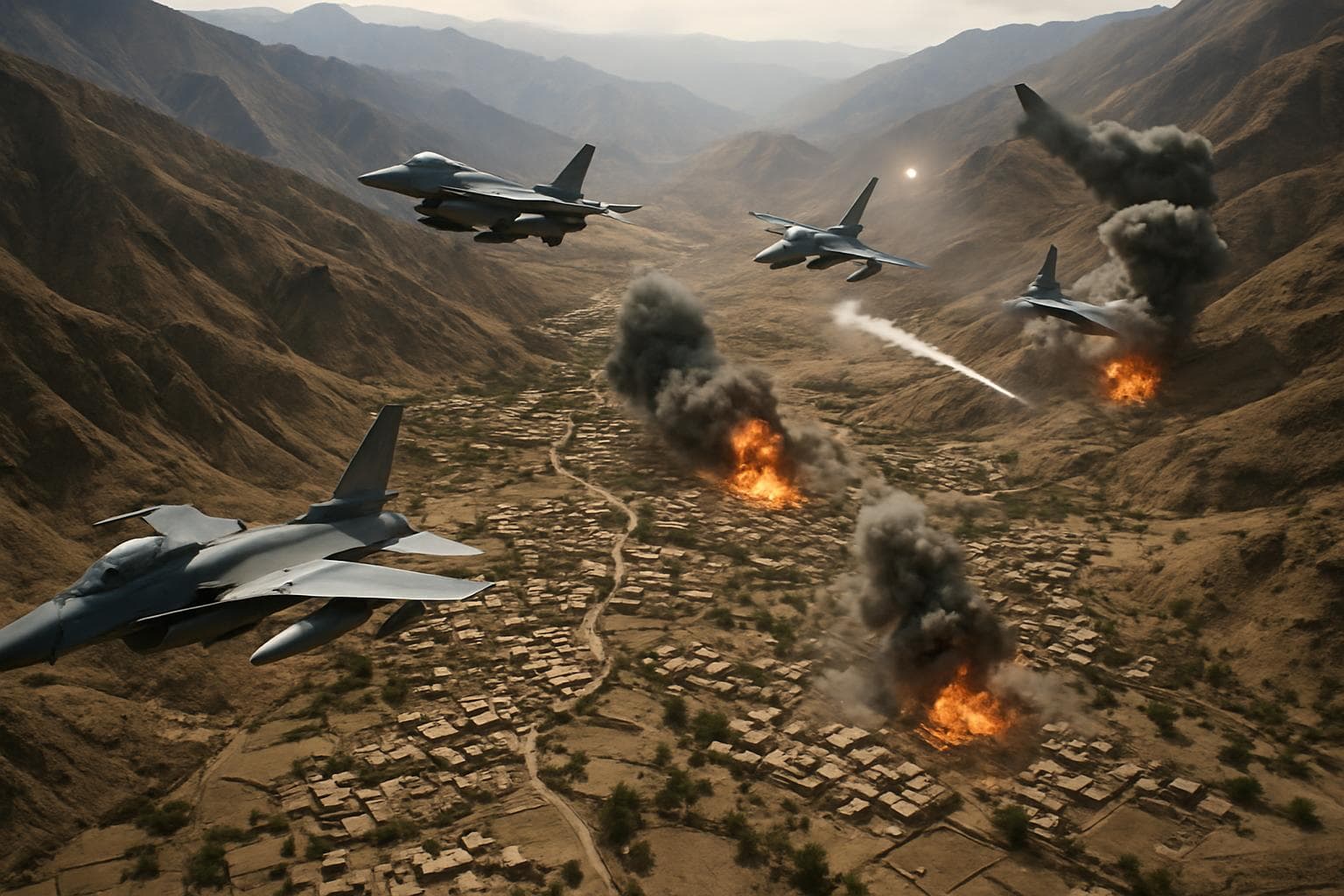
In a significant escalation of cross-border tensions, Pakistan has conducted a series of airstrikes on Afghanistan, targeting what it claims are militant hideouts. The strikes, which took place overnight, have resulted in the deaths of at least 18 civilians, including women and children, according to Afghan officials. The targeted areas include Nangarhar and Paktika provinces, regions that have been at the center of recent conflicts.
Background of the Conflict
The airstrikes come in the wake of a surge in militant attacks within Pakistan, including a devastating suicide bombing at a Shia mosque in Islamabad earlier this month. Islamabad has accused the Afghan Taliban of providing sanctuary to the militants responsible for these attacks, particularly the Tehreek-e-Taliban Pakistan (TTP) and affiliates of the Islamic State-Khorasan Province.
Pakistan's Ministry of Information and Broadcasting described the operation as "intelligence-based selective targeting" of seven terrorist camps. The ministry stated that these actions were a retributive response to the recent violence, which has claimed numerous lives, including those of Pakistani soldiers and civilians.
Afghan Response and International Concerns
The Afghan government has condemned the strikes, labeling them a "blatant violation of Afghanistan's territorial integrity" and a breach of international law. Afghan officials have warned of a potential "appropriate and measured response" to the attacks. The Taliban's defense ministry has criticized Pakistan's military strategy, suggesting it reflects internal security weaknesses.
The strikes have further strained the already fragile ceasefire agreement brokered last October after deadly border clashes. Despite the ceasefire, tensions have remained high, with both nations accusing each other of harboring militants.
Human Impact and Local Accounts
In the village of Girdi Kas in Nangarhar, a local resident named Shahabuddin recounted the devastation, stating that only five out of 23 family members survived the attack. The strikes also targeted a guesthouse and a religious school in Paktika, although these buildings were reportedly empty at the time.
Pakistan has urged the international community to pressure Afghanistan's Taliban rulers to prevent militant groups from using Afghan territory for attacks. The situation remains volatile, with both countries on high alert.
WHAT THIS MIGHT MEAN
The recent airstrikes by Pakistan could lead to a further deterioration of relations between Islamabad and Kabul, potentially destabilizing the region. If Afghanistan retaliates, it could spark a cycle of violence that undermines regional security. The international community may need to intervene diplomatically to prevent escalation and encourage both nations to adhere to their ceasefire commitments.
Experts suggest that Pakistan's actions might be aimed at pressuring the Afghan Taliban to take more decisive action against militant groups operating within its borders. However, without a cooperative approach, the risk of prolonged conflict remains high. The situation underscores the need for a comprehensive strategy to address the root causes of militancy and foster lasting peace in the region.
Related Articles
Indonesia Prepares Historic Troop Deployment to Gaza Under US Peace Plan
Deadly Suicide Bombing at Islamabad Mosque Claims Over 30 Lives
Deadly Attacks in Balochistan Highlight Ongoing Insurgency

Iran Signals Openness to US Talks Amid Rising Tensions
US Pledges $2 Billion in Humanitarian Aid Amidst Funding Cuts

Sisters Tragically Drown at Eryri National Park's Watkin Path
Pakistan's Airstrikes on Afghanistan Escalate Cross-Border Tensions
In This Article
 James Okoro| Published
 HIGHLIGHTS
- Pakistan launched airstrikes on Afghanistan, targeting alleged militant camps, resulting in at least 18 civilian deaths, including women and children.
- The strikes targeted areas in Nangarhar and Paktika provinces, with Pakistan citing recent suicide bombings as the catalyst for the attacks.
- Afghanistan condemned the strikes as a violation of its territorial integrity and international law, warning of a potential response.
- The attacks follow a fragile ceasefire agreement between the two nations, which has been strained by ongoing violence.
- Pakistan accuses the Afghan Taliban of harboring militants responsible for attacks within its borders, urging international intervention.
In a significant escalation of cross-border tensions, Pakistan has conducted a series of airstrikes on Afghanistan, targeting what it claims are militant hideouts. The strikes, which took place overnight, have resulted in the deaths of at least 18 civilians, including women and children, according to Afghan officials. The targeted areas include Nangarhar and Paktika provinces, regions that have been at the center of recent conflicts.
Background of the Conflict
The airstrikes come in the wake of a surge in militant attacks within Pakistan, including a devastating suicide bombing at a Shia mosque in Islamabad earlier this month. Islamabad has accused the Afghan Taliban of providing sanctuary to the militants responsible for these attacks, particularly the Tehreek-e-Taliban Pakistan (TTP) and affiliates of the Islamic State-Khorasan Province.
Pakistan's Ministry of Information and Broadcasting described the operation as "intelligence-based selective targeting" of seven terrorist camps. The ministry stated that these actions were a retributive response to the recent violence, which has claimed numerous lives, including those of Pakistani soldiers and civilians.
Afghan Response and International Concerns
The Afghan government has condemned the strikes, labeling them a "blatant violation of Afghanistan's territorial integrity" and a breach of international law. Afghan officials have warned of a potential "appropriate and measured response" to the attacks. The Taliban's defense ministry has criticized Pakistan's military strategy, suggesting it reflects internal security weaknesses.
The strikes have further strained the already fragile ceasefire agreement brokered last October after deadly border clashes. Despite the ceasefire, tensions have remained high, with both nations accusing each other of harboring militants.
Human Impact and Local Accounts
In the village of Girdi Kas in Nangarhar, a local resident named Shahabuddin recounted the devastation, stating that only five out of 23 family members survived the attack. The strikes also targeted a guesthouse and a religious school in Paktika, although these buildings were reportedly empty at the time.
Pakistan has urged the international community to pressure Afghanistan's Taliban rulers to prevent militant groups from using Afghan territory for attacks. The situation remains volatile, with both countries on high alert.
WHAT THIS MIGHT MEAN
The recent airstrikes by Pakistan could lead to a further deterioration of relations between Islamabad and Kabul, potentially destabilizing the region. If Afghanistan retaliates, it could spark a cycle of violence that undermines regional security. The international community may need to intervene diplomatically to prevent escalation and encourage both nations to adhere to their ceasefire commitments.
Experts suggest that Pakistan's actions might be aimed at pressuring the Afghan Taliban to take more decisive action against militant groups operating within its borders. However, without a cooperative approach, the risk of prolonged conflict remains high. The situation underscores the need for a comprehensive strategy to address the root causes of militancy and foster lasting peace in the region.
Related Articles
Indonesia Prepares Historic Troop Deployment to Gaza Under US Peace Plan
Deadly Suicide Bombing at Islamabad Mosque Claims Over 30 Lives
Deadly Attacks in Balochistan Highlight Ongoing Insurgency
Iran Signals Openness to US Talks Amid Rising Tensions
US Pledges $2 Billion in Humanitarian Aid Amidst Funding Cuts
Sisters Tragically Drown at Eryri National Park's Watkin Path