
US Pledges $2 Billion in Humanitarian Aid Amidst Funding Cuts
In This Article
HIGHLIGHTS
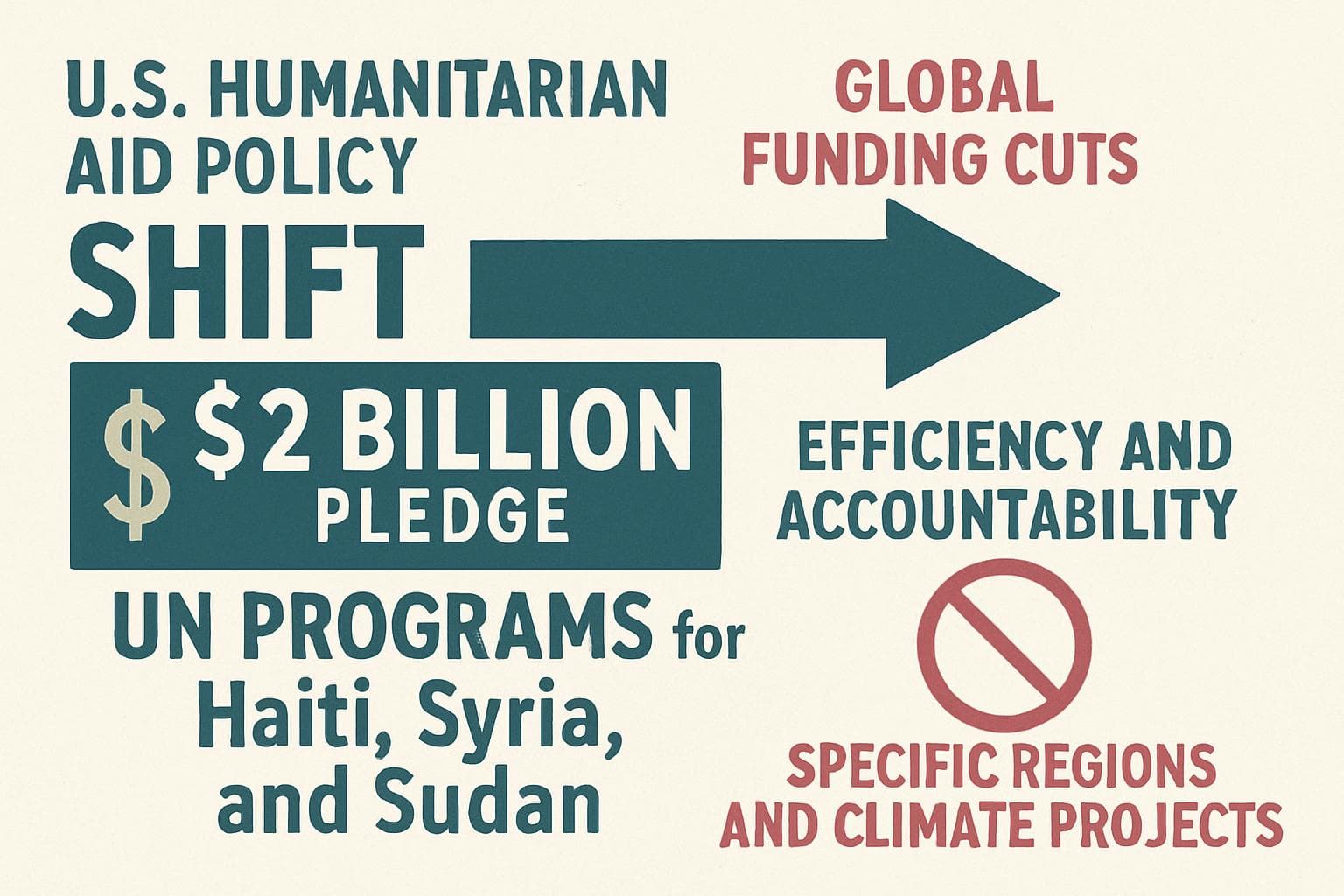
- The United States has pledged $2 billion in humanitarian aid to the United Nations, focusing on 17 priority countries.
- The funding comes amid significant cuts in US foreign aid, with a new model aiming for more efficient and accountable delivery.
- Countries like Afghanistan, Yemen, and Gaza are excluded from this funding, raising concerns about the politicization of aid.
- The US insists on conditions that exclude climate change projects, emphasizing life-saving assistance.
- The UN welcomes the funds but faces challenges in maintaining neutrality and impartiality in aid distribution.
The United States has announced a $2 billion commitment to United Nations humanitarian programs, marking a significant shift in its foreign aid policy under the Trump administration. This pledge, revealed in Geneva by Jeremy Lewin, Under Secretary for Foreign Assistance, and UN emergency relief chief Tom Fletcher, comes as the US and other Western nations like Germany reduce their overall aid contributions.
New Aid Model and Priorities
The newly pledged funds will be directed towards 17 countries, including Haiti, Syria, and Sudan, under a revamped aid delivery model designed to enhance efficiency and accountability. This model, agreed upon with the UN, aims to streamline the allocation of resources amidst a global funding crunch. However, notable exclusions from this list, such as Afghanistan, Yemen, and Gaza, have sparked debate over the politicization of humanitarian assistance.
Exclusions and Conditions
The US has justified the exclusion of certain countries by citing concerns over fund misuse, particularly in Afghanistan, where there is evidence of aid being diverted to the Taliban. Additionally, the funding explicitly excludes projects related to climate change, which Jeremy Lewin described as not being "life-saving" or aligned with US interests. This stance has raised questions about the adherence to the fundamental principles of neutrality and impartiality in humanitarian aid.
UN's Response and Challenges
While the UN has welcomed the US's financial support, it faces the challenge of balancing donor conditions with its mandate to provide neutral and impartial aid. Tom Fletcher emphasized the importance of maintaining these principles, despite the specific requirements set by donors. The UN will seek alternative funding sources for regions not covered by the US pledge, such as Gaza, where aid needs remain critical.
WHAT THIS MIGHT MEAN
The US's new approach to humanitarian aid could set a precedent for other donor countries, potentially reshaping global aid priorities. As the UN navigates these changes, it must ensure that its core principles of neutrality and impartiality are not compromised. The exclusion of climate-related projects may also prompt discussions on integrating environmental considerations into humanitarian efforts. Moving forward, the UN's ability to secure additional funding for excluded regions will be crucial in addressing the needs of vulnerable populations worldwide.
Related Articles

US-Iran Tensions Escalate Amid Renewed Nuclear Talks and Protests

Intensified US-Israel Strikes on Iran Spark Global Outcry
Iran Postpones Khamenei Funeral Amid Escalating US-Israeli Strikes
Canada Calls for De-escalation Amid US-Israel Strikes on Iran
Pakistan's Airstrikes on Afghanistan Escalate Cross-Border Tensions
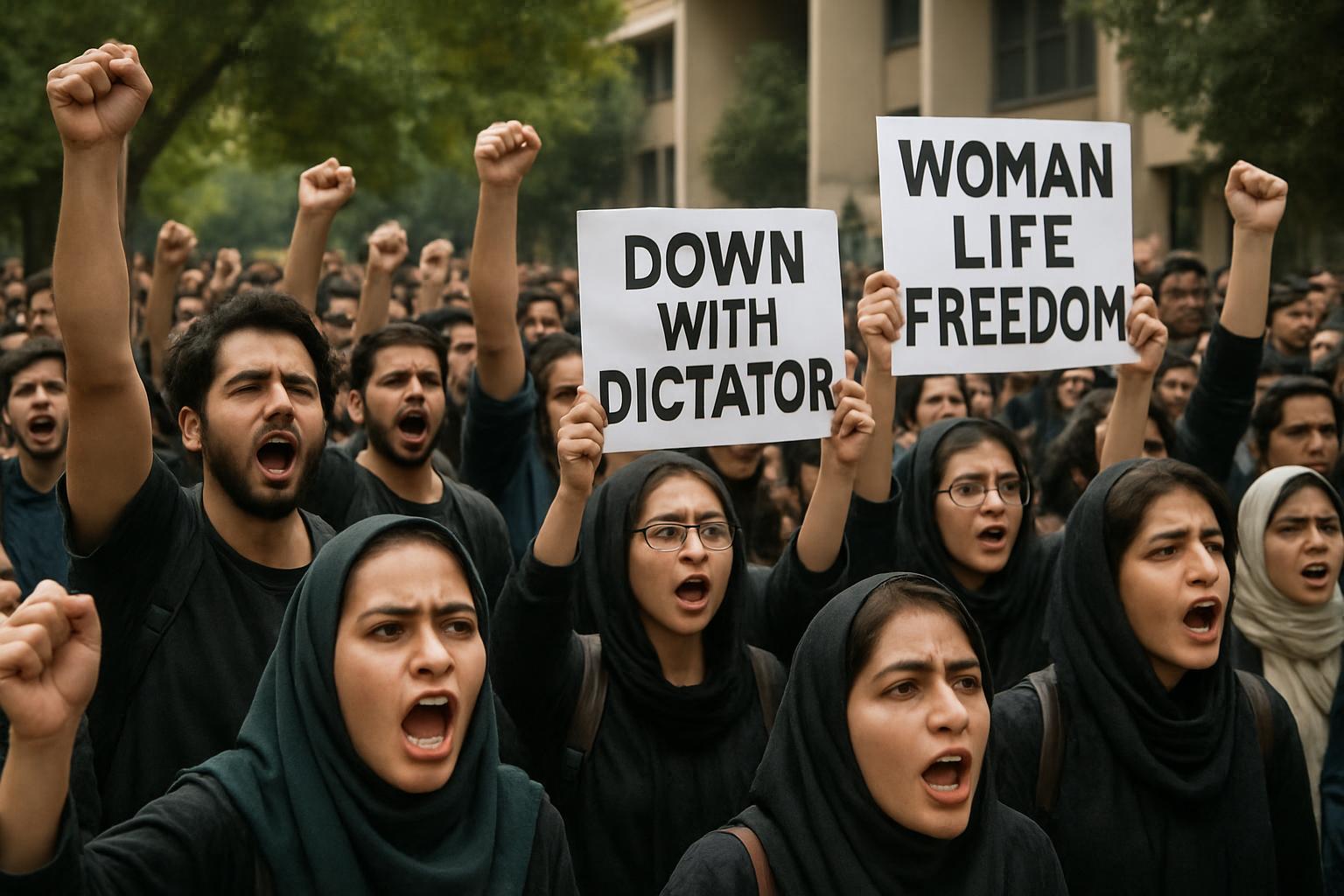
Iranian Students Lead Major Protests Amid Rising US-Iran Tensions
US Pledges $2 Billion in Humanitarian Aid Amidst Funding Cuts
In This Article
 Ethan Brooks| Published
 HIGHLIGHTS
- The United States has pledged $2 billion in humanitarian aid to the United Nations, focusing on 17 priority countries.
- The funding comes amid significant cuts in US foreign aid, with a new model aiming for more efficient and accountable delivery.
- Countries like Afghanistan, Yemen, and Gaza are excluded from this funding, raising concerns about the politicization of aid.
- The US insists on conditions that exclude climate change projects, emphasizing life-saving assistance.
- The UN welcomes the funds but faces challenges in maintaining neutrality and impartiality in aid distribution.
The United States has announced a $2 billion commitment to United Nations humanitarian programs, marking a significant shift in its foreign aid policy under the Trump administration. This pledge, revealed in Geneva by Jeremy Lewin, Under Secretary for Foreign Assistance, and UN emergency relief chief Tom Fletcher, comes as the US and other Western nations like Germany reduce their overall aid contributions.
New Aid Model and Priorities
The newly pledged funds will be directed towards 17 countries, including Haiti, Syria, and Sudan, under a revamped aid delivery model designed to enhance efficiency and accountability. This model, agreed upon with the UN, aims to streamline the allocation of resources amidst a global funding crunch. However, notable exclusions from this list, such as Afghanistan, Yemen, and Gaza, have sparked debate over the politicization of humanitarian assistance.
Exclusions and Conditions
The US has justified the exclusion of certain countries by citing concerns over fund misuse, particularly in Afghanistan, where there is evidence of aid being diverted to the Taliban. Additionally, the funding explicitly excludes projects related to climate change, which Jeremy Lewin described as not being "life-saving" or aligned with US interests. This stance has raised questions about the adherence to the fundamental principles of neutrality and impartiality in humanitarian aid.
UN's Response and Challenges
While the UN has welcomed the US's financial support, it faces the challenge of balancing donor conditions with its mandate to provide neutral and impartial aid. Tom Fletcher emphasized the importance of maintaining these principles, despite the specific requirements set by donors. The UN will seek alternative funding sources for regions not covered by the US pledge, such as Gaza, where aid needs remain critical.
WHAT THIS MIGHT MEAN
The US's new approach to humanitarian aid could set a precedent for other donor countries, potentially reshaping global aid priorities. As the UN navigates these changes, it must ensure that its core principles of neutrality and impartiality are not compromised. The exclusion of climate-related projects may also prompt discussions on integrating environmental considerations into humanitarian efforts. Moving forward, the UN's ability to secure additional funding for excluded regions will be crucial in addressing the needs of vulnerable populations worldwide.
Related Articles
US-Iran Tensions Escalate Amid Renewed Nuclear Talks and Protests
Intensified US-Israel Strikes on Iran Spark Global Outcry
Iran Postpones Khamenei Funeral Amid Escalating US-Israeli Strikes
Canada Calls for De-escalation Amid US-Israel Strikes on Iran
Pakistan's Airstrikes on Afghanistan Escalate Cross-Border Tensions
Iranian Students Lead Major Protests Amid Rising US-Iran Tensions