
Deadly Attacks in Balochistan Highlight Ongoing Insurgency
In This Article
HIGHLIGHTS
- A series of coordinated attacks in Balochistan, Pakistan, resulted in 33 deaths, including 18 civilians and 15 security personnel.
- The Balochistan Liberation Army claimed responsibility, with 92 insurgents reportedly killed by security forces.
- The attacks targeted police stations, paramilitary installations, and a high-security prison, leading to the escape of over 30 inmates.
- Pakistan accused India of supporting the insurgents, a claim India has consistently denied.
- The violence underscores the ongoing ethnic insurgency in Balochistan, a region rich in natural resources but marked by unrest.
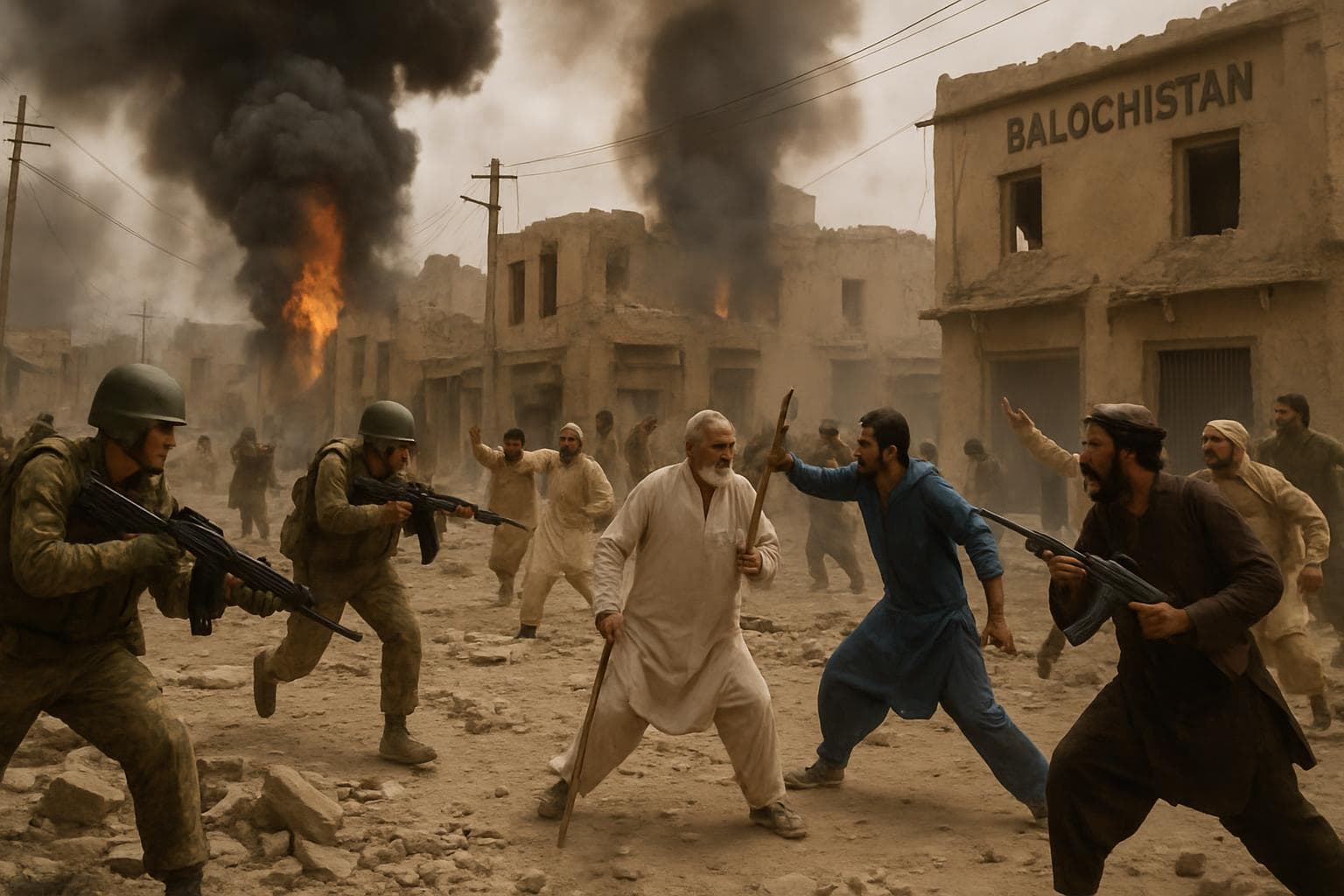
A wave of deadly attacks swept across Pakistan's Balochistan province, leaving 33 people dead, including 18 civilians and 15 security personnel, according to military reports. The Balochistan Liberation Army (BLA), a separatist group, claimed responsibility for the violence, which marks one of the deadliest days in the region's recent history.
Coordinated Assaults Across the Province
The attacks, described by analysts as unprecedented in scale, targeted multiple locations, including police stations, paramilitary installations, and a high-security prison. The insurgents, who reportedly included female fighters, also destroyed rail tracks, prompting the suspension of train services. In a particularly brazen move, they attacked a prison in Mastung district, freeing more than 30 inmates.
Security Forces Respond
In response, Pakistan's security forces launched a counter-offensive, killing 92 insurgents. The military reported that a total of 133 militants have been killed in the past 48 hours. Prime Minister Shehbaz Sharif commended the military's efforts and vowed to continue the fight against terrorism until it is eradicated.
Accusations and Denials
The Pakistani government accused India of backing the insurgents, a charge that New Delhi has repeatedly denied. The BLA, which is banned in Pakistan and designated a terrorist organization by the United States, has long accused the federal government of exploiting Balochistan's rich mineral resources without benefiting the local population.
Historical Context of the Conflict
Balochistan, covering nearly 44% of Pakistan's land area, has been a hotbed of insurgency since 1948. The region, home to about 5% of Pakistan's population, is rich in natural resources, including gas and minerals. The ongoing conflict is rooted in ethnic tensions and demands for greater autonomy and resource control by the Baloch people.
WHAT THIS MIGHT MEAN
The recent escalation in violence could lead to increased military operations in Balochistan, potentially resulting in further casualties on both sides. The Pakistani government's accusations against India may strain diplomatic relations, although New Delhi's consistent denials suggest a complex geopolitical backdrop. Experts warn that without addressing the underlying grievances of the Baloch people, including economic marginalization and political disenfranchisement, the insurgency is likely to persist, posing ongoing challenges to regional stability.
Related Articles
Pakistan's Airstrikes on Afghanistan Escalate Cross-Border Tensions
Iranian Students Lead Major Protests Amid Rising US-Iran Tensions
Iran Postpones Khamenei Funeral Amid Escalating US-Israeli Strikes
Canada Calls for De-escalation Amid US-Israel Strikes on Iran

US-Iran Tensions Escalate Amid Renewed Nuclear Talks and Protests

China Sets Lowest GDP Growth Target in Decades Amid Economic Challenges
Deadly Attacks in Balochistan Highlight Ongoing Insurgency
In This Article
 James Okoro| Published
 HIGHLIGHTS
- A series of coordinated attacks in Balochistan, Pakistan, resulted in 33 deaths, including 18 civilians and 15 security personnel.
- The Balochistan Liberation Army claimed responsibility, with 92 insurgents reportedly killed by security forces.
- The attacks targeted police stations, paramilitary installations, and a high-security prison, leading to the escape of over 30 inmates.
- Pakistan accused India of supporting the insurgents, a claim India has consistently denied.
- The violence underscores the ongoing ethnic insurgency in Balochistan, a region rich in natural resources but marked by unrest.
A wave of deadly attacks swept across Pakistan's Balochistan province, leaving 33 people dead, including 18 civilians and 15 security personnel, according to military reports. The Balochistan Liberation Army (BLA), a separatist group, claimed responsibility for the violence, which marks one of the deadliest days in the region's recent history.
Coordinated Assaults Across the Province
The attacks, described by analysts as unprecedented in scale, targeted multiple locations, including police stations, paramilitary installations, and a high-security prison. The insurgents, who reportedly included female fighters, also destroyed rail tracks, prompting the suspension of train services. In a particularly brazen move, they attacked a prison in Mastung district, freeing more than 30 inmates.
Security Forces Respond
In response, Pakistan's security forces launched a counter-offensive, killing 92 insurgents. The military reported that a total of 133 militants have been killed in the past 48 hours. Prime Minister Shehbaz Sharif commended the military's efforts and vowed to continue the fight against terrorism until it is eradicated.
Accusations and Denials
The Pakistani government accused India of backing the insurgents, a charge that New Delhi has repeatedly denied. The BLA, which is banned in Pakistan and designated a terrorist organization by the United States, has long accused the federal government of exploiting Balochistan's rich mineral resources without benefiting the local population.
Historical Context of the Conflict
Balochistan, covering nearly 44% of Pakistan's land area, has been a hotbed of insurgency since 1948. The region, home to about 5% of Pakistan's population, is rich in natural resources, including gas and minerals. The ongoing conflict is rooted in ethnic tensions and demands for greater autonomy and resource control by the Baloch people.
WHAT THIS MIGHT MEAN
The recent escalation in violence could lead to increased military operations in Balochistan, potentially resulting in further casualties on both sides. The Pakistani government's accusations against India may strain diplomatic relations, although New Delhi's consistent denials suggest a complex geopolitical backdrop. Experts warn that without addressing the underlying grievances of the Baloch people, including economic marginalization and political disenfranchisement, the insurgency is likely to persist, posing ongoing challenges to regional stability.
Related Articles
Pakistan's Airstrikes on Afghanistan Escalate Cross-Border Tensions
Iranian Students Lead Major Protests Amid Rising US-Iran Tensions
Iran Postpones Khamenei Funeral Amid Escalating US-Israeli Strikes
Canada Calls for De-escalation Amid US-Israel Strikes on Iran
US-Iran Tensions Escalate Amid Renewed Nuclear Talks and Protests
China Sets Lowest GDP Growth Target in Decades Amid Economic Challenges