
International Outcry as Israeli Forces Intensify Operations in Gaza's Deir al-Balah
In This Article
HIGHLIGHTS
- Israeli tanks advanced into Deir al-Balah, central Gaza, intensifying military operations and causing significant civilian displacement.
- The UK and 27 other countries condemned Israel for the humanitarian crisis, urging an immediate end to the conflict.
- The World Health Organization reported attacks on its facilities in Gaza, impacting humanitarian operations.
- Gaza's health ministry reported over 130 Palestinians killed in recent Israeli strikes, with thousands more injured.
- The UN highlighted the severe humanitarian impact, with 88% of Gaza under evacuation orders, squeezing civilians into a small area.
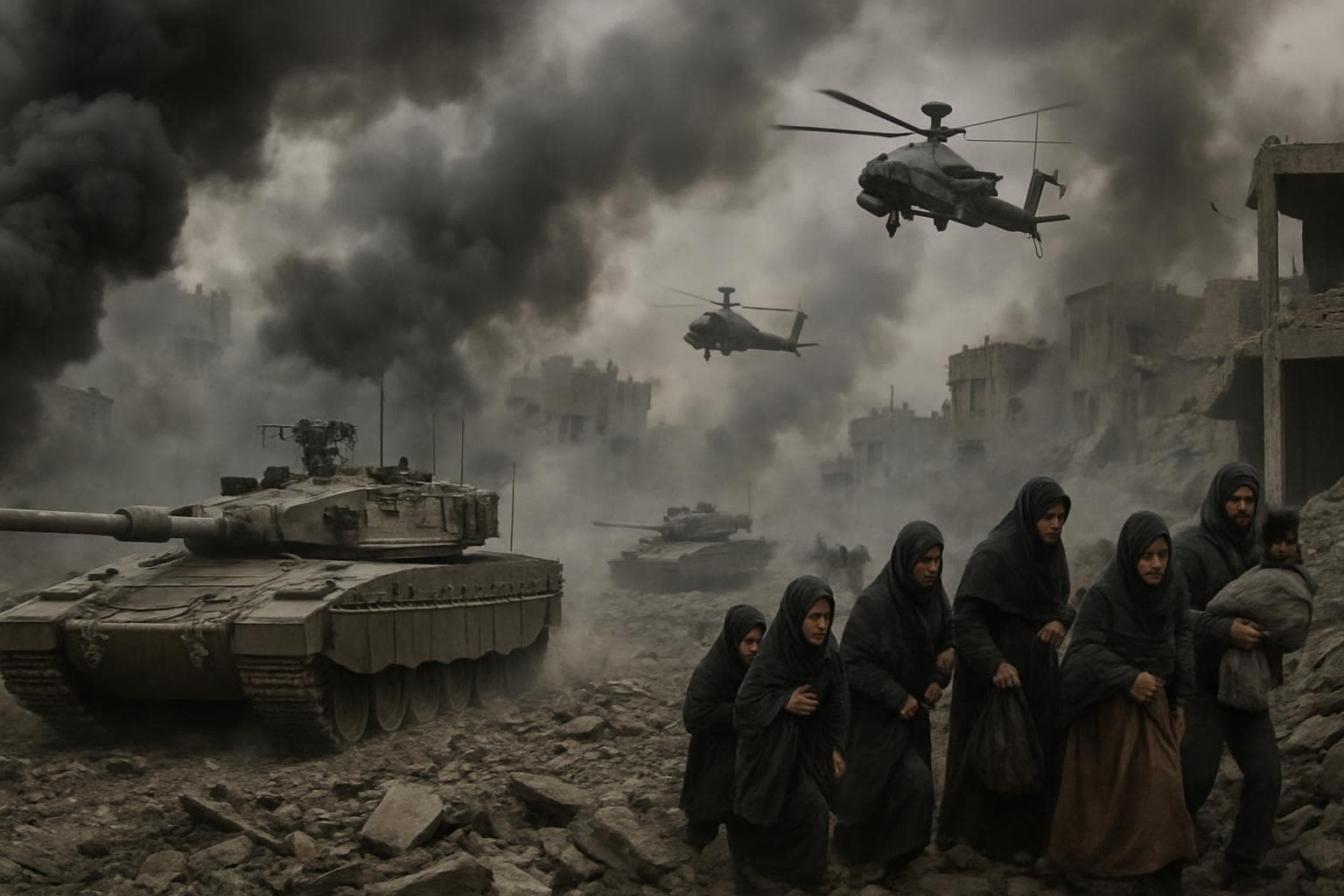
Israeli military forces have launched a significant ground and air offensive in Deir al-Balah, central Gaza, marking a new phase in the ongoing conflict with Hamas. This escalation has triggered widespread displacement and drawn international condemnation over the humanitarian crisis unfolding in the region.
Military Advances and Humanitarian Impact
On Monday, Israeli tanks moved into southern and eastern areas of Deir al-Balah, a city previously untouched by major ground operations during the 21-month conflict. The advance was accompanied by heavy artillery and airstrikes, leading to significant civilian displacement. Local journalists reported that the military incursion followed an evacuation order affecting tens of thousands of residents, further straining humanitarian efforts in the area.
The World Health Organization (WHO) reported that its facilities in Deir al-Balah were attacked, endangering staff and disrupting critical health services. "The health sector in Gaza is on its knees," said WHO Director-General Tedros Adhanom Ghebreyesus, demanding the protection of humanitarian workers.
International Condemnation
The UK, along with 27 other nations, issued a statement condemning the Israeli military's actions, particularly the killing of Palestinians seeking food aid. "The suffering of civilians has reached new depths," the statement read, calling for an immediate cessation of hostilities and the lifting of restrictions on aid flow.
Casualties and Displacement
Gaza's health ministry reported that at least 130 Palestinians were killed in the latest Israeli strikes, with over 1,000 injured. The UN Office for the Coordination of Humanitarian Affairs (OCHA) highlighted that 88% of Gaza is now under evacuation orders, compressing the population into a fragmented 12% of the territory where essential services have collapsed.
Humanitarian Concerns
Deir al-Balah, a crucial hub for humanitarian efforts, houses warehouses, health clinics, and a desalination plant vital for southern Gaza. The UN has warned of potential mass deaths due to hunger, as the area is critical for aid distribution.
WHAT THIS MIGHT MEAN
The intensification of military operations in Gaza raises concerns about further humanitarian deterioration. If the conflict continues, international pressure on Israel may increase, potentially leading to diplomatic interventions or sanctions. Experts suggest that a ceasefire could be negotiated if both parties agree to international mediation. However, the ongoing hostilities and humanitarian crisis could further destabilize the region, complicating peace efforts and exacerbating the plight of civilians caught in the crossfire.
Related Articles
Israeli Airstrikes in Lebanon's Bekaa Valley Leave 10 Dead Amid Rising Tensions
Middle East Conflict Drives UK Energy Prices to New Highs
UK Reinforces Military Presence in Cyprus Amid Middle East Tensions

US-Iran Tensions Escalate Amid Renewed Nuclear Talks and Protests
Canada and Australia Forge Strategic Partnership Amid Global Uncertainty

UK Government to Reform Asylum Seeker Support and Employment Policies
International Outcry as Israeli Forces Intensify Operations in Gaza's Deir al-Balah
In This Article
 James Okoro| Published
 HIGHLIGHTS
- Israeli tanks advanced into Deir al-Balah, central Gaza, intensifying military operations and causing significant civilian displacement.
- The UK and 27 other countries condemned Israel for the humanitarian crisis, urging an immediate end to the conflict.
- The World Health Organization reported attacks on its facilities in Gaza, impacting humanitarian operations.
- Gaza's health ministry reported over 130 Palestinians killed in recent Israeli strikes, with thousands more injured.
- The UN highlighted the severe humanitarian impact, with 88% of Gaza under evacuation orders, squeezing civilians into a small area.
Israeli military forces have launched a significant ground and air offensive in Deir al-Balah, central Gaza, marking a new phase in the ongoing conflict with Hamas. This escalation has triggered widespread displacement and drawn international condemnation over the humanitarian crisis unfolding in the region.
Military Advances and Humanitarian Impact
On Monday, Israeli tanks moved into southern and eastern areas of Deir al-Balah, a city previously untouched by major ground operations during the 21-month conflict. The advance was accompanied by heavy artillery and airstrikes, leading to significant civilian displacement. Local journalists reported that the military incursion followed an evacuation order affecting tens of thousands of residents, further straining humanitarian efforts in the area.
The World Health Organization (WHO) reported that its facilities in Deir al-Balah were attacked, endangering staff and disrupting critical health services. "The health sector in Gaza is on its knees," said WHO Director-General Tedros Adhanom Ghebreyesus, demanding the protection of humanitarian workers.
International Condemnation
The UK, along with 27 other nations, issued a statement condemning the Israeli military's actions, particularly the killing of Palestinians seeking food aid. "The suffering of civilians has reached new depths," the statement read, calling for an immediate cessation of hostilities and the lifting of restrictions on aid flow.
Casualties and Displacement
Gaza's health ministry reported that at least 130 Palestinians were killed in the latest Israeli strikes, with over 1,000 injured. The UN Office for the Coordination of Humanitarian Affairs (OCHA) highlighted that 88% of Gaza is now under evacuation orders, compressing the population into a fragmented 12% of the territory where essential services have collapsed.
Humanitarian Concerns
Deir al-Balah, a crucial hub for humanitarian efforts, houses warehouses, health clinics, and a desalination plant vital for southern Gaza. The UN has warned of potential mass deaths due to hunger, as the area is critical for aid distribution.
WHAT THIS MIGHT MEAN
The intensification of military operations in Gaza raises concerns about further humanitarian deterioration. If the conflict continues, international pressure on Israel may increase, potentially leading to diplomatic interventions or sanctions. Experts suggest that a ceasefire could be negotiated if both parties agree to international mediation. However, the ongoing hostilities and humanitarian crisis could further destabilize the region, complicating peace efforts and exacerbating the plight of civilians caught in the crossfire.
Related Articles
Israeli Airstrikes in Lebanon's Bekaa Valley Leave 10 Dead Amid Rising Tensions
Middle East Conflict Drives UK Energy Prices to New Highs
UK Reinforces Military Presence in Cyprus Amid Middle East Tensions
US-Iran Tensions Escalate Amid Renewed Nuclear Talks and Protests
Canada and Australia Forge Strategic Partnership Amid Global Uncertainty
UK Government to Reform Asylum Seeker Support and Employment Policies