
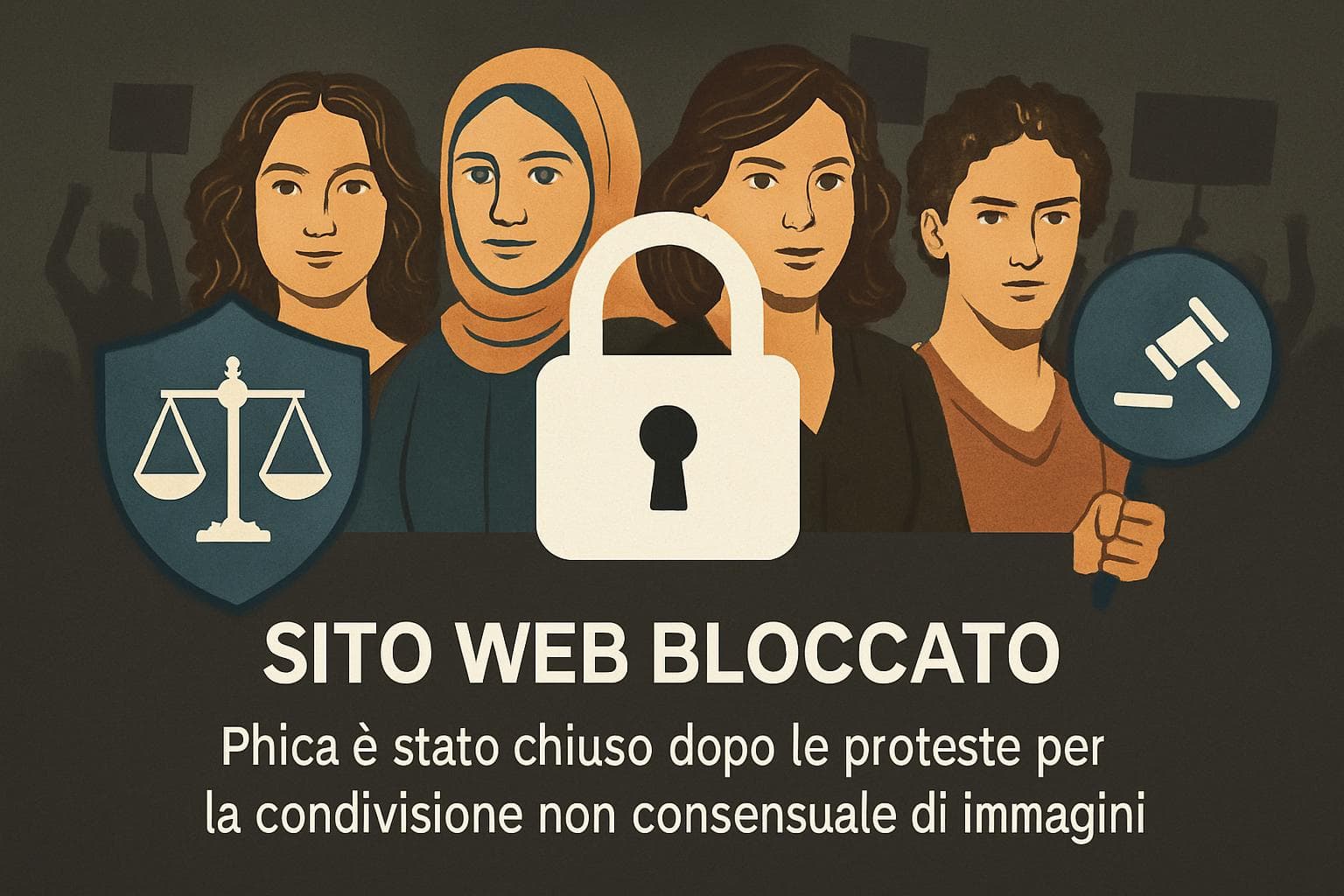
Italian Website Phica Shuts Down Amid Outcry Over Non-Consensual Image Sharing
In This Article
HIGHLIGHTS
- Italian website Phica, known for sharing doctored images of women, including Prime Minister Giorgia Meloni, has shut down amid public outrage.
- Giorgia Meloni and other female politicians have condemned the site, calling for severe punishment for those responsible.
- Phica had over 700,000 users and was active for nearly two decades despite previous complaints about its content.
- Italy's Postal Police have launched an investigation into the site following numerous complaints from women.
- The closure follows Meta's shutdown of a similar Italian Facebook group, Mia Moglie, for sharing non-consensual intimate images.
An Italian website notorious for sharing altered images of prominent women, including Prime Minister Giorgia Meloni, has been forced to close following a wave of public condemnation. The site, known as Phica, was a hub for sexist content, boasting over 700,000 users before its abrupt shutdown.
Public Outrage and Political Condemnation
The closure of Phica comes after a significant backlash led by female politicians and public figures. Prime Minister Giorgia Meloni expressed her disgust at the site's activities, demanding that those responsible be identified and punished "with the utmost firmness." Meloni's sentiments were echoed by other politicians, including Alessandra Moretti of the Democratic Party, who highlighted the site's role in inciting violence and degrading women's dignity.
A Long-Standing Issue
Phica, operational since 2005, had long been a platform for sharing non-consensual images of women, often accompanied by vulgar and sexist commentary. The site's so-called VIP section featured doctored images of female politicians and celebrities, taken from public appearances or personal social media accounts. Despite numerous complaints over the years, the site continued to operate until the recent public outcry forced its closure.
Legal and Social Implications
The Italian Postal Police have confirmed an investigation into Phica, following official complaints from several politicians. This development comes on the heels of Meta's decision to close an Italian Facebook group, Mia Moglie, where men shared intimate images of women without their consent. The incidents have sparked a broader conversation about digital privacy and the need for stricter regulations to protect individuals from online harassment.
WHAT THIS MIGHT MEAN
The closure of Phica and the subsequent investigation by Italian authorities could lead to significant legal repercussions for those involved in the site's operations. If the investigation uncovers criminal activities, it may result in prosecutions and set a precedent for handling similar cases in the future. Politically, the incident underscores the ongoing challenges in combating online harassment and protecting women's rights in Italy. Experts suggest that this could prompt legislative changes aimed at strengthening digital privacy laws and ensuring more robust enforcement against platforms that facilitate non-consensual image sharing.
Related Articles

James Talarico Secures Democratic Nomination in Texas Senate Race Amidst Republican Runoff
Rai Sport Chief Resigns Amid Olympic Commentary Controversy

Jesse Jackson: A Legacy of Civil Rights and Political Change

Trump Faces Backlash Over Racist Video Depicting Obamas

Tech Giants Pledge to Cover AI Data Center Energy Costs Amid Rising Electricity Concerns
St Francis of Assisi's Bones Draw Global Pilgrims to Italy
Italian Website Phica Shuts Down Amid Outcry Over Non-Consensual Image Sharing
In This Article
 Alex Carter| Published
 HIGHLIGHTS
- Italian website Phica, known for sharing doctored images of women, including Prime Minister Giorgia Meloni, has shut down amid public outrage.
- Giorgia Meloni and other female politicians have condemned the site, calling for severe punishment for those responsible.
- Phica had over 700,000 users and was active for nearly two decades despite previous complaints about its content.
- Italy's Postal Police have launched an investigation into the site following numerous complaints from women.
- The closure follows Meta's shutdown of a similar Italian Facebook group, Mia Moglie, for sharing non-consensual intimate images.
An Italian website notorious for sharing altered images of prominent women, including Prime Minister Giorgia Meloni, has been forced to close following a wave of public condemnation. The site, known as Phica, was a hub for sexist content, boasting over 700,000 users before its abrupt shutdown.
Public Outrage and Political Condemnation
The closure of Phica comes after a significant backlash led by female politicians and public figures. Prime Minister Giorgia Meloni expressed her disgust at the site's activities, demanding that those responsible be identified and punished "with the utmost firmness." Meloni's sentiments were echoed by other politicians, including Alessandra Moretti of the Democratic Party, who highlighted the site's role in inciting violence and degrading women's dignity.
A Long-Standing Issue
Phica, operational since 2005, had long been a platform for sharing non-consensual images of women, often accompanied by vulgar and sexist commentary. The site's so-called VIP section featured doctored images of female politicians and celebrities, taken from public appearances or personal social media accounts. Despite numerous complaints over the years, the site continued to operate until the recent public outcry forced its closure.
Legal and Social Implications
The Italian Postal Police have confirmed an investigation into Phica, following official complaints from several politicians. This development comes on the heels of Meta's decision to close an Italian Facebook group, Mia Moglie, where men shared intimate images of women without their consent. The incidents have sparked a broader conversation about digital privacy and the need for stricter regulations to protect individuals from online harassment.
WHAT THIS MIGHT MEAN
The closure of Phica and the subsequent investigation by Italian authorities could lead to significant legal repercussions for those involved in the site's operations. If the investigation uncovers criminal activities, it may result in prosecutions and set a precedent for handling similar cases in the future. Politically, the incident underscores the ongoing challenges in combating online harassment and protecting women's rights in Italy. Experts suggest that this could prompt legislative changes aimed at strengthening digital privacy laws and ensuring more robust enforcement against platforms that facilitate non-consensual image sharing.
Related Articles
James Talarico Secures Democratic Nomination in Texas Senate Race Amidst Republican Runoff
Rai Sport Chief Resigns Amid Olympic Commentary Controversy
Jesse Jackson: A Legacy of Civil Rights and Political Change
Trump Faces Backlash Over Racist Video Depicting Obamas
Tech Giants Pledge to Cover AI Data Center Energy Costs Amid Rising Electricity Concerns
St Francis of Assisi's Bones Draw Global Pilgrims to Italy