
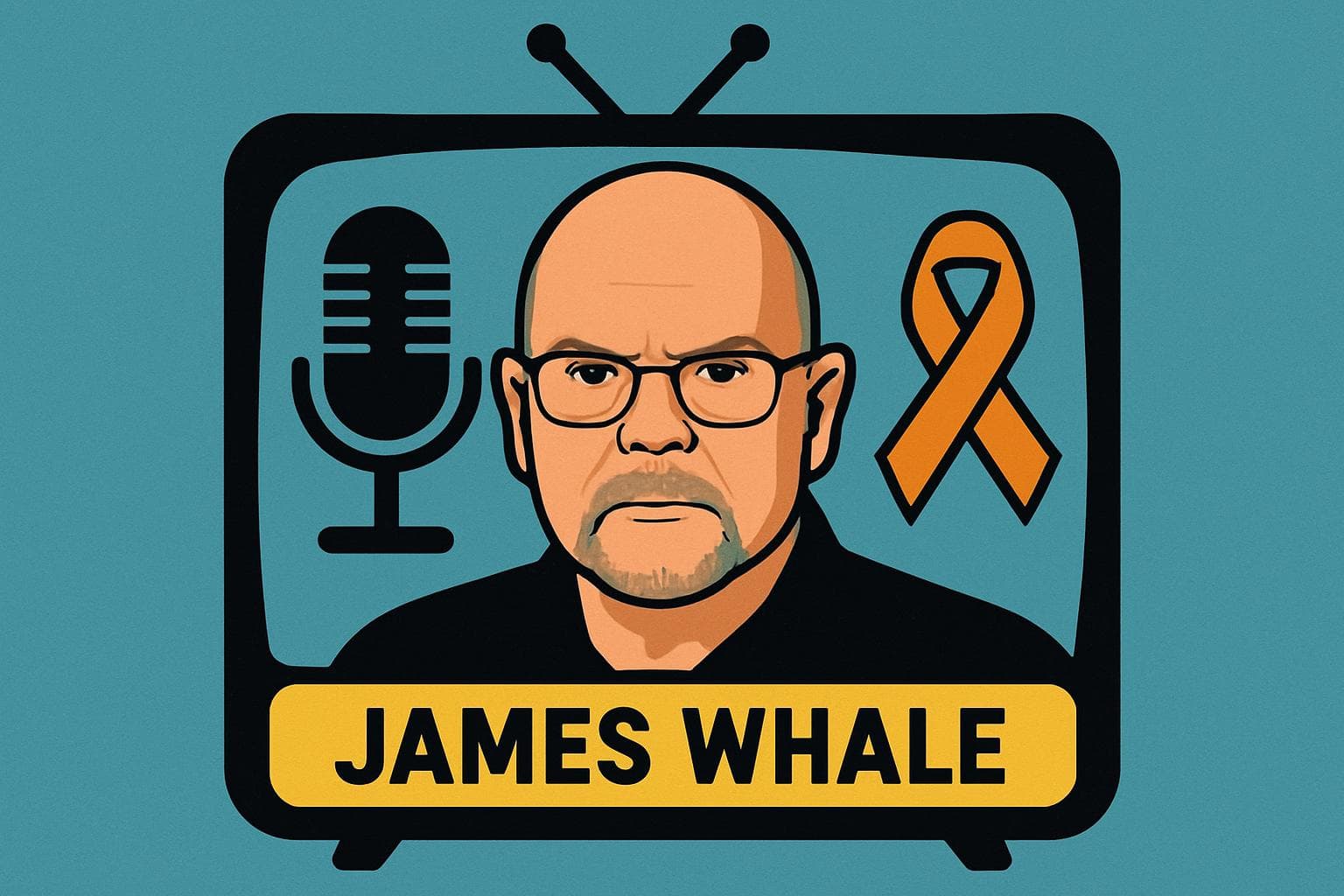
James Whale: Broadcasting Legend and Shock Jock Pioneer Dies at 74
In This Article
HIGHLIGHTS
- James Whale, a renowned British radio and TV presenter, has died at 74 after battling stage four kidney cancer.
- Whale's career spanned six decades, making him a household name with his pioneering late-night shock jock phone-in shows.
- He was first diagnosed with kidney cancer in 2000, and in 2020, the cancer returned, affecting multiple organs.
- Whale was awarded an MBE in 2024 for his contributions to broadcasting and charity, notably founding Kidney Cancer UK.
- Tributes from colleagues and fans highlight his impact on British media, with many calling him a broadcasting legend.
James Whale, the influential British radio and television presenter known for his outspoken style and pioneering late-night shows, has died at the age of 74. Whale's passing was confirmed by his agent on Monday, following a battle with stage four kidney cancer.
A Trailblazing Career
Whale's career in broadcasting began in the early 1970s, where he quickly became known for his innovative approach to radio. He gained widespread recognition in the 1980s with "The James Whale Radio Show," a late-night program that combined elements of shock jock antics with serious discussions, attracting millions of viewers and listeners across the UK. His work on ITV, Sky, and the BBC further cemented his status as a household name.
Personal Struggles and Achievements
First diagnosed with kidney cancer in 2000, Whale underwent surgery to remove a kidney. The cancer returned in 2020, spreading to his spine, brain, and lungs. Despite his health challenges, Whale continued to engage with his audience through his TalkRadio show and podcast, "Tales of the Whales." In recognition of his contributions to broadcasting and his charitable efforts, particularly with Kidney Cancer UK, Whale was awarded an MBE in 2024.
Tributes and Legacy
Tributes have poured in from colleagues and fans alike. TalkTV colleague Mike Graham described Whale as a "remarkable man" and "extraordinary talent," while broadcaster Piers Morgan hailed him as "one of Britain's all-time great radio talk show hosts." Whale's wife, Nadine Lamont-Brown, expressed her deep sadness, noting that he passed away peacefully.
Whale's legacy as a broadcasting legend and a provocateur who shaped the airwaves on his own terms will be remembered by many. His ability to entertain and challenge audiences left an indelible mark on British media.
WHAT THIS MIGHT MEAN
James Whale's death marks the end of an era for British broadcasting, particularly in the realm of late-night radio. His pioneering work in the shock jock genre paved the way for future broadcasters to explore more daring and controversial content. As the media landscape continues to evolve, Whale's influence may inspire a new generation of broadcasters to push boundaries while engaging audiences in meaningful dialogue.
Legally, Whale's contributions to charity, especially through Kidney Cancer UK, highlight the potential for media figures to leverage their platforms for philanthropic efforts. His MBE award underscores the importance of recognizing such contributions, which may encourage other media personalities to follow suit.
Politically, Whale's outspoken nature often sparked debate, reflecting the power of media figures to influence public discourse. His legacy may prompt discussions on the role of broadcasters in shaping societal narratives, particularly in an era where media consumption is rapidly changing.
Related Articles
BBC Faces Major Budget Cuts Amid Declining Licence Fee Income

Iranian Students Lead Major Protests Amid Rising US-Iran Tensions

Robert Carlyle Joins Line of Duty for Thrilling Seventh Series

Inside the Dark Web: How Investigator Greg Squire Rescues Children from Abuse
Gisèle Pelicot: A Journey from Horror to Advocacy in France's Largest Rape Trial

UK Faces Persistent Flooding Amid Record Wet Winter
James Whale: Broadcasting Legend and Shock Jock Pioneer Dies at 74
In This Article
 Marcus Blake| Published
 HIGHLIGHTS
- James Whale, a renowned British radio and TV presenter, has died at 74 after battling stage four kidney cancer.
- Whale's career spanned six decades, making him a household name with his pioneering late-night shock jock phone-in shows.
- He was first diagnosed with kidney cancer in 2000, and in 2020, the cancer returned, affecting multiple organs.
- Whale was awarded an MBE in 2024 for his contributions to broadcasting and charity, notably founding Kidney Cancer UK.
- Tributes from colleagues and fans highlight his impact on British media, with many calling him a broadcasting legend.
James Whale, the influential British radio and television presenter known for his outspoken style and pioneering late-night shows, has died at the age of 74. Whale's passing was confirmed by his agent on Monday, following a battle with stage four kidney cancer.
A Trailblazing Career
Whale's career in broadcasting began in the early 1970s, where he quickly became known for his innovative approach to radio. He gained widespread recognition in the 1980s with "The James Whale Radio Show," a late-night program that combined elements of shock jock antics with serious discussions, attracting millions of viewers and listeners across the UK. His work on ITV, Sky, and the BBC further cemented his status as a household name.
Personal Struggles and Achievements
First diagnosed with kidney cancer in 2000, Whale underwent surgery to remove a kidney. The cancer returned in 2020, spreading to his spine, brain, and lungs. Despite his health challenges, Whale continued to engage with his audience through his TalkRadio show and podcast, "Tales of the Whales." In recognition of his contributions to broadcasting and his charitable efforts, particularly with Kidney Cancer UK, Whale was awarded an MBE in 2024.
Tributes and Legacy
Tributes have poured in from colleagues and fans alike. TalkTV colleague Mike Graham described Whale as a "remarkable man" and "extraordinary talent," while broadcaster Piers Morgan hailed him as "one of Britain's all-time great radio talk show hosts." Whale's wife, Nadine Lamont-Brown, expressed her deep sadness, noting that he passed away peacefully.
Whale's legacy as a broadcasting legend and a provocateur who shaped the airwaves on his own terms will be remembered by many. His ability to entertain and challenge audiences left an indelible mark on British media.
WHAT THIS MIGHT MEAN
James Whale's death marks the end of an era for British broadcasting, particularly in the realm of late-night radio. His pioneering work in the shock jock genre paved the way for future broadcasters to explore more daring and controversial content. As the media landscape continues to evolve, Whale's influence may inspire a new generation of broadcasters to push boundaries while engaging audiences in meaningful dialogue.
Legally, Whale's contributions to charity, especially through Kidney Cancer UK, highlight the potential for media figures to leverage their platforms for philanthropic efforts. His MBE award underscores the importance of recognizing such contributions, which may encourage other media personalities to follow suit.
Politically, Whale's outspoken nature often sparked debate, reflecting the power of media figures to influence public discourse. His legacy may prompt discussions on the role of broadcasters in shaping societal narratives, particularly in an era where media consumption is rapidly changing.
Related Articles
BBC Faces Major Budget Cuts Amid Declining Licence Fee Income
Iranian Students Lead Major Protests Amid Rising US-Iran Tensions
Robert Carlyle Joins Line of Duty for Thrilling Seventh Series
Inside the Dark Web: How Investigator Greg Squire Rescues Children from Abuse
Gisèle Pelicot: A Journey from Horror to Advocacy in France's Largest Rape Trial
UK Faces Persistent Flooding Amid Record Wet Winter