
Jellyfish Swarm Temporarily Shuts Down Major French Nuclear Plant
In This Article
HIGHLIGHTS
- A jellyfish swarm forced the temporary shutdown of the Gravelines nuclear power plant in northern France.
- The incident affected four reactors, with two others already offline for maintenance, but posed no safety risk.
- EDF, the plant's operator, confirmed the jellyfish clogged the cooling system, a recurring issue for coastal plants.
- The plant, one of France's largest, draws cooling water from the North Sea, where jellyfish are common in warmer months.
- Similar jellyfish-related shutdowns have occurred globally, highlighting the need for predictive measures.
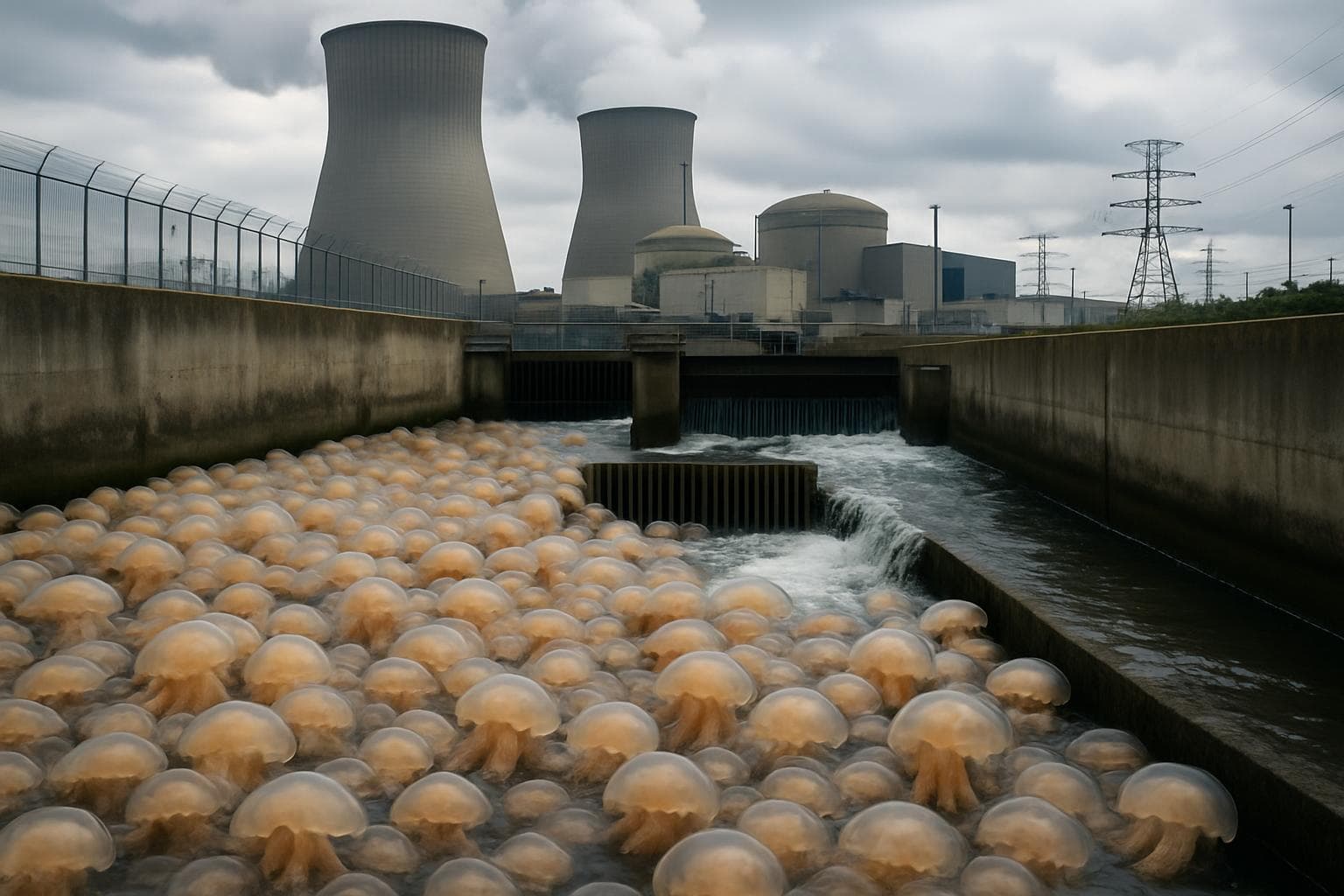
A massive swarm of jellyfish has led to the temporary shutdown of the Gravelines nuclear power plant in northern France, one of the country's largest energy facilities. The unexpected influx of marine creatures clogged the plant's cooling system, causing four of its six reactors to automatically shut down, according to EDF, the state-owned energy group operating the plant.
Cooling System Blockage
The incident occurred late on Sunday when the jellyfish swarmed the water intake systems used to cool the reactors. The plant, located between Dunkirk and Calais, draws its cooling water from a canal connected to the North Sea, a habitat for several jellyfish species. EDF assured that the event posed no threat to the safety of the facilities, personnel, or the environment, emphasizing that the jellyfish were found in the non-nuclear part of the plant.
Recurring Marine Life Challenges
This is not the first time jellyfish have disrupted nuclear power operations. Similar incidents have been reported at other coastal plants, including the Torness nuclear plant in Scotland and Sweden's Oskarshamn plant. Marine biologist Ruth Chamberlain noted that jellyfish are more active in warmer months, drawn to the surface by increased plankton levels, making them susceptible to getting caught in cooling systems.
Efforts to Mitigate Future Risks
The repeated interference by jellyfish has prompted scientists to develop predictive tools to anticipate such swarms. Researchers at the University of Bristol are working on an "early warning tool" to help coastal power plants prepare for sudden jellyfish influxes. Despite the current shutdown, EDF confirmed that there has been no impact on electricity exports from France to the UK.
WHAT THIS MIGHT MEAN
The Gravelines incident underscores the vulnerability of coastal nuclear plants to natural phenomena, such as jellyfish swarms. As climate change continues to alter marine ecosystems, the frequency of such events could increase, prompting energy companies to invest in predictive technologies and alternative cooling methods. Experts suggest that enhancing early warning systems and improving filter designs could mitigate future disruptions. The incident also highlights the broader environmental challenges faced by the nuclear energy sector, which remains a critical component of France's energy strategy, providing about 70% of the country's electricity.
Related Articles

UK Government Eases Deer Culling to Protect Woodlands and Farmland

Middle East Conflict Drives UK Energy Prices to New Highs

Saharan Dust to Illuminate UK Skies with Vivid Sunrises and Sunsets

Canada and Australia Forge Strategic Partnership Amid Global Uncertainty

UK Government to Reform Asylum Seeker Support and Employment Policies

UK Faces Dilemmas Amid Iran Conflict and China Spying Allegations
Jellyfish Swarm Temporarily Shuts Down Major French Nuclear Plant
In This Article
 Leila Hassan| Published
 HIGHLIGHTS
- A jellyfish swarm forced the temporary shutdown of the Gravelines nuclear power plant in northern France.
- The incident affected four reactors, with two others already offline for maintenance, but posed no safety risk.
- EDF, the plant's operator, confirmed the jellyfish clogged the cooling system, a recurring issue for coastal plants.
- The plant, one of France's largest, draws cooling water from the North Sea, where jellyfish are common in warmer months.
- Similar jellyfish-related shutdowns have occurred globally, highlighting the need for predictive measures.
A massive swarm of jellyfish has led to the temporary shutdown of the Gravelines nuclear power plant in northern France, one of the country's largest energy facilities. The unexpected influx of marine creatures clogged the plant's cooling system, causing four of its six reactors to automatically shut down, according to EDF, the state-owned energy group operating the plant.
Cooling System Blockage
The incident occurred late on Sunday when the jellyfish swarmed the water intake systems used to cool the reactors. The plant, located between Dunkirk and Calais, draws its cooling water from a canal connected to the North Sea, a habitat for several jellyfish species. EDF assured that the event posed no threat to the safety of the facilities, personnel, or the environment, emphasizing that the jellyfish were found in the non-nuclear part of the plant.
Recurring Marine Life Challenges
This is not the first time jellyfish have disrupted nuclear power operations. Similar incidents have been reported at other coastal plants, including the Torness nuclear plant in Scotland and Sweden's Oskarshamn plant. Marine biologist Ruth Chamberlain noted that jellyfish are more active in warmer months, drawn to the surface by increased plankton levels, making them susceptible to getting caught in cooling systems.
Efforts to Mitigate Future Risks
The repeated interference by jellyfish has prompted scientists to develop predictive tools to anticipate such swarms. Researchers at the University of Bristol are working on an "early warning tool" to help coastal power plants prepare for sudden jellyfish influxes. Despite the current shutdown, EDF confirmed that there has been no impact on electricity exports from France to the UK.
WHAT THIS MIGHT MEAN
The Gravelines incident underscores the vulnerability of coastal nuclear plants to natural phenomena, such as jellyfish swarms. As climate change continues to alter marine ecosystems, the frequency of such events could increase, prompting energy companies to invest in predictive technologies and alternative cooling methods. Experts suggest that enhancing early warning systems and improving filter designs could mitigate future disruptions. The incident also highlights the broader environmental challenges faced by the nuclear energy sector, which remains a critical component of France's energy strategy, providing about 70% of the country's electricity.
Related Articles
UK Government Eases Deer Culling to Protect Woodlands and Farmland
Middle East Conflict Drives UK Energy Prices to New Highs
Saharan Dust to Illuminate UK Skies with Vivid Sunrises and Sunsets
Canada and Australia Forge Strategic Partnership Amid Global Uncertainty
UK Government to Reform Asylum Seeker Support and Employment Policies
UK Faces Dilemmas Amid Iran Conflict and China Spying Allegations