
Judge Temporarily Blocks Deportation of Kilmar Abrego Garcia Amid Legal Battle
In This Article
HIGHLIGHTS
- A federal judge has temporarily blocked the deportation of Kilmar Abrego Garcia, citing concerns over his potential deportation to Uganda.
- Abrego Garcia, facing human trafficking charges, was mistakenly deported to El Salvador in March and is now challenging his detention and possible deportation.
- Judge Paula Xinis emphasized that deporting Abrego Garcia without due process would violate his constitutional rights.
- Abrego Garcia's attorney argues that the government is using deportation threats to coerce a guilty plea.
- The judge has scheduled an evidentiary hearing for Friday to further assess the case.
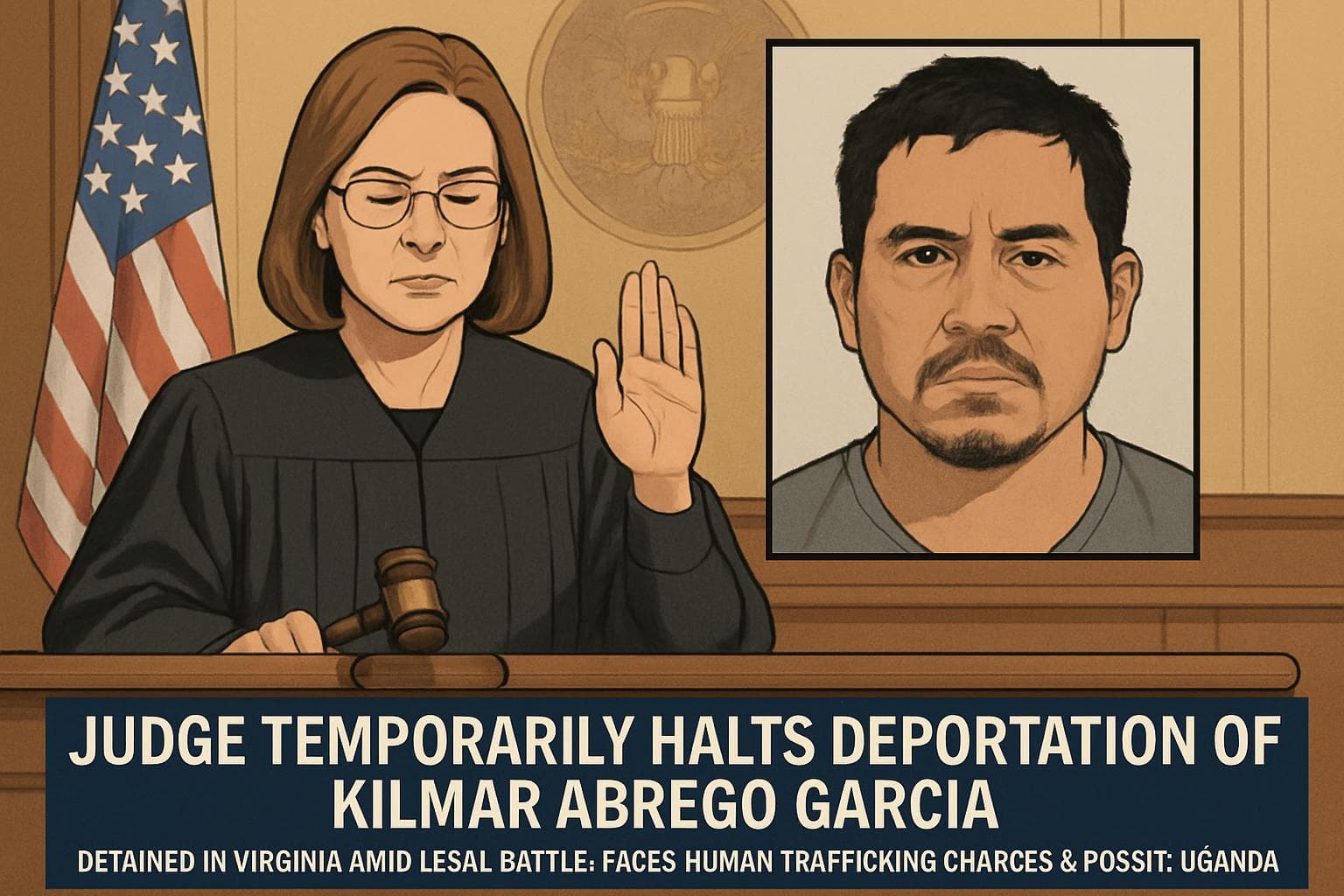
In a significant development in the ongoing legal saga surrounding Kilmar Abrego Garcia, a federal judge has temporarily halted his deportation, raising questions about the US government's handling of his case. Abrego Garcia, who was mistakenly deported to El Salvador earlier this year, now faces human trafficking charges and potential deportation to Uganda.
Legal Proceedings and Concerns
On Tuesday, US District Judge Paula Xinis issued a temporary order preventing the deportation of Abrego Garcia, who is currently detained in Virginia. The judge expressed concerns over the government's plan to deport him to Uganda, a country with which he has no connections. "It is in my view plain that you can't do that," Judge Xinis remarked, highlighting the constitutional implications of such actions.
Abrego Garcia's attorney, Simon Sandoval-Moshenberg, argues that the government's threats of deportation are being used as leverage to extract a guilty plea from his client. "The fact that they are holding Costa Rica as a carrot and using Uganda as a stick to try to coerce him to plead guilty for a crime is such clear evidence that they are weaponizing the immigration system," Sandoval-Moshenberg stated.
Background and Current Status
Abrego Garcia's legal troubles began when he was mistakenly deported to a notorious prison in El Salvador in March. Since then, he has been embroiled in a complex legal battle, challenging his detention and potential deportation. His recent lawsuit seeks to ensure that he is not removed from the United States without full due process.
Judge Xinis, who previously oversaw the case regarding his mistaken deportation, has scheduled an evidentiary hearing for Friday to further examine the situation. Meanwhile, Abrego Garcia remains in custody, with his legal team advocating for his rights and challenging the government's actions.
WHAT THIS MIGHT MEAN
The upcoming evidentiary hearing will be crucial in determining the next steps in Kilmar Abrego Garcia's case. If the court finds that his constitutional rights are being violated, it could set a precedent for similar cases involving deportation and due process. Legal experts suggest that the case could highlight broader issues within the US immigration policy, particularly regarding the use of deportation as a coercive tool. As the situation unfolds, it will be important to monitor how the court balances legal obligations with human rights considerations.
Related Articles
Venezuelan Political Prisoners Seek Amnesty Amidst Hopes for Democratic Transition

China Sets Lowest GDP Growth Target in Decades Amid Economic Challenges

Cuba Faces Widespread Blackout Amid Deepening Fuel Crisis

UK Faces Dilemmas Amid Iran Conflict and China Spying Allegations

Google Faces Legal Battle Over AI Chatbot's Alleged Role in Tragic Death

Iran Postpones Khamenei Funeral Amid Escalating US-Israeli Strikes
Judge Temporarily Blocks Deportation of Kilmar Abrego Garcia Amid Legal Battle
In This Article
 Sofia Romano| Published
 HIGHLIGHTS
- A federal judge has temporarily blocked the deportation of Kilmar Abrego Garcia, citing concerns over his potential deportation to Uganda.
- Abrego Garcia, facing human trafficking charges, was mistakenly deported to El Salvador in March and is now challenging his detention and possible deportation.
- Judge Paula Xinis emphasized that deporting Abrego Garcia without due process would violate his constitutional rights.
- Abrego Garcia's attorney argues that the government is using deportation threats to coerce a guilty plea.
- The judge has scheduled an evidentiary hearing for Friday to further assess the case.
In a significant development in the ongoing legal saga surrounding Kilmar Abrego Garcia, a federal judge has temporarily halted his deportation, raising questions about the US government's handling of his case. Abrego Garcia, who was mistakenly deported to El Salvador earlier this year, now faces human trafficking charges and potential deportation to Uganda.
Legal Proceedings and Concerns
On Tuesday, US District Judge Paula Xinis issued a temporary order preventing the deportation of Abrego Garcia, who is currently detained in Virginia. The judge expressed concerns over the government's plan to deport him to Uganda, a country with which he has no connections. "It is in my view plain that you can't do that," Judge Xinis remarked, highlighting the constitutional implications of such actions.
Abrego Garcia's attorney, Simon Sandoval-Moshenberg, argues that the government's threats of deportation are being used as leverage to extract a guilty plea from his client. "The fact that they are holding Costa Rica as a carrot and using Uganda as a stick to try to coerce him to plead guilty for a crime is such clear evidence that they are weaponizing the immigration system," Sandoval-Moshenberg stated.
Background and Current Status
Abrego Garcia's legal troubles began when he was mistakenly deported to a notorious prison in El Salvador in March. Since then, he has been embroiled in a complex legal battle, challenging his detention and potential deportation. His recent lawsuit seeks to ensure that he is not removed from the United States without full due process.
Judge Xinis, who previously oversaw the case regarding his mistaken deportation, has scheduled an evidentiary hearing for Friday to further examine the situation. Meanwhile, Abrego Garcia remains in custody, with his legal team advocating for his rights and challenging the government's actions.
WHAT THIS MIGHT MEAN
The upcoming evidentiary hearing will be crucial in determining the next steps in Kilmar Abrego Garcia's case. If the court finds that his constitutional rights are being violated, it could set a precedent for similar cases involving deportation and due process. Legal experts suggest that the case could highlight broader issues within the US immigration policy, particularly regarding the use of deportation as a coercive tool. As the situation unfolds, it will be important to monitor how the court balances legal obligations with human rights considerations.
Related Articles
Venezuelan Political Prisoners Seek Amnesty Amidst Hopes for Democratic Transition
China Sets Lowest GDP Growth Target in Decades Amid Economic Challenges
Cuba Faces Widespread Blackout Amid Deepening Fuel Crisis
UK Faces Dilemmas Amid Iran Conflict and China Spying Allegations
Google Faces Legal Battle Over AI Chatbot's Alleged Role in Tragic Death
Iran Postpones Khamenei Funeral Amid Escalating US-Israeli Strikes