
Tensions Rise in Minneapolis as Federal Judge Limits ICE Tactics Amid Protests
In This Article
HIGHLIGHTS
- A federal judge has restricted ICE's use of crowd control tactics against peaceful protesters in Minneapolis following the shooting of Renee Good.
- Approximately 1,500 soldiers are on standby in Alaska for potential deployment to Minneapolis amid ongoing anti-ICE demonstrations.
- The Trump administration has mobilized 3,000 federal agents to Minnesota, significantly outnumbering local police forces.
- Protests erupted after Renee Good, a legal observer, was fatally shot by an ICE agent on January 7, sparking nationwide demonstrations.
- The Department of Justice has launched an investigation into Minnesota officials for allegedly obstructing federal immigration operations.
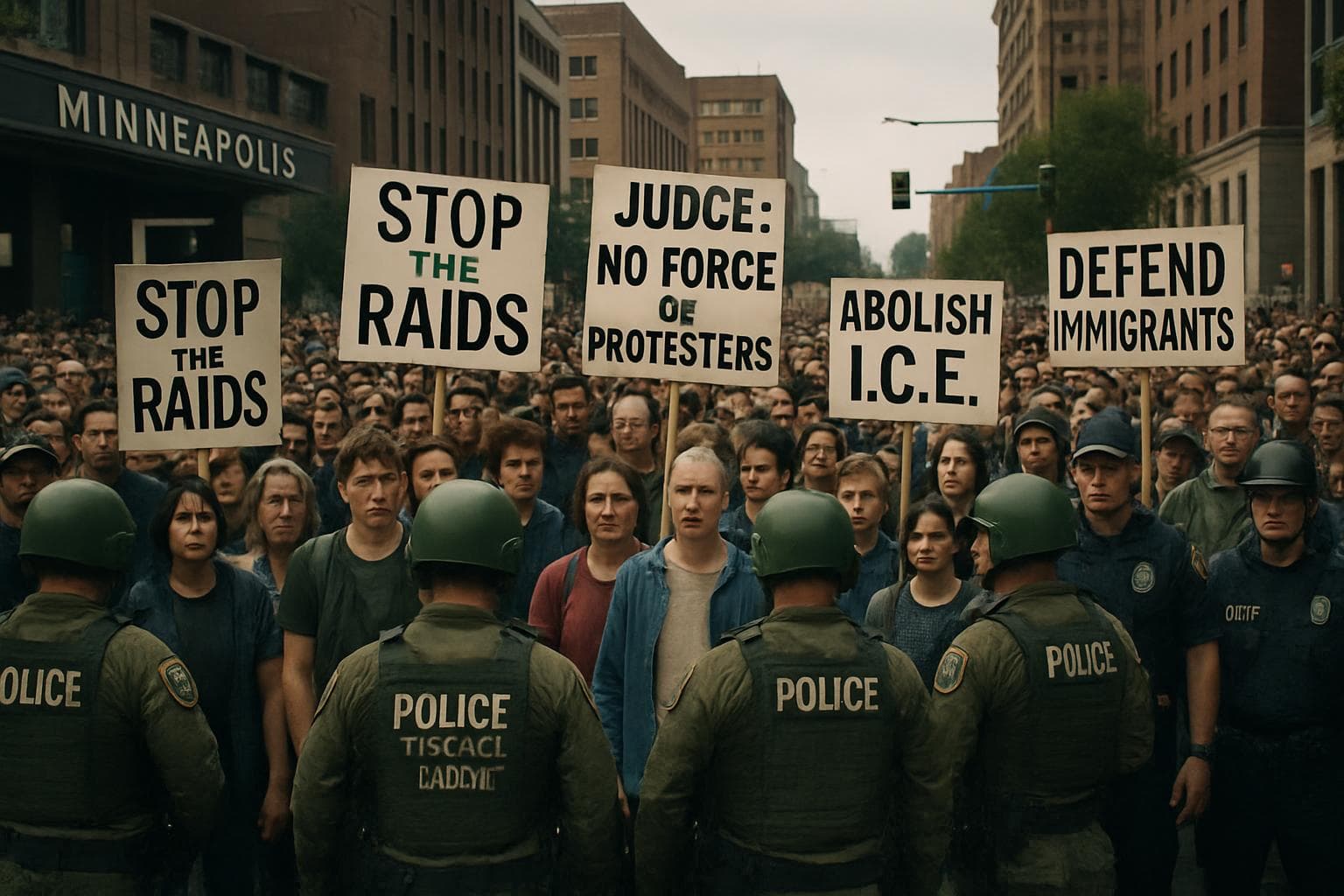
In the wake of the fatal shooting of Renee Good by an Immigration and Customs Enforcement (ICE) agent, Minneapolis has become a focal point of nationwide protests against aggressive immigration enforcement. A federal judge has issued a ruling limiting the crowd control measures that ICE agents can employ against peaceful demonstrators, a decision that comes as tensions escalate in the city.
Federal Restrictions on ICE Tactics
Judge Katherine Menendez's ruling prohibits federal agents from arresting or using pepper spray on peaceful protesters, including those observing ICE activities. This decision follows a lawsuit filed by demonstrators and aims to protect civil rights during protests. The Department of Homeland Security, however, has criticized the ruling, asserting that federal agents have acted lawfully to protect themselves.
Military and Law Enforcement on Standby
As protests continue, approximately 1,500 soldiers from the 11th Airborne Division in Alaska are on standby for potential deployment to Minneapolis. This comes as the Trump administration has already mobilized 3,000 federal agents to Minnesota, a force that now outnumbers local police five to one. The state's National Guard has also been placed on alert, with troops ready to assist local law enforcement.
Community Impact and Response
The presence of federal agents has dramatically altered daily life in Minneapolis, with reports of arrests occurring during routine activities such as commuting and grocery shopping. Community leaders and organizations have voiced concerns over the aggressive tactics used by ICE, which have affected not only undocumented immigrants but also legal residents and citizens.
Political and Legal Implications
The Trump administration has threatened to invoke the Insurrection Act, potentially deploying U.S. troops to quell demonstrations. Additionally, the Department of Justice has initiated an investigation into Minnesota officials, including Governor Tim Walz, for allegedly conspiring to impede federal immigration efforts. This development underscores the heightened political tensions surrounding immigration enforcement in the state.
WHAT THIS MIGHT MEAN
The situation in Minneapolis remains volatile, with potential for further escalation if federal troops are deployed. The legal restrictions on ICE tactics may serve as a precedent for other cities facing similar protests, potentially influencing future immigration enforcement policies. As the Department of Justice investigates state officials, the outcome could have significant political ramifications, potentially affecting federal-state relations and immigration policy debates nationwide.
Related Articles
Don Lemon Pleads Not Guilty in Minnesota Church Protest Case
DHS Spokesperson Tricia McLaughlin to Depart Amidst Immigration Policy Controversy
ICE Agents Under Investigation for Alleged False Testimony in Minneapolis Shooting
Senate Stalemate Over DHS Funding Amid Immigration Reform Dispute
Trump Administration Ends Controversial Immigration Enforcement Surge in Minnesota
Clintons to Testify as Epstein Files Spark Allegations of Cover-Up
Tensions Rise in Minneapolis as Federal Judge Limits ICE Tactics Amid Protests
In This Article
 Ethan Brooks| Published
 HIGHLIGHTS
- A federal judge has restricted ICE's use of crowd control tactics against peaceful protesters in Minneapolis following the shooting of Renee Good.
- Approximately 1,500 soldiers are on standby in Alaska for potential deployment to Minneapolis amid ongoing anti-ICE demonstrations.
- The Trump administration has mobilized 3,000 federal agents to Minnesota, significantly outnumbering local police forces.
- Protests erupted after Renee Good, a legal observer, was fatally shot by an ICE agent on January 7, sparking nationwide demonstrations.
- The Department of Justice has launched an investigation into Minnesota officials for allegedly obstructing federal immigration operations.
In the wake of the fatal shooting of Renee Good by an Immigration and Customs Enforcement (ICE) agent, Minneapolis has become a focal point of nationwide protests against aggressive immigration enforcement. A federal judge has issued a ruling limiting the crowd control measures that ICE agents can employ against peaceful demonstrators, a decision that comes as tensions escalate in the city.
Federal Restrictions on ICE Tactics
Judge Katherine Menendez's ruling prohibits federal agents from arresting or using pepper spray on peaceful protesters, including those observing ICE activities. This decision follows a lawsuit filed by demonstrators and aims to protect civil rights during protests. The Department of Homeland Security, however, has criticized the ruling, asserting that federal agents have acted lawfully to protect themselves.
Military and Law Enforcement on Standby
As protests continue, approximately 1,500 soldiers from the 11th Airborne Division in Alaska are on standby for potential deployment to Minneapolis. This comes as the Trump administration has already mobilized 3,000 federal agents to Minnesota, a force that now outnumbers local police five to one. The state's National Guard has also been placed on alert, with troops ready to assist local law enforcement.
Community Impact and Response
The presence of federal agents has dramatically altered daily life in Minneapolis, with reports of arrests occurring during routine activities such as commuting and grocery shopping. Community leaders and organizations have voiced concerns over the aggressive tactics used by ICE, which have affected not only undocumented immigrants but also legal residents and citizens.
Political and Legal Implications
The Trump administration has threatened to invoke the Insurrection Act, potentially deploying U.S. troops to quell demonstrations. Additionally, the Department of Justice has initiated an investigation into Minnesota officials, including Governor Tim Walz, for allegedly conspiring to impede federal immigration efforts. This development underscores the heightened political tensions surrounding immigration enforcement in the state.
WHAT THIS MIGHT MEAN
The situation in Minneapolis remains volatile, with potential for further escalation if federal troops are deployed. The legal restrictions on ICE tactics may serve as a precedent for other cities facing similar protests, potentially influencing future immigration enforcement policies. As the Department of Justice investigates state officials, the outcome could have significant political ramifications, potentially affecting federal-state relations and immigration policy debates nationwide.
Related Articles
Don Lemon Pleads Not Guilty in Minnesota Church Protest Case
DHS Spokesperson Tricia McLaughlin to Depart Amidst Immigration Policy Controversy
ICE Agents Under Investigation for Alleged False Testimony in Minneapolis Shooting
Senate Stalemate Over DHS Funding Amid Immigration Reform Dispute
Trump Administration Ends Controversial Immigration Enforcement Surge in Minnesota
Clintons to Testify as Epstein Files Spark Allegations of Cover-Up