
Judge Orders Release of Ghislaine Maxwell Grand Jury Records Under New Transparency Law
In This Article
HIGHLIGHTS
- A federal judge in New York has authorized the release of grand jury materials from Ghislaine Maxwell's sex trafficking case, following a new law mandating transparency.
- The Epstein Files Transparency Act requires the Department of Justice to release Epstein-related records by December 19, with protections for victims' privacy.
- Maxwell, convicted in 2021, is serving a 20-year sentence for her role in recruiting underage girls for Epstein, who died in 2019.
- The unsealing of these documents is seen as a victory for transparency, with implications for ongoing investigations and public understanding.
- The Justice Department plans to redact sensitive information to protect survivors, as it prepares to release extensive investigative materials.
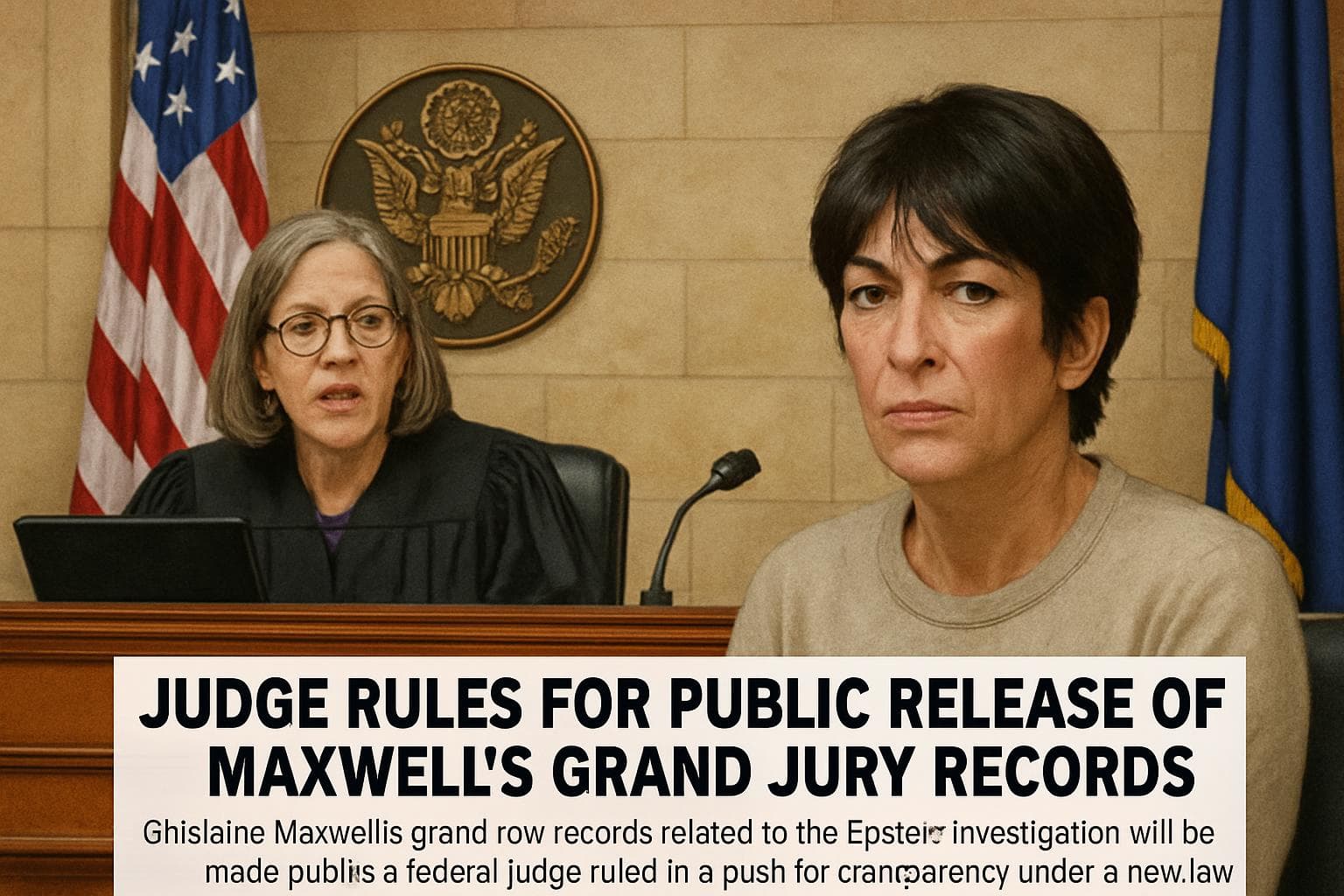
In a significant legal development, a federal judge in New York has ruled that grand jury materials from the sex trafficking investigation of Ghislaine Maxwell can be made public. This decision follows the recent passage of the Epstein Files Transparency Act, which mandates the release of records related to the disgraced financier Jeffrey Epstein by December 19. The ruling, issued by US District Judge Paul Engelmayer, underscores a growing push for transparency in cases involving Epstein and his associates.
Maxwell, a former confidant of Epstein, was convicted in 2021 for her role in recruiting and grooming underage girls for sexual exploitation by Epstein. She is currently serving a 20-year sentence in a Texas prison. The decision to unseal these records is part of a broader legislative effort to shed light on the extensive investigations surrounding Epstein, who died in a federal jail in 2019.
Legislative and Legal Context
The Epstein Files Transparency Act, signed into law by former President Donald Trump, requires the Department of Justice to release unclassified records related to Epstein and Maxwell. This includes grand jury transcripts, investigative materials, and other documents that have been kept secret under federal rules. The Justice Department has been tasked with ensuring that these records are made available in a searchable format, while also protecting the privacy of victims.
Judge Engelmayer's ruling follows a similar decision by a Florida judge, who allowed the release of documents from a state investigation into Epstein dating back to 2005. The Justice Department has indicated that it will redact sensitive information to protect survivors and prevent the dissemination of sexualized images.
Implications for Transparency and Justice
The unsealing of these documents is hailed as a victory for transparency, with Representative Robert Garcia, a top Democrat on the House Oversight Committee, emphasizing the importance of public access to these files. "These files are now part of the Epstein files held by the Department of Justice, and must be turned over to the Oversight Committee in response to our subpoena," Garcia stated.
The release of these materials is expected to provide new insights into the extensive sex trafficking network orchestrated by Epstein and Maxwell. It also raises questions about the handling of previous investigations and the potential for further legal actions.
WHAT THIS MIGHT MEAN
The release of grand jury materials from Ghislaine Maxwell's case could have far-reaching implications for ongoing investigations and public understanding of the Epstein scandal. Legal experts suggest that the transparency mandated by the Epstein Files Transparency Act may lead to new revelations about the extent of Epstein's network and the involvement of other individuals.
As the Department of Justice prepares to release these records, it faces the challenge of balancing transparency with the need to protect victims' privacy. The redaction of sensitive information will be crucial to ensuring that survivors are not further victimized by the public disclosure of these materials.
Looking ahead, the unsealing of these documents may prompt renewed scrutiny of past investigations and potentially lead to additional legal actions against those implicated in Epstein's crimes. The public release of these records could also influence ongoing discussions about accountability and justice in high-profile cases involving sexual exploitation.
Related Articles

Congress Subpoenas Attorney General Bondi in Epstein Investigation

Armed Intruder Fatally Shot at Mar-a-Lago by Secret Service

Tech Giants Pledge to Cover AI Data Center Energy Costs Amid Rising Electricity Concerns

Cuba Faces Widespread Blackout Amid Deepening Fuel Crisis

UK Faces Dilemmas Amid Iran Conflict and China Spying Allegations

Google Faces Legal Battle Over AI Chatbot's Alleged Role in Tragic Death
Judge Orders Release of Ghislaine Maxwell Grand Jury Records Under New Transparency Law
In This Article
 Sofia Romano| Published
 HIGHLIGHTS
- A federal judge in New York has authorized the release of grand jury materials from Ghislaine Maxwell's sex trafficking case, following a new law mandating transparency.
- The Epstein Files Transparency Act requires the Department of Justice to release Epstein-related records by December 19, with protections for victims' privacy.
- Maxwell, convicted in 2021, is serving a 20-year sentence for her role in recruiting underage girls for Epstein, who died in 2019.
- The unsealing of these documents is seen as a victory for transparency, with implications for ongoing investigations and public understanding.
- The Justice Department plans to redact sensitive information to protect survivors, as it prepares to release extensive investigative materials.
In a significant legal development, a federal judge in New York has ruled that grand jury materials from the sex trafficking investigation of Ghislaine Maxwell can be made public. This decision follows the recent passage of the Epstein Files Transparency Act, which mandates the release of records related to the disgraced financier Jeffrey Epstein by December 19. The ruling, issued by US District Judge Paul Engelmayer, underscores a growing push for transparency in cases involving Epstein and his associates.
Maxwell, a former confidant of Epstein, was convicted in 2021 for her role in recruiting and grooming underage girls for sexual exploitation by Epstein. She is currently serving a 20-year sentence in a Texas prison. The decision to unseal these records is part of a broader legislative effort to shed light on the extensive investigations surrounding Epstein, who died in a federal jail in 2019.
Legislative and Legal Context
The Epstein Files Transparency Act, signed into law by former President Donald Trump, requires the Department of Justice to release unclassified records related to Epstein and Maxwell. This includes grand jury transcripts, investigative materials, and other documents that have been kept secret under federal rules. The Justice Department has been tasked with ensuring that these records are made available in a searchable format, while also protecting the privacy of victims.
Judge Engelmayer's ruling follows a similar decision by a Florida judge, who allowed the release of documents from a state investigation into Epstein dating back to 2005. The Justice Department has indicated that it will redact sensitive information to protect survivors and prevent the dissemination of sexualized images.
Implications for Transparency and Justice
The unsealing of these documents is hailed as a victory for transparency, with Representative Robert Garcia, a top Democrat on the House Oversight Committee, emphasizing the importance of public access to these files. "These files are now part of the Epstein files held by the Department of Justice, and must be turned over to the Oversight Committee in response to our subpoena," Garcia stated.
The release of these materials is expected to provide new insights into the extensive sex trafficking network orchestrated by Epstein and Maxwell. It also raises questions about the handling of previous investigations and the potential for further legal actions.
WHAT THIS MIGHT MEAN
The release of grand jury materials from Ghislaine Maxwell's case could have far-reaching implications for ongoing investigations and public understanding of the Epstein scandal. Legal experts suggest that the transparency mandated by the Epstein Files Transparency Act may lead to new revelations about the extent of Epstein's network and the involvement of other individuals.
As the Department of Justice prepares to release these records, it faces the challenge of balancing transparency with the need to protect victims' privacy. The redaction of sensitive information will be crucial to ensuring that survivors are not further victimized by the public disclosure of these materials.
Looking ahead, the unsealing of these documents may prompt renewed scrutiny of past investigations and potentially lead to additional legal actions against those implicated in Epstein's crimes. The public release of these records could also influence ongoing discussions about accountability and justice in high-profile cases involving sexual exploitation.
Related Articles
Congress Subpoenas Attorney General Bondi in Epstein Investigation
Armed Intruder Fatally Shot at Mar-a-Lago by Secret Service
Tech Giants Pledge to Cover AI Data Center Energy Costs Amid Rising Electricity Concerns
Cuba Faces Widespread Blackout Amid Deepening Fuel Crisis
UK Faces Dilemmas Amid Iran Conflict and China Spying Allegations
Google Faces Legal Battle Over AI Chatbot's Alleged Role in Tragic Death