
US Justice Department Challenges California's New Congressional Maps Over Racial Gerrymandering Claims
In This Article
HIGHLIGHTS
- The US Justice Department has filed a lawsuit against California over new congressional maps approved by voters, alleging racial gerrymandering.
- Proposition 50, passed by California voters, aims to give Democrats an advantage in five new congressional districts.
- Attorney General Pam Bondi accuses Governor Gavin Newsom of a "brazen" power grab, while Newsom's team defends the maps as a response to Republican gerrymandering in Texas.
- The lawsuit claims the maps violate the Equal Protection Clause by using race as a predominant factor in redistricting.
- The legal battle sets up a significant confrontation between the Trump administration and California's Democratic leadership.
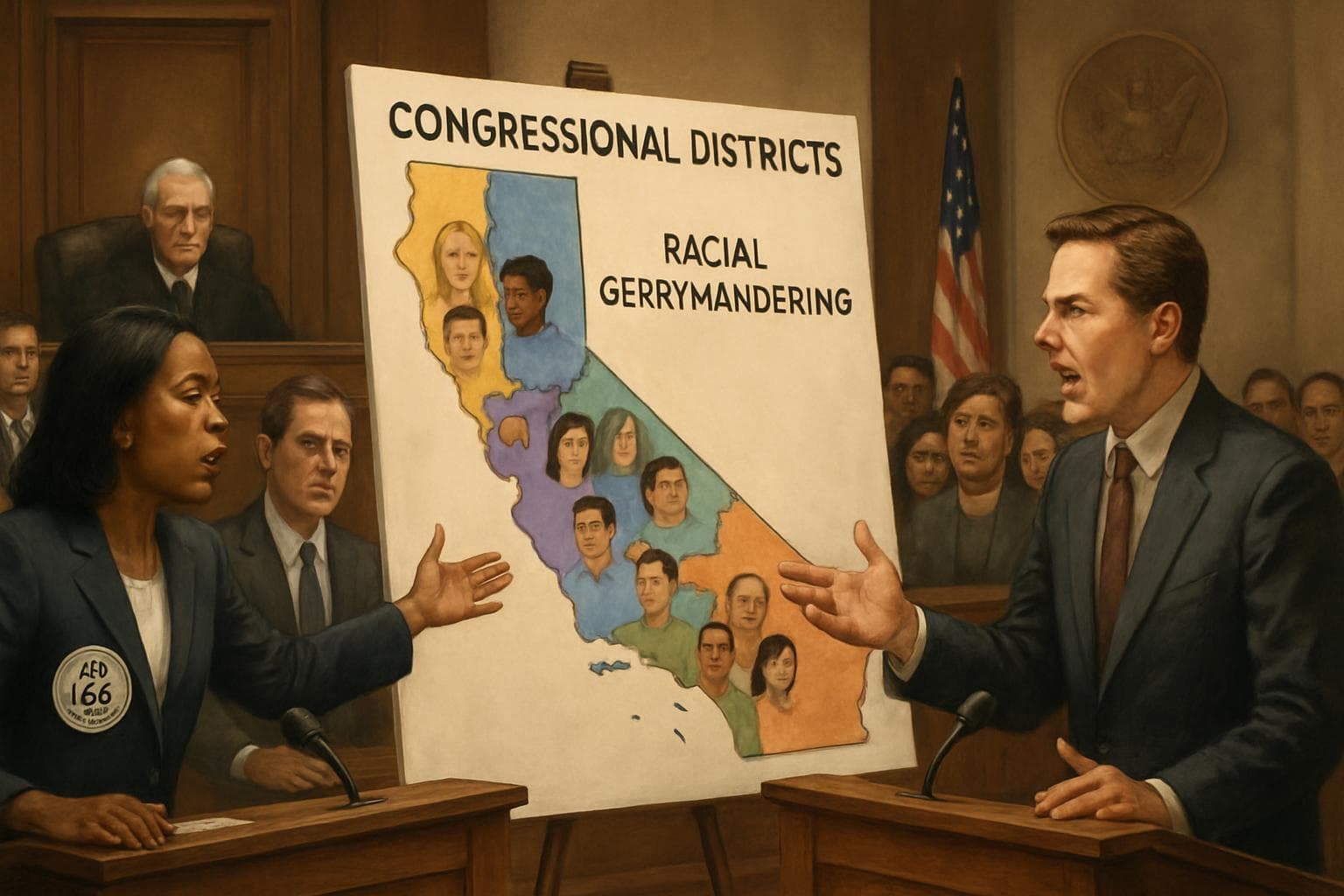
The US Justice Department has initiated a legal battle against California, challenging the state's newly approved congressional maps on grounds of racial gerrymandering. The lawsuit, filed in a federal court in California, accuses Governor Gavin Newsom and Secretary of State Shirley Weber of creating racially gerrymandered districts, violating the Equal Protection Clause of the 14th Amendment.
Proposition 50 and Its Implications
The contentious maps stem from Proposition 50, a redistricting measure that California voters passed with a decisive majority. The proposition aims to provide Democrats with an edge in five new congressional districts, countering Republican gains in states like Texas. Attorney General Pam Bondi criticized the move as a "brazen power grab," asserting that it seeks to entrench one-party rule in California.
Legal and Political Reactions
The lawsuit has intensified the ongoing redistricting conflict, which has seen states across the nation redrawing maps to secure political advantages. Newsom's administration defends the maps as a necessary countermeasure to Republican gerrymandering efforts led by former President Donald Trump. "Californians spoke loud and clear," said Attorney General Rob Bonta, emphasizing the voters' rejection of Trump's policies.
Allegations of Racial Gerrymandering
The Justice Department's complaint highlights "substantial evidence" that racial demographics were a primary consideration in the redistricting process. Jesus A. Osete, Principal Deputy Assistant Attorney General for Civil Rights, stated, "Race cannot be used as a proxy to advance political interests." The lawsuit seeks to block the implementation of these maps in future elections.
A Broader Redistricting Battle
This legal confrontation is part of a larger national struggle over redistricting, with both parties seeking to secure electoral advantages. The outcome of this case could have significant implications for the balance of power in the US House of Representatives, particularly as the 2026 midterm elections approach.
WHAT THIS MIGHT MEAN
The lawsuit against California's congressional maps could lead to a landmark decision on the legality of using race as a factor in redistricting. If the courts rule against California, it may prompt a reevaluation of redistricting practices nationwide, potentially affecting other states with similar allegations. Politically, the case underscores the deepening divide between Republican and Democratic strategies in securing electoral advantages. As the legal proceedings unfold, both parties will likely intensify their efforts to influence redistricting outcomes, shaping the political landscape for years to come.
Related Articles

Congress Subpoenas Attorney General Bondi in Epstein Investigation

James Talarico Secures Democratic Nomination in Texas Senate Race Amidst Republican Runoff

Senate Blocks Resolution to Limit Trump's Military Actions in Iran

Tech Giants Pledge to Cover AI Data Center Energy Costs Amid Rising Electricity Concerns

Cuba Faces Widespread Blackout Amid Deepening Fuel Crisis

UK Faces Dilemmas Amid Iran Conflict and China Spying Allegations
US Justice Department Challenges California's New Congressional Maps Over Racial Gerrymandering Claims
In This Article
 Alex Carter| Published
 HIGHLIGHTS
- The US Justice Department has filed a lawsuit against California over new congressional maps approved by voters, alleging racial gerrymandering.
- Proposition 50, passed by California voters, aims to give Democrats an advantage in five new congressional districts.
- Attorney General Pam Bondi accuses Governor Gavin Newsom of a "brazen" power grab, while Newsom's team defends the maps as a response to Republican gerrymandering in Texas.
- The lawsuit claims the maps violate the Equal Protection Clause by using race as a predominant factor in redistricting.
- The legal battle sets up a significant confrontation between the Trump administration and California's Democratic leadership.
The US Justice Department has initiated a legal battle against California, challenging the state's newly approved congressional maps on grounds of racial gerrymandering. The lawsuit, filed in a federal court in California, accuses Governor Gavin Newsom and Secretary of State Shirley Weber of creating racially gerrymandered districts, violating the Equal Protection Clause of the 14th Amendment.
Proposition 50 and Its Implications
The contentious maps stem from Proposition 50, a redistricting measure that California voters passed with a decisive majority. The proposition aims to provide Democrats with an edge in five new congressional districts, countering Republican gains in states like Texas. Attorney General Pam Bondi criticized the move as a "brazen power grab," asserting that it seeks to entrench one-party rule in California.
Legal and Political Reactions
The lawsuit has intensified the ongoing redistricting conflict, which has seen states across the nation redrawing maps to secure political advantages. Newsom's administration defends the maps as a necessary countermeasure to Republican gerrymandering efforts led by former President Donald Trump. "Californians spoke loud and clear," said Attorney General Rob Bonta, emphasizing the voters' rejection of Trump's policies.
Allegations of Racial Gerrymandering
The Justice Department's complaint highlights "substantial evidence" that racial demographics were a primary consideration in the redistricting process. Jesus A. Osete, Principal Deputy Assistant Attorney General for Civil Rights, stated, "Race cannot be used as a proxy to advance political interests." The lawsuit seeks to block the implementation of these maps in future elections.
A Broader Redistricting Battle
This legal confrontation is part of a larger national struggle over redistricting, with both parties seeking to secure electoral advantages. The outcome of this case could have significant implications for the balance of power in the US House of Representatives, particularly as the 2026 midterm elections approach.
WHAT THIS MIGHT MEAN
The lawsuit against California's congressional maps could lead to a landmark decision on the legality of using race as a factor in redistricting. If the courts rule against California, it may prompt a reevaluation of redistricting practices nationwide, potentially affecting other states with similar allegations. Politically, the case underscores the deepening divide between Republican and Democratic strategies in securing electoral advantages. As the legal proceedings unfold, both parties will likely intensify their efforts to influence redistricting outcomes, shaping the political landscape for years to come.
Related Articles
Congress Subpoenas Attorney General Bondi in Epstein Investigation
James Talarico Secures Democratic Nomination in Texas Senate Race Amidst Republican Runoff
Senate Blocks Resolution to Limit Trump's Military Actions in Iran
Tech Giants Pledge to Cover AI Data Center Energy Costs Amid Rising Electricity Concerns
Cuba Faces Widespread Blackout Amid Deepening Fuel Crisis
UK Faces Dilemmas Amid Iran Conflict and China Spying Allegations