
Keir Starmer's China Visit Paves Way for Economic Cooperation Amidst Criticism
In This Article
HIGHLIGHTS
- Keir Starmer's visit to China marks the first by a UK Prime Minister in eight years, aiming to reset UK-China relations.
- A visa-free travel agreement for British citizens to China was announced, potentially benefiting 620,000 travelers in 2024.
- The UK secured a reduction in import taxes on UK whisky and agreed to explore a services trade agreement with China.
- Critics express concerns over national security and human rights issues, urging a cautious approach to UK-China relations.
- The visit opens the possibility of a future visit to the UK by Chinese President Xi Jinping, despite existing political tensions.
In a landmark visit, UK Prime Minister Keir Starmer has taken significant steps to thaw the frosty relations between the United Kingdom and China. This visit, the first by a British leader in eight years, signals a strategic shift towards economic pragmatism, despite ongoing concerns over national security and human rights.
Visa-Free Travel and Trade Agreements
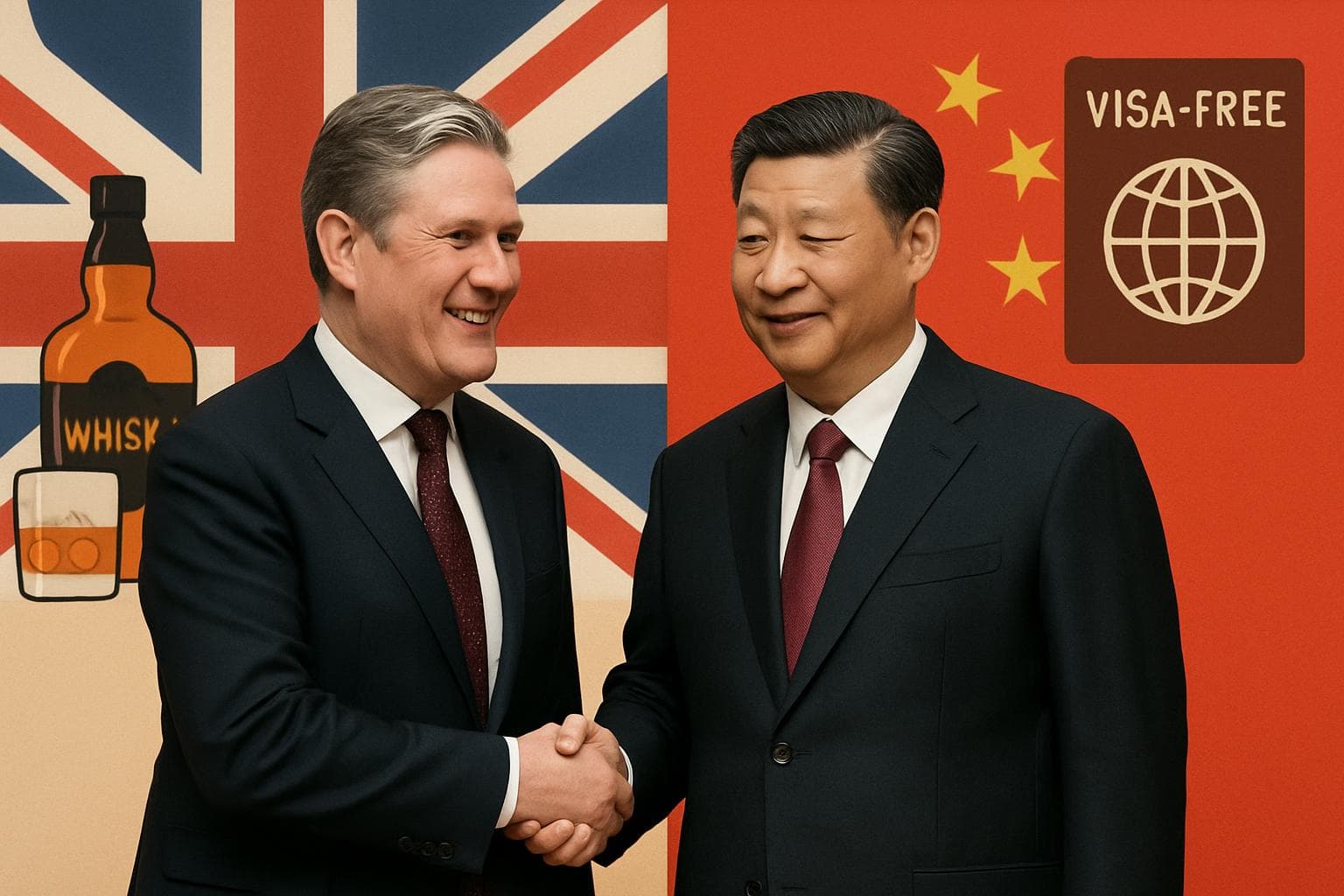
Among the key outcomes of the visit is an agreement allowing British citizens to travel to China visa-free for up to 30 days. This move, aligning the UK with 50 other countries, is expected to benefit hundreds of thousands of travelers annually. Additionally, the UK secured a reduction in import taxes on its whisky exports to China, from 10% to 5%, a development welcomed by the British business community.
Exploring New Avenues for Trade
The UK and China have also agreed to explore a potential services trade agreement, which could establish clear, legally binding rules for UK firms operating in China. As the world's second-largest exporter of services, the UK sees this as an opportunity to expand its economic footprint in China, particularly in finance, healthcare, and legal services.
Balancing Economic Gains and Security Concerns
Despite these promising developments, the visit has not been without controversy. Critics, including former US President Donald Trump, have warned of the risks associated with closer ties to China, citing national security and human rights issues. Starmer, however, emphasized a "clear-eyed and realistic" approach, aiming for a "sophisticated" relationship that balances economic interests with security concerns.
Potential for Future Engagements
The visit has also opened the door to a potential visit to the UK by Chinese President Xi Jinping, a move that could further solidify the renewed relationship. However, political challenges remain, including existing sanctions on British MPs by China and the ban on Chinese diplomats from the UK Parliament.
WHAT THIS MIGHT MEAN
The outcomes of Starmer's visit to China could herald a new era of economic cooperation between the two nations. If the visa-free travel agreement is implemented smoothly, it could significantly boost tourism and business travel, fostering closer ties. The exploration of a services trade agreement could open lucrative opportunities for UK businesses, enhancing economic growth.
However, the UK must navigate the delicate balance between economic benefits and security concerns. As the relationship evolves, it will be crucial for the UK to maintain a vigilant stance on national security and human rights issues, ensuring that economic gains do not come at the expense of ethical standards.
Looking ahead, the potential visit by President Xi to the UK could further cement this renewed partnership, provided political tensions are managed effectively. The UK will need to continue its diplomatic efforts to address existing sanctions and foster a mutually beneficial relationship with China.
Related Articles

UK Faces Dilemmas Amid Iran Conflict and China Spying Allegations

Labour MP's Husband Arrested in UK-China Espionage Probe

UK-Iran Tensions: Starmer Defends Cautious Approach Amid Trump Criticism
Diplomatic Tensions Rise as Trump Criticizes Starmer's Iran Policy

Breakthrough Drug Offers Hope for Children with Severe Epilepsy
US Supreme Court Ruling Sparks Trade Uncertainty in Asia and Beyond
Keir Starmer's China Visit Paves Way for Economic Cooperation Amidst Criticism
In This Article
 Ethan Brooks| Published
 HIGHLIGHTS
- Keir Starmer's visit to China marks the first by a UK Prime Minister in eight years, aiming to reset UK-China relations.
- A visa-free travel agreement for British citizens to China was announced, potentially benefiting 620,000 travelers in 2024.
- The UK secured a reduction in import taxes on UK whisky and agreed to explore a services trade agreement with China.
- Critics express concerns over national security and human rights issues, urging a cautious approach to UK-China relations.
- The visit opens the possibility of a future visit to the UK by Chinese President Xi Jinping, despite existing political tensions.
In a landmark visit, UK Prime Minister Keir Starmer has taken significant steps to thaw the frosty relations between the United Kingdom and China. This visit, the first by a British leader in eight years, signals a strategic shift towards economic pragmatism, despite ongoing concerns over national security and human rights.
Visa-Free Travel and Trade Agreements
Among the key outcomes of the visit is an agreement allowing British citizens to travel to China visa-free for up to 30 days. This move, aligning the UK with 50 other countries, is expected to benefit hundreds of thousands of travelers annually. Additionally, the UK secured a reduction in import taxes on its whisky exports to China, from 10% to 5%, a development welcomed by the British business community.
Exploring New Avenues for Trade
The UK and China have also agreed to explore a potential services trade agreement, which could establish clear, legally binding rules for UK firms operating in China. As the world's second-largest exporter of services, the UK sees this as an opportunity to expand its economic footprint in China, particularly in finance, healthcare, and legal services.
Balancing Economic Gains and Security Concerns
Despite these promising developments, the visit has not been without controversy. Critics, including former US President Donald Trump, have warned of the risks associated with closer ties to China, citing national security and human rights issues. Starmer, however, emphasized a "clear-eyed and realistic" approach, aiming for a "sophisticated" relationship that balances economic interests with security concerns.
Potential for Future Engagements
The visit has also opened the door to a potential visit to the UK by Chinese President Xi Jinping, a move that could further solidify the renewed relationship. However, political challenges remain, including existing sanctions on British MPs by China and the ban on Chinese diplomats from the UK Parliament.
WHAT THIS MIGHT MEAN
The outcomes of Starmer's visit to China could herald a new era of economic cooperation between the two nations. If the visa-free travel agreement is implemented smoothly, it could significantly boost tourism and business travel, fostering closer ties. The exploration of a services trade agreement could open lucrative opportunities for UK businesses, enhancing economic growth.
However, the UK must navigate the delicate balance between economic benefits and security concerns. As the relationship evolves, it will be crucial for the UK to maintain a vigilant stance on national security and human rights issues, ensuring that economic gains do not come at the expense of ethical standards.
Looking ahead, the potential visit by President Xi to the UK could further cement this renewed partnership, provided political tensions are managed effectively. The UK will need to continue its diplomatic efforts to address existing sanctions and foster a mutually beneficial relationship with China.
Related Articles
UK Faces Dilemmas Amid Iran Conflict and China Spying Allegations
Labour MP's Husband Arrested in UK-China Espionage Probe
UK-Iran Tensions: Starmer Defends Cautious Approach Amid Trump Criticism
Diplomatic Tensions Rise as Trump Criticizes Starmer's Iran Policy
Breakthrough Drug Offers Hope for Children with Severe Epilepsy
US Supreme Court Ruling Sparks Trade Uncertainty in Asia and Beyond