
Kissing: An Ancient Practice Traced Back 21 Million Years
In This Article
HIGHLIGHTS
- Scientists suggest kissing evolved over 21 million years ago among human and ape ancestors.
- Research indicates Neanderthals likely engaged in kissing, possibly with early modern humans.
- The study used a broad definition of kissing to include non-human species like primates and polar bears.
- Evidence of shared oral microbes between humans and Neanderthals supports saliva exchange theories.
- The study opens discussions on the evolutionary purpose of kissing, from mate selection to bonding.
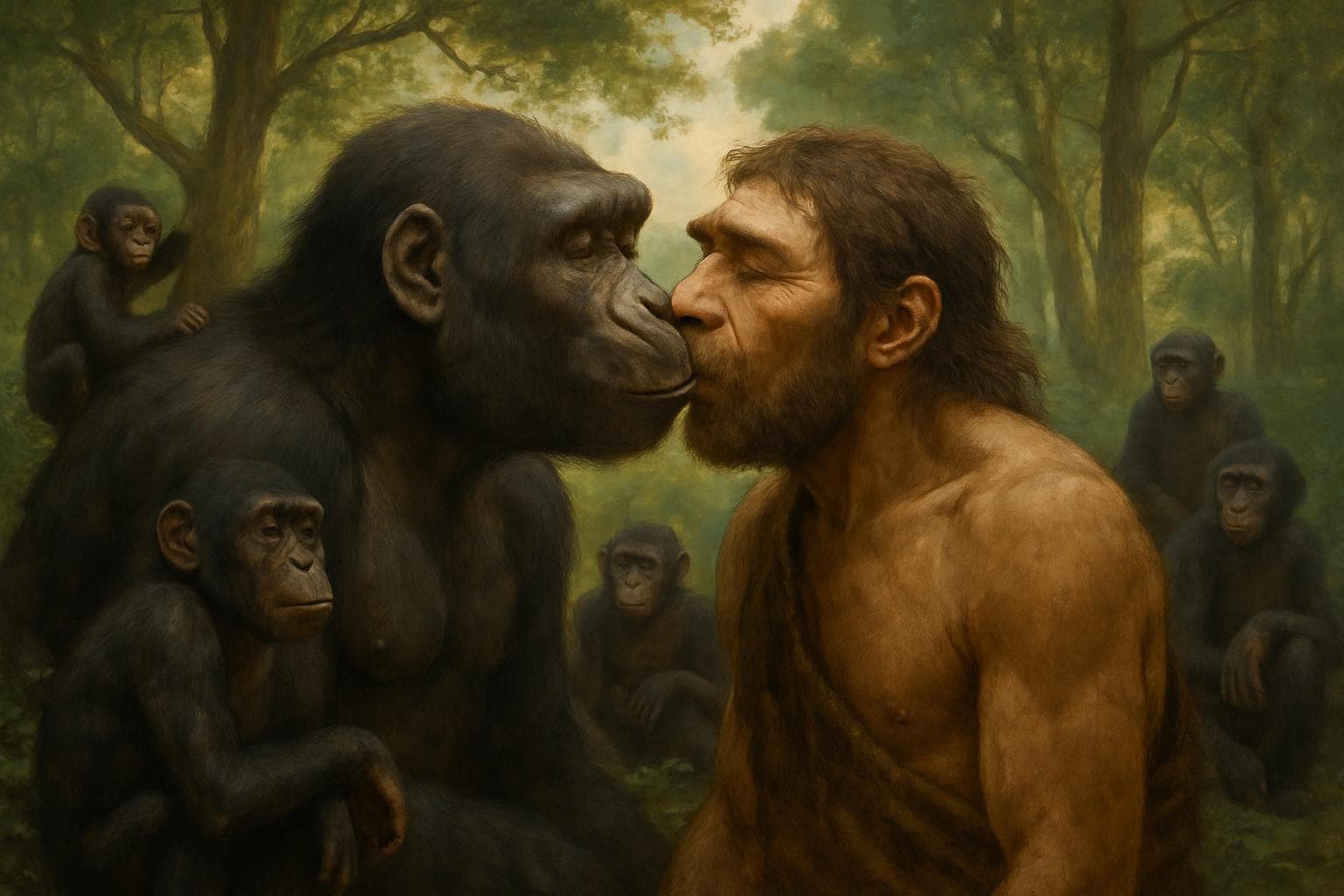
Recent research has shed light on the evolutionary origins of kissing, suggesting that this intimate act dates back over 21 million years. A study led by Dr. Matilda Brindle, an evolutionary biologist at the University of Oxford, proposes that kissing likely evolved among the common ancestors of humans and other great apes, including Neanderthals.
Tracing the Evolutionary Roots
The study, published in the journal Evolution and Human Behaviour, explores the evolutionary puzzle of kissing, a behavior observed across various species without clear survival benefits. By examining kissing-like behaviors in animals such as chimpanzees, bonobos, and even polar bears, researchers constructed an "evolutionary family tree" to pinpoint when kissing might have emerged. Dr. Brindle explained that the behavior likely evolved around 21.5 million years ago in large apes, with Neanderthals also participating in this intimate act.
Neanderthals and Modern Humans: A Shared History
The research highlights that Neanderthals, our closest ancient relatives, likely engaged in kissing, potentially with early modern humans. This theory is supported by evidence of shared oral microbes between the two species, indicating saliva exchange over hundreds of thousands of years. Dr. Brindle noted that this finding adds a romantic dimension to human-Neanderthal relations, further supported by genetic evidence of interbreeding.
Defining Kissing Across Species
To ensure a comprehensive analysis, the researchers developed a broad definition of kissing, encompassing non-aggressive, directed oral contact without food transfer. This allowed them to include behaviors in various species, such as wolves and prairie dogs, in their study. The team focused on primates, using video evidence to confirm kissing behaviors and integrate these findings with evolutionary data.
The Purpose of Kissing: An Ongoing Debate
While the study successfully traced the origins of kissing, the question of why it evolved remains open. Theories suggest it could have arisen from grooming behaviors or serve as a means of assessing partner compatibility. Dr. Brindle emphasized the importance of understanding this shared behavior with our non-human relatives, encouraging further exploration of its evolutionary significance.
WHAT THIS MIGHT MEAN
The findings of this study open new avenues for understanding the evolutionary purpose of kissing. Future research could explore whether kissing plays a role in mate selection, reproductive success, or social bonding. Additionally, the evidence of interbreeding between humans and Neanderthals raises questions about the extent of their interactions and shared behaviors. As scientists continue to unravel the complexities of human evolution, the study of kissing may offer unique insights into the social and biological factors that have shaped our species.
Related Articles

Moltbook: The AI-Driven Social Network Sparking Debate

UK Government Considers Social Media Ban for Under-16s Amidst Growing Concerns
NHS Tribunal Ruling Sparks Debate Over Transgender Rights and Single-Sex Spaces

Matthew McConaughey Trademarks Iconic Phrase to Combat AI Misuse
Rapid Weight Regain After Stopping Weight-Loss Injections Raises Concerns
Humans Rank Among Top Monogamous Mammals, Study Finds
Kissing: An Ancient Practice Traced Back 21 Million Years
In This Article
 Sofia Romano| Published
 HIGHLIGHTS
- Scientists suggest kissing evolved over 21 million years ago among human and ape ancestors.
- Research indicates Neanderthals likely engaged in kissing, possibly with early modern humans.
- The study used a broad definition of kissing to include non-human species like primates and polar bears.
- Evidence of shared oral microbes between humans and Neanderthals supports saliva exchange theories.
- The study opens discussions on the evolutionary purpose of kissing, from mate selection to bonding.
Recent research has shed light on the evolutionary origins of kissing, suggesting that this intimate act dates back over 21 million years. A study led by Dr. Matilda Brindle, an evolutionary biologist at the University of Oxford, proposes that kissing likely evolved among the common ancestors of humans and other great apes, including Neanderthals.
Tracing the Evolutionary Roots
The study, published in the journal Evolution and Human Behaviour, explores the evolutionary puzzle of kissing, a behavior observed across various species without clear survival benefits. By examining kissing-like behaviors in animals such as chimpanzees, bonobos, and even polar bears, researchers constructed an "evolutionary family tree" to pinpoint when kissing might have emerged. Dr. Brindle explained that the behavior likely evolved around 21.5 million years ago in large apes, with Neanderthals also participating in this intimate act.
Neanderthals and Modern Humans: A Shared History
The research highlights that Neanderthals, our closest ancient relatives, likely engaged in kissing, potentially with early modern humans. This theory is supported by evidence of shared oral microbes between the two species, indicating saliva exchange over hundreds of thousands of years. Dr. Brindle noted that this finding adds a romantic dimension to human-Neanderthal relations, further supported by genetic evidence of interbreeding.
Defining Kissing Across Species
To ensure a comprehensive analysis, the researchers developed a broad definition of kissing, encompassing non-aggressive, directed oral contact without food transfer. This allowed them to include behaviors in various species, such as wolves and prairie dogs, in their study. The team focused on primates, using video evidence to confirm kissing behaviors and integrate these findings with evolutionary data.
The Purpose of Kissing: An Ongoing Debate
While the study successfully traced the origins of kissing, the question of why it evolved remains open. Theories suggest it could have arisen from grooming behaviors or serve as a means of assessing partner compatibility. Dr. Brindle emphasized the importance of understanding this shared behavior with our non-human relatives, encouraging further exploration of its evolutionary significance.
WHAT THIS MIGHT MEAN
The findings of this study open new avenues for understanding the evolutionary purpose of kissing. Future research could explore whether kissing plays a role in mate selection, reproductive success, or social bonding. Additionally, the evidence of interbreeding between humans and Neanderthals raises questions about the extent of their interactions and shared behaviors. As scientists continue to unravel the complexities of human evolution, the study of kissing may offer unique insights into the social and biological factors that have shaped our species.
Related Articles
Moltbook: The AI-Driven Social Network Sparking Debate
UK Government Considers Social Media Ban for Under-16s Amidst Growing Concerns
NHS Tribunal Ruling Sparks Debate Over Transgender Rights and Single-Sex Spaces
Matthew McConaughey Trademarks Iconic Phrase to Combat AI Misuse
Rapid Weight Regain After Stopping Weight-Loss Injections Raises Concerns
Humans Rank Among Top Monogamous Mammals, Study Finds