
Labour Party Faces Internal Strife as Andy Burnham Blocked from By-Election
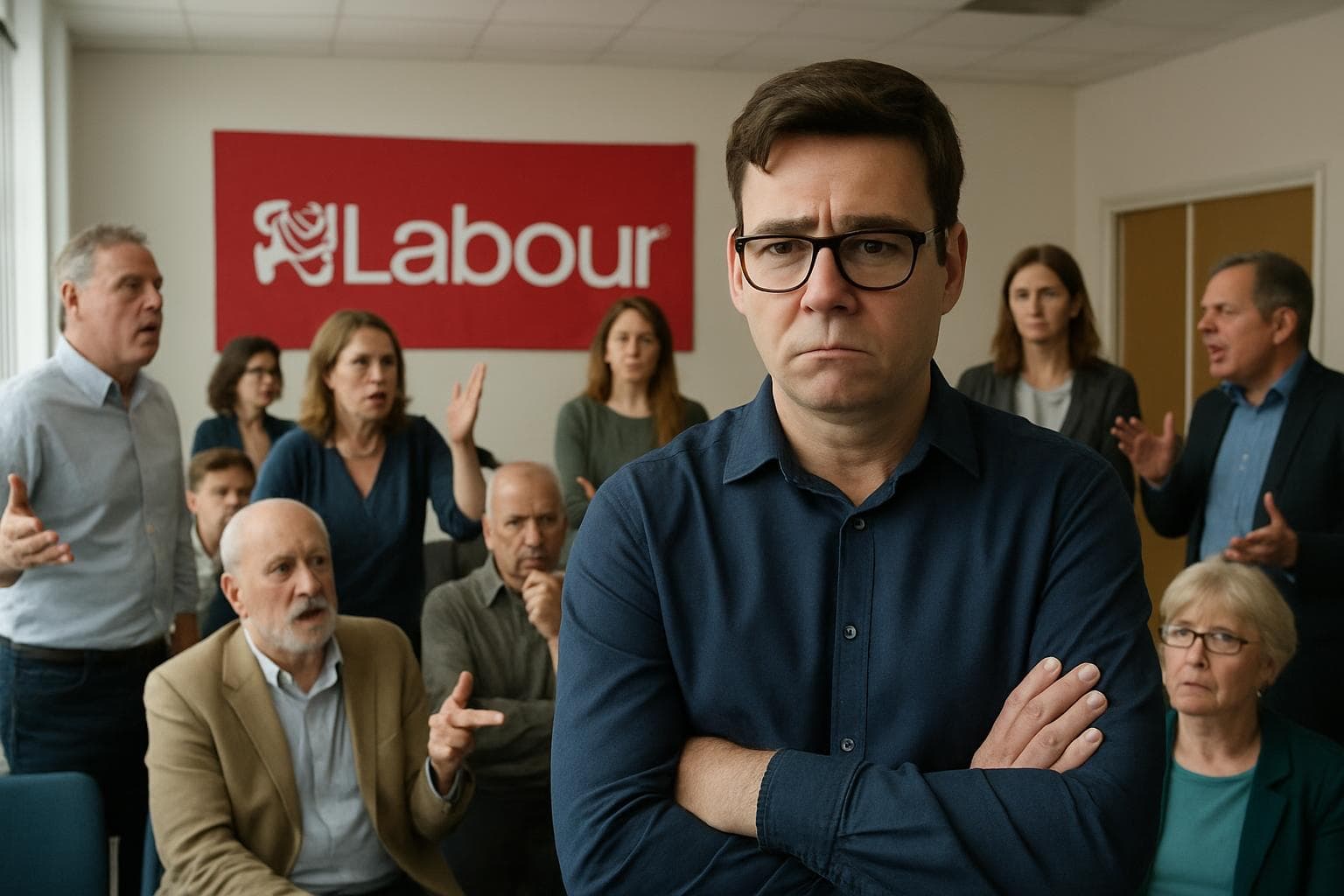
In This Article
HIGHLIGHTS
- Andy Burnham's bid to stand in the Gorton and Denton by-election was blocked by Labour's NEC to avoid a costly mayoral election.
- The decision, supported by Prime Minister Keir Starmer, has sparked internal party tensions and accusations of "petty factionalism."
- Burnham, a potential leadership challenger, expressed disappointment and criticized the party's decision-making process.
- The move risks further dividing the Labour Party, which is already trailing Reform UK in national polls.
- Labour figures, including Angela Rayner and Lucy Powell, have voiced support for Burnham's candidacy, highlighting internal disagreements.
In a move that has ignited internal tensions within the Labour Party, Andy Burnham's attempt to stand in the upcoming Gorton and Denton by-election has been thwarted by the party's national executive committee (NEC). The decision, made to prevent a costly mayoral election in Greater Manchester, has drawn criticism from various quarters, including Labour MPs and union backers.
Burnham, the current Mayor of Greater Manchester and a former minister, had sought approval from the NEC to contest the parliamentary seat vacated by Andrew Gwynne. However, the committee, with Prime Minister Keir Starmer casting a decisive vote, blocked his candidacy. The NEC cited the financial burden of a mayoral election and the potential for a divisive campaign as reasons for their decision.
Political Fallout and Internal Tensions
The decision has been met with widespread discontent within the Labour Party. Critics have accused the leadership of "petty factionalism" and expressed concerns about the party's direction under Starmer. Andrea Egan, head of the Unison union, described the move as "blatant gerrymandering," while other senior Labour figures, including Angela Rayner and Lucy Powell, have publicly supported Burnham's bid.
Burnham, who has been a vocal figure in Labour politics, expressed his disappointment on social media, criticizing the party's decision-making process. "The fact that the media was informed of the NEC decision before I was tells you everything you need to know about the way the Labour Party is being run these days," he stated.
Implications for Labour's Leadership
The decision to block Burnham, seen by some as a potential challenger to Starmer's leadership, comes at a time when Labour is trailing in national polls. The party's internal divisions could impact its performance in the upcoming by-election, where it faces competition from Reform UK and other parties.
Starmer's allies argue that keeping Burnham out of Westminster is necessary to maintain party unity and avoid a leadership challenge. However, the move has deepened internal rifts and raised questions about the party's strategy and leadership.
WHAT THIS MIGHT MEAN
The decision to block Andy Burnham's candidacy could have significant implications for the Labour Party's future. If the party loses the Gorton and Denton by-election, it could further weaken Starmer's leadership and embolden his critics. The internal discord may also impact Labour's performance in the upcoming general elections, where it faces stiff competition from Reform UK.
Experts suggest that Starmer's leadership could be at risk if the party fails to address its internal divisions and improve its standing in the polls. The situation underscores the challenges facing Labour as it navigates a complex political landscape and seeks to regain public confidence.
Related Articles
Reform UK Aims to Reshape Welsh Politics with New Manifesto
Antonia Romeo Appointed as First Female UK Cabinet Secretary Amid Controversy
Government U-turn Forces Local Elections in Lancashire and Essex Amid Reorganisation Plans
UK Government to Reform Asylum Seeker Support and Employment Policies

UK Faces Dilemmas Amid Iran Conflict and China Spying Allegations
Labour MP's Husband Arrested in UK-China Espionage Probe
Labour Party Faces Internal Strife as Andy Burnham Blocked from By-Election
In This Article
 Alex Carter| Published
 HIGHLIGHTS
- Andy Burnham's bid to stand in the Gorton and Denton by-election was blocked by Labour's NEC to avoid a costly mayoral election.
- The decision, supported by Prime Minister Keir Starmer, has sparked internal party tensions and accusations of "petty factionalism."
- Burnham, a potential leadership challenger, expressed disappointment and criticized the party's decision-making process.
- The move risks further dividing the Labour Party, which is already trailing Reform UK in national polls.
- Labour figures, including Angela Rayner and Lucy Powell, have voiced support for Burnham's candidacy, highlighting internal disagreements.
In a move that has ignited internal tensions within the Labour Party, Andy Burnham's attempt to stand in the upcoming Gorton and Denton by-election has been thwarted by the party's national executive committee (NEC). The decision, made to prevent a costly mayoral election in Greater Manchester, has drawn criticism from various quarters, including Labour MPs and union backers.
Burnham, the current Mayor of Greater Manchester and a former minister, had sought approval from the NEC to contest the parliamentary seat vacated by Andrew Gwynne. However, the committee, with Prime Minister Keir Starmer casting a decisive vote, blocked his candidacy. The NEC cited the financial burden of a mayoral election and the potential for a divisive campaign as reasons for their decision.
Political Fallout and Internal Tensions
The decision has been met with widespread discontent within the Labour Party. Critics have accused the leadership of "petty factionalism" and expressed concerns about the party's direction under Starmer. Andrea Egan, head of the Unison union, described the move as "blatant gerrymandering," while other senior Labour figures, including Angela Rayner and Lucy Powell, have publicly supported Burnham's bid.
Burnham, who has been a vocal figure in Labour politics, expressed his disappointment on social media, criticizing the party's decision-making process. "The fact that the media was informed of the NEC decision before I was tells you everything you need to know about the way the Labour Party is being run these days," he stated.
Implications for Labour's Leadership
The decision to block Burnham, seen by some as a potential challenger to Starmer's leadership, comes at a time when Labour is trailing in national polls. The party's internal divisions could impact its performance in the upcoming by-election, where it faces competition from Reform UK and other parties.
Starmer's allies argue that keeping Burnham out of Westminster is necessary to maintain party unity and avoid a leadership challenge. However, the move has deepened internal rifts and raised questions about the party's strategy and leadership.
WHAT THIS MIGHT MEAN
The decision to block Andy Burnham's candidacy could have significant implications for the Labour Party's future. If the party loses the Gorton and Denton by-election, it could further weaken Starmer's leadership and embolden his critics. The internal discord may also impact Labour's performance in the upcoming general elections, where it faces stiff competition from Reform UK.
Experts suggest that Starmer's leadership could be at risk if the party fails to address its internal divisions and improve its standing in the polls. The situation underscores the challenges facing Labour as it navigates a complex political landscape and seeks to regain public confidence.
Related Articles
Reform UK Aims to Reshape Welsh Politics with New Manifesto
Antonia Romeo Appointed as First Female UK Cabinet Secretary Amid Controversy
Government U-turn Forces Local Elections in Lancashire and Essex Amid Reorganisation Plans
UK Government to Reform Asylum Seeker Support and Employment Policies
UK Faces Dilemmas Amid Iran Conflict and China Spying Allegations
Labour MP's Husband Arrested in UK-China Espionage Probe