
Labour Minister Criticizes Farage's Brexit Plans Amid Rising Political Tensions
In This Article
HIGHLIGHTS
- Labour minister Nick Thomas-Symonds criticized Nigel Farage's plan to scrap the Brexit reset agreement, warning it would increase bureaucracy for UK businesses.
- Farage, leader of Reform UK, accused Labour of betraying Brexit by aligning with EU trade rules without parliamentary debate.
- The UK government aims to finalize a UK-EU food and drink deal by 2027 to reduce trade barriers and boost economic growth.
- Farage's controversial proposals include deporting asylum seekers and renegotiating the Good Friday Agreement, drawing criticism from political leaders.
- Reform UK has gained political traction, with recent defections from the Conservative Party bolstering its presence in the Scottish Parliament.
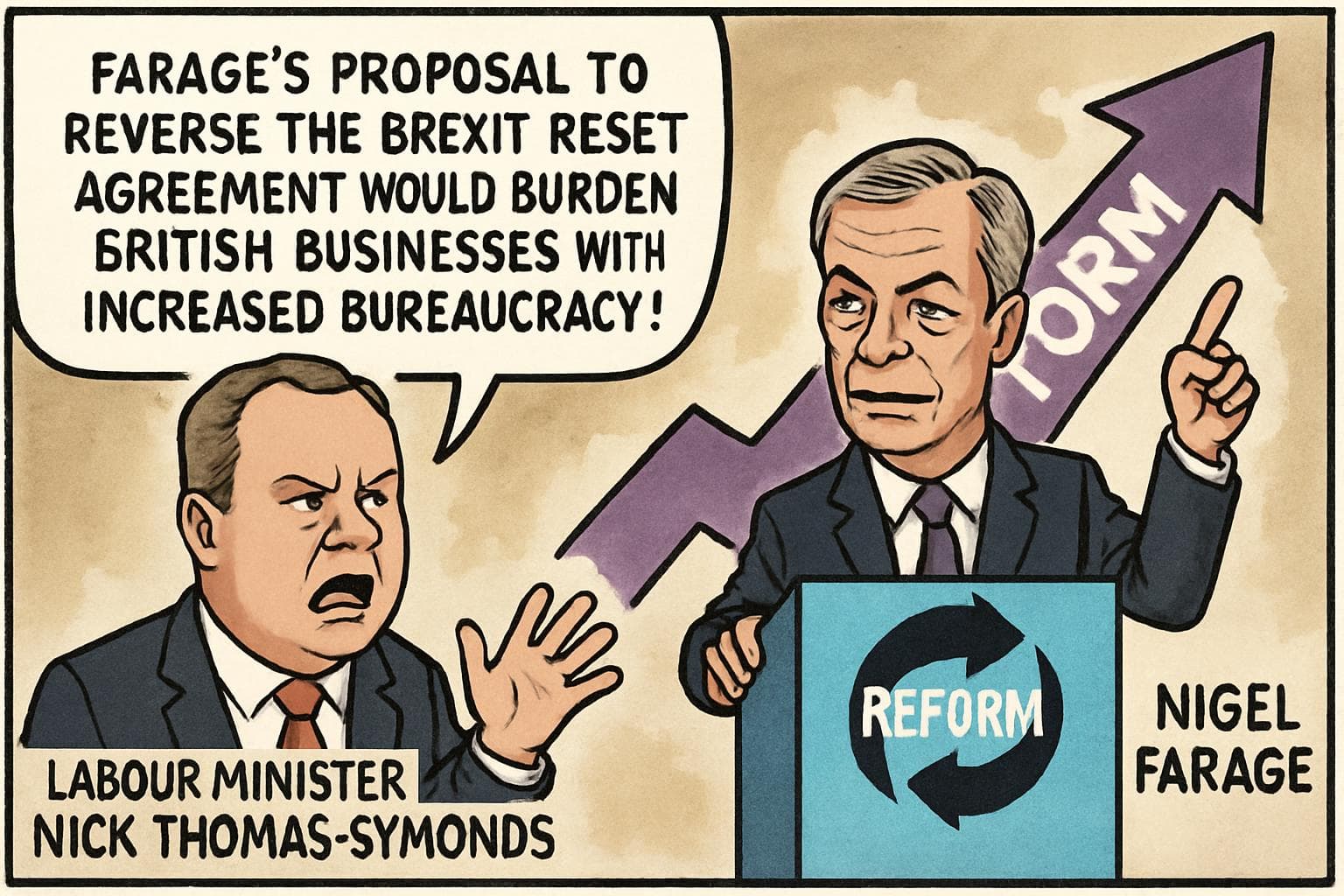
In a heated exchange over the future of UK-EU relations, Labour minister Nick Thomas-Symonds has condemned Nigel Farage's proposal to dismantle the government's Brexit reset agreement. Speaking at a Spectator magazine event, Thomas-Symonds warned that Farage's plan would burden British businesses with increased bureaucracy and paperwork, undermining economic stability.
Brexit Reset Agreement Under Fire
The Brexit reset agreement, established in May, aims to streamline trade and strengthen ties between the UK and the EU. It includes provisions for fishing, defence, and energy, with a significant focus on reducing trade barriers for food and drink imports. The government is negotiating a sanitary and phytosanitary (SPS) agreement to eliminate border checks on plant and animal products, with hopes of finalizing a comprehensive deal by 2027.
Farage's Controversial Proposals
Nigel Farage, leader of Reform UK, has been vocal in his criticism of the current government's approach, accusing Labour of betraying Brexit by aligning with EU trade rules without parliamentary oversight. Farage has pledged to reverse the Brexit agreements if his party gains power, a move he claims would restore UK sovereignty.
Farage's policy proposals have sparked further controversy, particularly his plans to deport asylum seekers and renegotiate the Good Friday Agreement. These proposals have been met with widespread criticism, with political leaders warning of potential destabilization in Northern Ireland.
Political Shifts and Reform UK's Rise
Despite only having a small presence in Parliament, Reform UK has gained momentum, particularly following recent defections from the Conservative Party. Graham Simpson's switch to Reform UK marks a significant political shift, bolstering the party's representation in the Scottish Parliament.
Thomas-Symonds has dismissed Reform UK's approach as offering "easy answers and snake oil," emphasizing the importance of maintaining stable UK-EU relations. He accused Farage of stoking division and anger, asserting that such rhetoric is detrimental to national unity.
WHAT THIS MIGHT MEAN
As the UK navigates its post-Brexit landscape, the political discourse surrounding UK-EU relations remains contentious. Should Farage's Reform UK gain further traction, it could lead to significant shifts in policy, particularly concerning trade and immigration. Experts warn that dismantling existing agreements could result in economic instability and increased tension with the EU.
The potential renegotiation of the Good Friday Agreement poses a risk to peace in Northern Ireland, with political leaders urging caution. As the UK government continues its negotiations with the EU, the outcome will likely shape the nation's economic and political future, with implications for businesses and communities across the country.
Related Articles

UK Government to Reform Asylum Seeker Support and Employment Policies

UK-Iran Tensions: Starmer Defends Cautious Approach Amid Trump Criticism

Reform UK Aims to Reshape Welsh Politics with New Manifesto

UK Faces Dilemmas Amid Iran Conflict and China Spying Allegations

UK Reinforces Military Presence in Cyprus Amid Middle East Tensions

Labour MP's Husband Arrested in UK-China Espionage Probe
Labour Minister Criticizes Farage's Brexit Plans Amid Rising Political Tensions
In This Article
 Ethan Brooks| Published
 HIGHLIGHTS
- Labour minister Nick Thomas-Symonds criticized Nigel Farage's plan to scrap the Brexit reset agreement, warning it would increase bureaucracy for UK businesses.
- Farage, leader of Reform UK, accused Labour of betraying Brexit by aligning with EU trade rules without parliamentary debate.
- The UK government aims to finalize a UK-EU food and drink deal by 2027 to reduce trade barriers and boost economic growth.
- Farage's controversial proposals include deporting asylum seekers and renegotiating the Good Friday Agreement, drawing criticism from political leaders.
- Reform UK has gained political traction, with recent defections from the Conservative Party bolstering its presence in the Scottish Parliament.
In a heated exchange over the future of UK-EU relations, Labour minister Nick Thomas-Symonds has condemned Nigel Farage's proposal to dismantle the government's Brexit reset agreement. Speaking at a Spectator magazine event, Thomas-Symonds warned that Farage's plan would burden British businesses with increased bureaucracy and paperwork, undermining economic stability.
Brexit Reset Agreement Under Fire
The Brexit reset agreement, established in May, aims to streamline trade and strengthen ties between the UK and the EU. It includes provisions for fishing, defence, and energy, with a significant focus on reducing trade barriers for food and drink imports. The government is negotiating a sanitary and phytosanitary (SPS) agreement to eliminate border checks on plant and animal products, with hopes of finalizing a comprehensive deal by 2027.
Farage's Controversial Proposals
Nigel Farage, leader of Reform UK, has been vocal in his criticism of the current government's approach, accusing Labour of betraying Brexit by aligning with EU trade rules without parliamentary oversight. Farage has pledged to reverse the Brexit agreements if his party gains power, a move he claims would restore UK sovereignty.
Farage's policy proposals have sparked further controversy, particularly his plans to deport asylum seekers and renegotiate the Good Friday Agreement. These proposals have been met with widespread criticism, with political leaders warning of potential destabilization in Northern Ireland.
Political Shifts and Reform UK's Rise
Despite only having a small presence in Parliament, Reform UK has gained momentum, particularly following recent defections from the Conservative Party. Graham Simpson's switch to Reform UK marks a significant political shift, bolstering the party's representation in the Scottish Parliament.
Thomas-Symonds has dismissed Reform UK's approach as offering "easy answers and snake oil," emphasizing the importance of maintaining stable UK-EU relations. He accused Farage of stoking division and anger, asserting that such rhetoric is detrimental to national unity.
WHAT THIS MIGHT MEAN
As the UK navigates its post-Brexit landscape, the political discourse surrounding UK-EU relations remains contentious. Should Farage's Reform UK gain further traction, it could lead to significant shifts in policy, particularly concerning trade and immigration. Experts warn that dismantling existing agreements could result in economic instability and increased tension with the EU.
The potential renegotiation of the Good Friday Agreement poses a risk to peace in Northern Ireland, with political leaders urging caution. As the UK government continues its negotiations with the EU, the outcome will likely shape the nation's economic and political future, with implications for businesses and communities across the country.
Related Articles
UK Government to Reform Asylum Seeker Support and Employment Policies
UK-Iran Tensions: Starmer Defends Cautious Approach Amid Trump Criticism
Reform UK Aims to Reshape Welsh Politics with New Manifesto
UK Faces Dilemmas Amid Iran Conflict and China Spying Allegations
UK Reinforces Military Presence in Cyprus Amid Middle East Tensions
Labour MP's Husband Arrested in UK-China Espionage Probe