
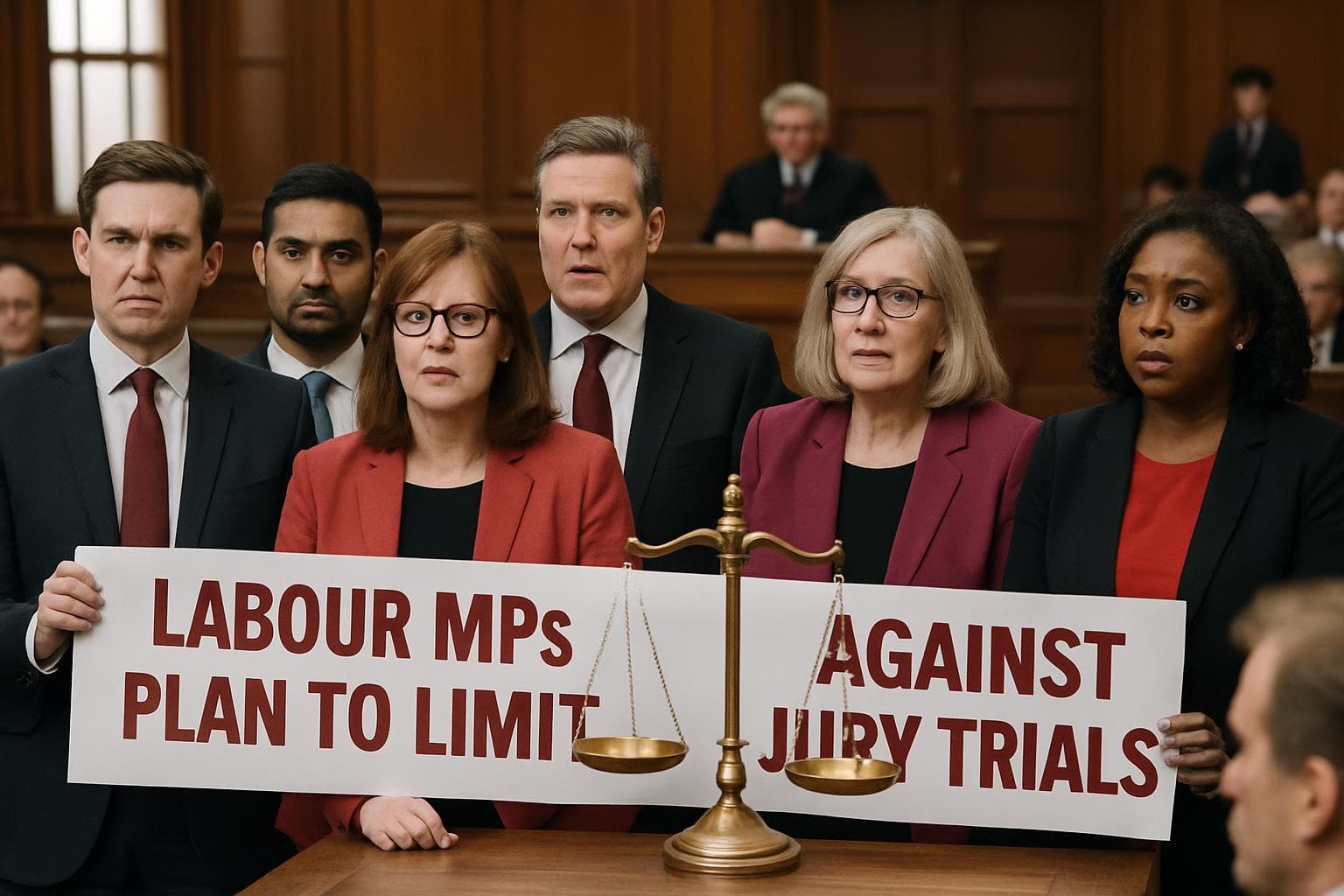
Labour MPs Challenge Government's Plan to Limit Jury Trials Amid Court Backlog Crisis
In This Article
HIGHLIGHTS
- The Crown Court backlog in England and Wales has reached a record 79,600 cases, with projections suggesting it could hit 100,000 by 2028.
- The government proposes reforms to reduce jury trials for crimes with sentences under three years to address the backlog.
- Nearly 40 Labour MPs oppose the plan, arguing it undermines a fundamental right and is unlikely to solve the backlog crisis.
- Justice Secretary David Lammy insists the reforms will expedite justice, while critics highlight the impact of austerity cuts and the pandemic on the justice system.
- The Labour Party faces internal dissent, with MPs warning that the public will not support the erosion of jury trials.
The criminal justice system in England and Wales is grappling with an unprecedented backlog, with over 79,600 cases currently pending in Crown Courts. This figure, released by the Ministry of Justice (MoJ), is expected to rise to 100,000 by 2028, exacerbating delays that could see some serious crimes not reaching trial until 2030. In response, the government has proposed radical reforms aimed at expediting justice by limiting jury trials for offences carrying sentences of less than three years.
Government's Reform Proposal
Justice Secretary David Lammy announced the controversial measure on December 3, suggesting that judge-only trials for certain offences could accelerate case resolutions by up to 20%. This proposal, based on recommendations from former High Court judge Sir Brian Leveson, aims to address the backlog that has left victims and defendants waiting years for justice. The reforms would see volunteer community magistrates and new "swift courts" taking on increased workloads.
Labour Party Rebellion
However, the plan has sparked significant opposition within the Labour Party. Nearly 40 Labour MPs, led by former shadow attorney general Karl Turner, have signed a letter condemning the proposal as "madness" and "unworkable." They argue that the restriction of jury trials undermines a fundamental right and will not effectively address the backlog. The MPs suggest alternative solutions, such as increasing judicial sitting days and employing more part-time judges.
Historical Context and Challenges
The roots of the current crisis trace back to austerity measures initiated in 2010, which saw significant budget cuts to the MoJ. These cuts led to the closure of numerous courtrooms and a reduction in judicial sitting days. The situation was further compounded by the COVID-19 pandemic, which disrupted court operations and exacerbated delays. Critics argue that these factors, rather than the structure of trials, are the primary causes of the backlog.
Public and Political Implications
The Labour MPs' rebellion highlights growing discontent within the party and raises questions about public support for the government's approach. Turner and his colleagues warn that the public will not tolerate the erosion of jury trials, a cornerstone of the justice system for centuries. Despite the internal dissent, the government remains steadfast, citing the urgent need to address the backlog and deliver timely justice.
WHAT THIS MIGHT MEAN
The proposed reforms to limit jury trials could face significant legal and political challenges. If implemented, they may lead to legal challenges from civil liberties groups concerned about the erosion of fundamental rights. Politically, the Labour Party's internal dissent could weaken its cohesion and impact its ability to effectively oppose the government's broader agenda. Experts suggest that without addressing the underlying causes of the backlog, such as funding and resource allocation, the reforms may offer only a temporary solution. The situation calls for a comprehensive review of the criminal justice system to ensure it can meet the demands of timely and fair justice.
Related Articles

UK Government to Reform Asylum Seeker Support and Employment Policies

UK Faces Dilemmas Amid Iran Conflict and China Spying Allegations

Labour MP's Husband Arrested in UK-China Espionage Probe

New Archbishop of Westminster Calls for Church Accountability and Social Justice
US Congress Seeks Testimony from Peter Mandelson Over Epstein Ties
Jim Ratcliffe Faces Backlash Over Controversial Immigration Remarks
Labour MPs Challenge Government's Plan to Limit Jury Trials Amid Court Backlog Crisis
In This Article
 Ethan Brooks| Published
 HIGHLIGHTS
- The Crown Court backlog in England and Wales has reached a record 79,600 cases, with projections suggesting it could hit 100,000 by 2028.
- The government proposes reforms to reduce jury trials for crimes with sentences under three years to address the backlog.
- Nearly 40 Labour MPs oppose the plan, arguing it undermines a fundamental right and is unlikely to solve the backlog crisis.
- Justice Secretary David Lammy insists the reforms will expedite justice, while critics highlight the impact of austerity cuts and the pandemic on the justice system.
- The Labour Party faces internal dissent, with MPs warning that the public will not support the erosion of jury trials.
The criminal justice system in England and Wales is grappling with an unprecedented backlog, with over 79,600 cases currently pending in Crown Courts. This figure, released by the Ministry of Justice (MoJ), is expected to rise to 100,000 by 2028, exacerbating delays that could see some serious crimes not reaching trial until 2030. In response, the government has proposed radical reforms aimed at expediting justice by limiting jury trials for offences carrying sentences of less than three years.
Government's Reform Proposal
Justice Secretary David Lammy announced the controversial measure on December 3, suggesting that judge-only trials for certain offences could accelerate case resolutions by up to 20%. This proposal, based on recommendations from former High Court judge Sir Brian Leveson, aims to address the backlog that has left victims and defendants waiting years for justice. The reforms would see volunteer community magistrates and new "swift courts" taking on increased workloads.
Labour Party Rebellion
However, the plan has sparked significant opposition within the Labour Party. Nearly 40 Labour MPs, led by former shadow attorney general Karl Turner, have signed a letter condemning the proposal as "madness" and "unworkable." They argue that the restriction of jury trials undermines a fundamental right and will not effectively address the backlog. The MPs suggest alternative solutions, such as increasing judicial sitting days and employing more part-time judges.
Historical Context and Challenges
The roots of the current crisis trace back to austerity measures initiated in 2010, which saw significant budget cuts to the MoJ. These cuts led to the closure of numerous courtrooms and a reduction in judicial sitting days. The situation was further compounded by the COVID-19 pandemic, which disrupted court operations and exacerbated delays. Critics argue that these factors, rather than the structure of trials, are the primary causes of the backlog.
Public and Political Implications
The Labour MPs' rebellion highlights growing discontent within the party and raises questions about public support for the government's approach. Turner and his colleagues warn that the public will not tolerate the erosion of jury trials, a cornerstone of the justice system for centuries. Despite the internal dissent, the government remains steadfast, citing the urgent need to address the backlog and deliver timely justice.
WHAT THIS MIGHT MEAN
The proposed reforms to limit jury trials could face significant legal and political challenges. If implemented, they may lead to legal challenges from civil liberties groups concerned about the erosion of fundamental rights. Politically, the Labour Party's internal dissent could weaken its cohesion and impact its ability to effectively oppose the government's broader agenda. Experts suggest that without addressing the underlying causes of the backlog, such as funding and resource allocation, the reforms may offer only a temporary solution. The situation calls for a comprehensive review of the criminal justice system to ensure it can meet the demands of timely and fair justice.
Related Articles
UK Government to Reform Asylum Seeker Support and Employment Policies
UK Faces Dilemmas Amid Iran Conflict and China Spying Allegations
Labour MP's Husband Arrested in UK-China Espionage Probe
New Archbishop of Westminster Calls for Church Accountability and Social Justice
US Congress Seeks Testimony from Peter Mandelson Over Epstein Ties
Jim Ratcliffe Faces Backlash Over Controversial Immigration Remarks