
New Archbishop of Westminster Calls for Church Accountability and Social Justice
In This Article
HIGHLIGHTS
- Archbishop Richard Moth was installed as the 12th Archbishop of Westminster, succeeding Cardinal Vincent Nichols.
- Moth emphasized the Church's past failures, particularly regarding abuse of the vulnerable, and stressed the importance of learning from victims.
- He highlighted the need for the Church to address social justice issues, including the refugee crisis and the dignity of every person.
- Moth criticized government policies on asylum seekers and called for better solutions than housing them in hotels.
- The installation ceremony was attended by notable figures, including the new Archbishop of Canterbury, Dame Sarah Mullally.
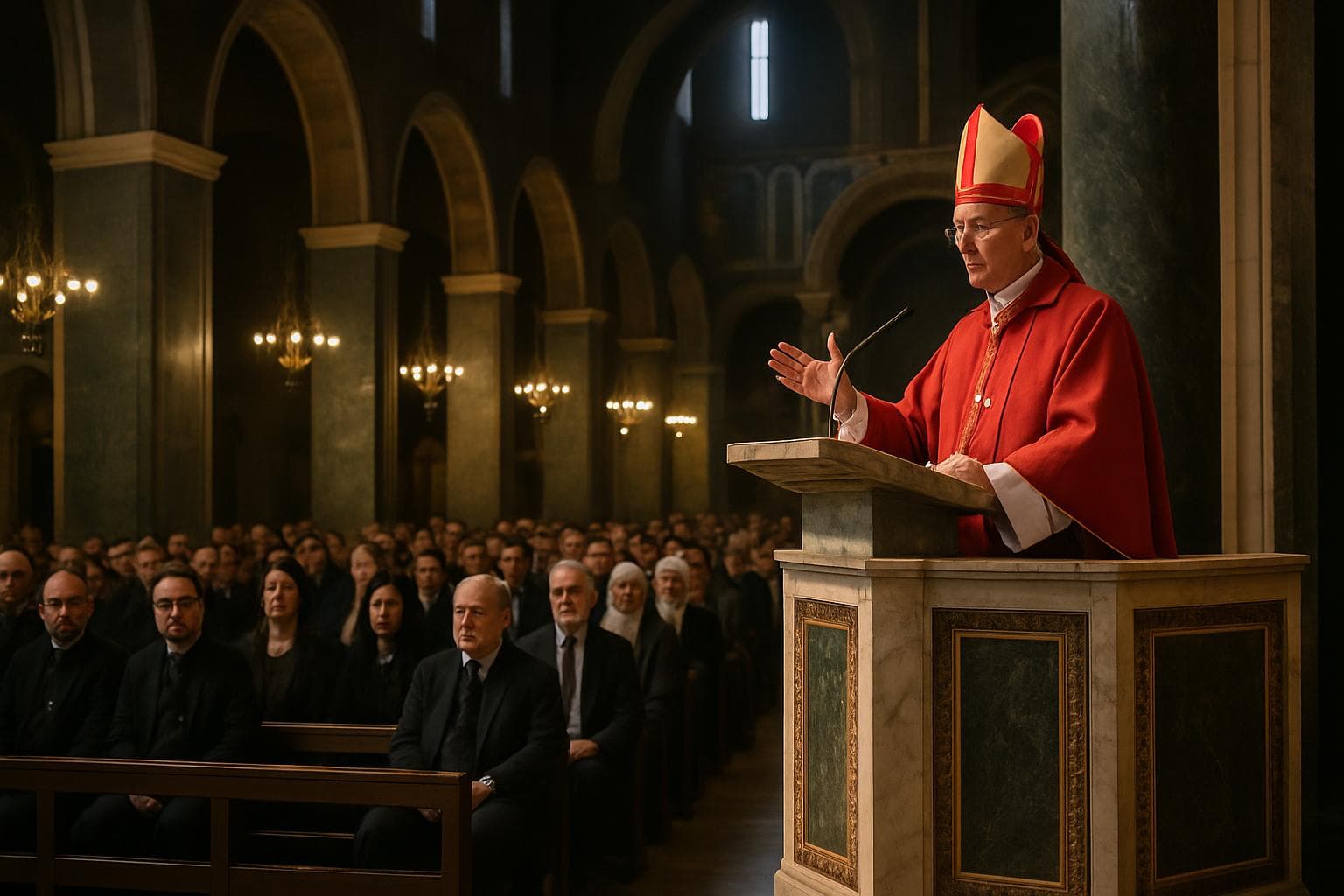
In a significant ceremony at Westminster Cathedral, Richard Moth was officially installed as the 12th Archbishop of Westminster, taking over from Cardinal Vincent Nichols. The event marked a pivotal moment for the Catholic Church in England and Wales, as Archbishop Moth addressed a congregation of 2,000, acknowledging the Church's historical failures, particularly in protecting the vulnerable from abuse.
Acknowledging Past Failures
Archbishop Moth, who previously served as Bishop of Arundel and Brighton, emphasized the Church's need to listen to and learn from abuse victims. "Our failures in love, power, and self-control have adversely impacted our evangelical work," he stated, underscoring the fragility of the Church's mission. His remarks reflect a broader commitment to Church accountability and a renewed focus on safeguarding vulnerable individuals.
Addressing Social Justice and Refugee Issues
Beyond addressing past abuses, Moth highlighted pressing social justice issues, including the refugee crisis. He criticized current government policies that house asylum seekers in hotels, advocating for more humane solutions. "Having people living in hotels for long periods is not ideal," he remarked, urging a more compassionate approach to migration challenges.
A Unified Religious Leadership
The installation ceremony was attended by Dame Sarah Mullally, the new Archbishop of Canterbury, who praised Moth's deep concern for human dignity. "In a world marked by division, our traditions are deepened when we walk together in charity, honesty, and truth," she said, emphasizing the importance of unity among religious leaders.
Archbishop Moth's installation signals a potential shift towards a more socially conscious and accountable Catholic Church in England and Wales. His leadership is expected to focus on addressing both internal Church issues and broader societal challenges.
WHAT THIS MIGHT MEAN
Archbishop Moth's emphasis on accountability and social justice could lead to significant changes within the Catholic Church's approach to handling abuse cases and social issues. His criticism of government asylum policies may also influence public discourse on refugee treatment in the UK. As Moth settles into his new role, his leadership could foster stronger interfaith collaborations, particularly with the Church of England, as both institutions navigate complex social and moral landscapes. The Church's response to these challenges will likely shape its public perception and influence its ability to engage new believers in a post-pandemic world.
Related Articles

UK Government to Reform Asylum Seeker Support and Employment Policies

UK Faces Dilemmas Amid Iran Conflict and China Spying Allegations

UK Reinforces Military Presence in Cyprus Amid Middle East Tensions

UK-Iran Tensions: Starmer Defends Cautious Approach Amid Trump Criticism
Persistent Safety Concerns in Nottingham Maternity Services Amidst Calls for Systemic Reform

Diplomatic Tensions Rise as Trump Criticizes Starmer's Iran Policy
New Archbishop of Westminster Calls for Church Accountability and Social Justice
In This Article
 Ethan Brooks| Published
 HIGHLIGHTS
- Archbishop Richard Moth was installed as the 12th Archbishop of Westminster, succeeding Cardinal Vincent Nichols.
- Moth emphasized the Church's past failures, particularly regarding abuse of the vulnerable, and stressed the importance of learning from victims.
- He highlighted the need for the Church to address social justice issues, including the refugee crisis and the dignity of every person.
- Moth criticized government policies on asylum seekers and called for better solutions than housing them in hotels.
- The installation ceremony was attended by notable figures, including the new Archbishop of Canterbury, Dame Sarah Mullally.
In a significant ceremony at Westminster Cathedral, Richard Moth was officially installed as the 12th Archbishop of Westminster, taking over from Cardinal Vincent Nichols. The event marked a pivotal moment for the Catholic Church in England and Wales, as Archbishop Moth addressed a congregation of 2,000, acknowledging the Church's historical failures, particularly in protecting the vulnerable from abuse.
Acknowledging Past Failures
Archbishop Moth, who previously served as Bishop of Arundel and Brighton, emphasized the Church's need to listen to and learn from abuse victims. "Our failures in love, power, and self-control have adversely impacted our evangelical work," he stated, underscoring the fragility of the Church's mission. His remarks reflect a broader commitment to Church accountability and a renewed focus on safeguarding vulnerable individuals.
Addressing Social Justice and Refugee Issues
Beyond addressing past abuses, Moth highlighted pressing social justice issues, including the refugee crisis. He criticized current government policies that house asylum seekers in hotels, advocating for more humane solutions. "Having people living in hotels for long periods is not ideal," he remarked, urging a more compassionate approach to migration challenges.
A Unified Religious Leadership
The installation ceremony was attended by Dame Sarah Mullally, the new Archbishop of Canterbury, who praised Moth's deep concern for human dignity. "In a world marked by division, our traditions are deepened when we walk together in charity, honesty, and truth," she said, emphasizing the importance of unity among religious leaders.
Archbishop Moth's installation signals a potential shift towards a more socially conscious and accountable Catholic Church in England and Wales. His leadership is expected to focus on addressing both internal Church issues and broader societal challenges.
WHAT THIS MIGHT MEAN
Archbishop Moth's emphasis on accountability and social justice could lead to significant changes within the Catholic Church's approach to handling abuse cases and social issues. His criticism of government asylum policies may also influence public discourse on refugee treatment in the UK. As Moth settles into his new role, his leadership could foster stronger interfaith collaborations, particularly with the Church of England, as both institutions navigate complex social and moral landscapes. The Church's response to these challenges will likely shape its public perception and influence its ability to engage new believers in a post-pandemic world.
Related Articles
UK Government to Reform Asylum Seeker Support and Employment Policies
UK Faces Dilemmas Amid Iran Conflict and China Spying Allegations
UK Reinforces Military Presence in Cyprus Amid Middle East Tensions
UK-Iran Tensions: Starmer Defends Cautious Approach Amid Trump Criticism
Persistent Safety Concerns in Nottingham Maternity Services Amidst Calls for Systemic Reform
Diplomatic Tensions Rise as Trump Criticizes Starmer's Iran Policy