
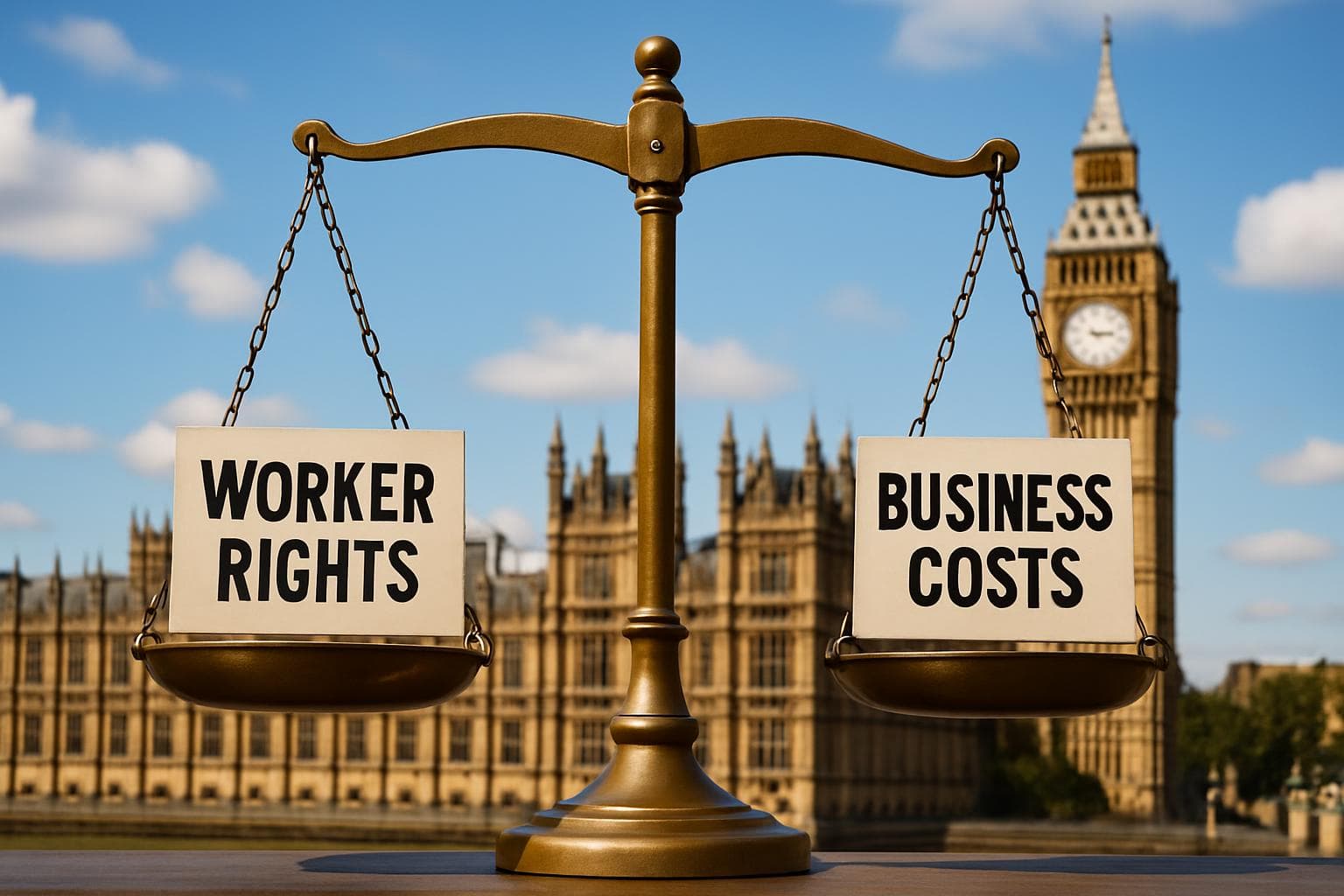
Labour's Employment Rights Act: A Balancing Act Between Worker Protections and Business Costs
In This Article
HIGHLIGHTS
- Labour's revised Employment Rights Act is projected to cost UK businesses £1bn annually, down from an initial £5bn estimate.
- Concessions include a six-month qualifying period for unfair dismissal claims, diverging from Labour's original day-one rights proposal.
- The updated impact assessment suggests 18 million workers could benefit, with positive effects on employment and economic growth.
- Business groups argue the £1bn cost estimate is underestimated, citing unquantified administrative expenses.
- Trade unions support the legislation, emphasizing its benefits for workers and the economy, despite some leaders calling it a "shell of its former self."
The Labour Party's Employment Rights Act, a cornerstone of its legislative agenda, has undergone significant revisions, resulting in a projected annual cost to UK businesses of £1 billion. This figure marks a substantial reduction from the initial £5 billion estimate, according to a government impact assessment released on Wednesday.
Concessions and Compromises
The revised cost comes after Labour made key concessions to its original proposal, notably introducing a six-month qualifying period for unfair dismissal claims. This change, which deviates from the party's manifesto promise of day-one rights, was a strategic move to break a legislative deadlock in the House of Lords. The decision followed negotiations between major business groups and trade unions, aiming to make the legislation more palatable for all stakeholders.
Economic and Employment Implications
Despite the reduced cost estimate, business leaders, including Kate Shoesmith from the British Chambers of Commerce, argue that the £1 billion figure likely underestimates the true financial impact. They point to unquantified costs such as staff time for implementing new processes. However, the government maintains that the additional expenses will be modest compared to the overall employment costs in the UK, which totaled £1.4 trillion in 2024.
The impact assessment also highlights potential benefits, projecting that 18 million workers could gain from the strengthened rights package. The legislation is expected to have a small positive impact on employment, boosting the workforce by 0.1%, and could contribute to economic growth.
Trade Union Support and Criticism
Trade unions have largely welcomed the revised assessment, with the Trades Union Congress (TUC) praising the legislation for aligning the UK with international standards. TUC General Secretary Paul Nowak emphasized the importance of completing the legislative process swiftly, ensuring that secondary legislation is robust. However, some union leaders, like Sharon Graham of Unite, have criticized the concessions, describing the bill as a "shell of its former self."
WHAT THIS MIGHT MEAN
As the Employment Rights Act moves forward, its implementation will be closely watched by both business leaders and workers' advocates. The phased introduction of the legislation allows for adjustments based on feedback and economic conditions, potentially mitigating some of the anticipated costs. However, the ongoing debate over the true financial impact could influence future policy decisions and Labour's relationship with its traditional union base.
Politically, the concessions made by Labour may affect its standing with left-wing MPs and union supporters, who may push for more comprehensive reforms in the future. The success of the Employment Rights Act in improving worker protections while maintaining business viability could serve as a model for other legislative initiatives, shaping the UK's approach to balancing economic growth with social welfare.
Related Articles

Trump's New Tariff Strategy Sparks Global Trade Uncertainty

UK Government to Reform Asylum Seeker Support and Employment Policies

UK Faces Dilemmas Amid Iran Conflict and China Spying Allegations

Canada and Australia Forge Strategic Partnership Amid Global Uncertainty

Middle East Conflict Drives UK Energy Prices to New Highs

UK Reinforces Military Presence in Cyprus Amid Middle East Tensions
Labour's Employment Rights Act: A Balancing Act Between Worker Protections and Business Costs
In This Article
 Daniel Rivera| Published
 HIGHLIGHTS
- Labour's revised Employment Rights Act is projected to cost UK businesses £1bn annually, down from an initial £5bn estimate.
- Concessions include a six-month qualifying period for unfair dismissal claims, diverging from Labour's original day-one rights proposal.
- The updated impact assessment suggests 18 million workers could benefit, with positive effects on employment and economic growth.
- Business groups argue the £1bn cost estimate is underestimated, citing unquantified administrative expenses.
- Trade unions support the legislation, emphasizing its benefits for workers and the economy, despite some leaders calling it a "shell of its former self."
The Labour Party's Employment Rights Act, a cornerstone of its legislative agenda, has undergone significant revisions, resulting in a projected annual cost to UK businesses of £1 billion. This figure marks a substantial reduction from the initial £5 billion estimate, according to a government impact assessment released on Wednesday.
Concessions and Compromises
The revised cost comes after Labour made key concessions to its original proposal, notably introducing a six-month qualifying period for unfair dismissal claims. This change, which deviates from the party's manifesto promise of day-one rights, was a strategic move to break a legislative deadlock in the House of Lords. The decision followed negotiations between major business groups and trade unions, aiming to make the legislation more palatable for all stakeholders.
Economic and Employment Implications
Despite the reduced cost estimate, business leaders, including Kate Shoesmith from the British Chambers of Commerce, argue that the £1 billion figure likely underestimates the true financial impact. They point to unquantified costs such as staff time for implementing new processes. However, the government maintains that the additional expenses will be modest compared to the overall employment costs in the UK, which totaled £1.4 trillion in 2024.
The impact assessment also highlights potential benefits, projecting that 18 million workers could gain from the strengthened rights package. The legislation is expected to have a small positive impact on employment, boosting the workforce by 0.1%, and could contribute to economic growth.
Trade Union Support and Criticism
Trade unions have largely welcomed the revised assessment, with the Trades Union Congress (TUC) praising the legislation for aligning the UK with international standards. TUC General Secretary Paul Nowak emphasized the importance of completing the legislative process swiftly, ensuring that secondary legislation is robust. However, some union leaders, like Sharon Graham of Unite, have criticized the concessions, describing the bill as a "shell of its former self."
WHAT THIS MIGHT MEAN
As the Employment Rights Act moves forward, its implementation will be closely watched by both business leaders and workers' advocates. The phased introduction of the legislation allows for adjustments based on feedback and economic conditions, potentially mitigating some of the anticipated costs. However, the ongoing debate over the true financial impact could influence future policy decisions and Labour's relationship with its traditional union base.
Politically, the concessions made by Labour may affect its standing with left-wing MPs and union supporters, who may push for more comprehensive reforms in the future. The success of the Employment Rights Act in improving worker protections while maintaining business viability could serve as a model for other legislative initiatives, shaping the UK's approach to balancing economic growth with social welfare.
Related Articles
Trump's New Tariff Strategy Sparks Global Trade Uncertainty
UK Government to Reform Asylum Seeker Support and Employment Policies
UK Faces Dilemmas Amid Iran Conflict and China Spying Allegations
Canada and Australia Forge Strategic Partnership Amid Global Uncertainty
Middle East Conflict Drives UK Energy Prices to New Highs
UK Reinforces Military Presence in Cyprus Amid Middle East Tensions