
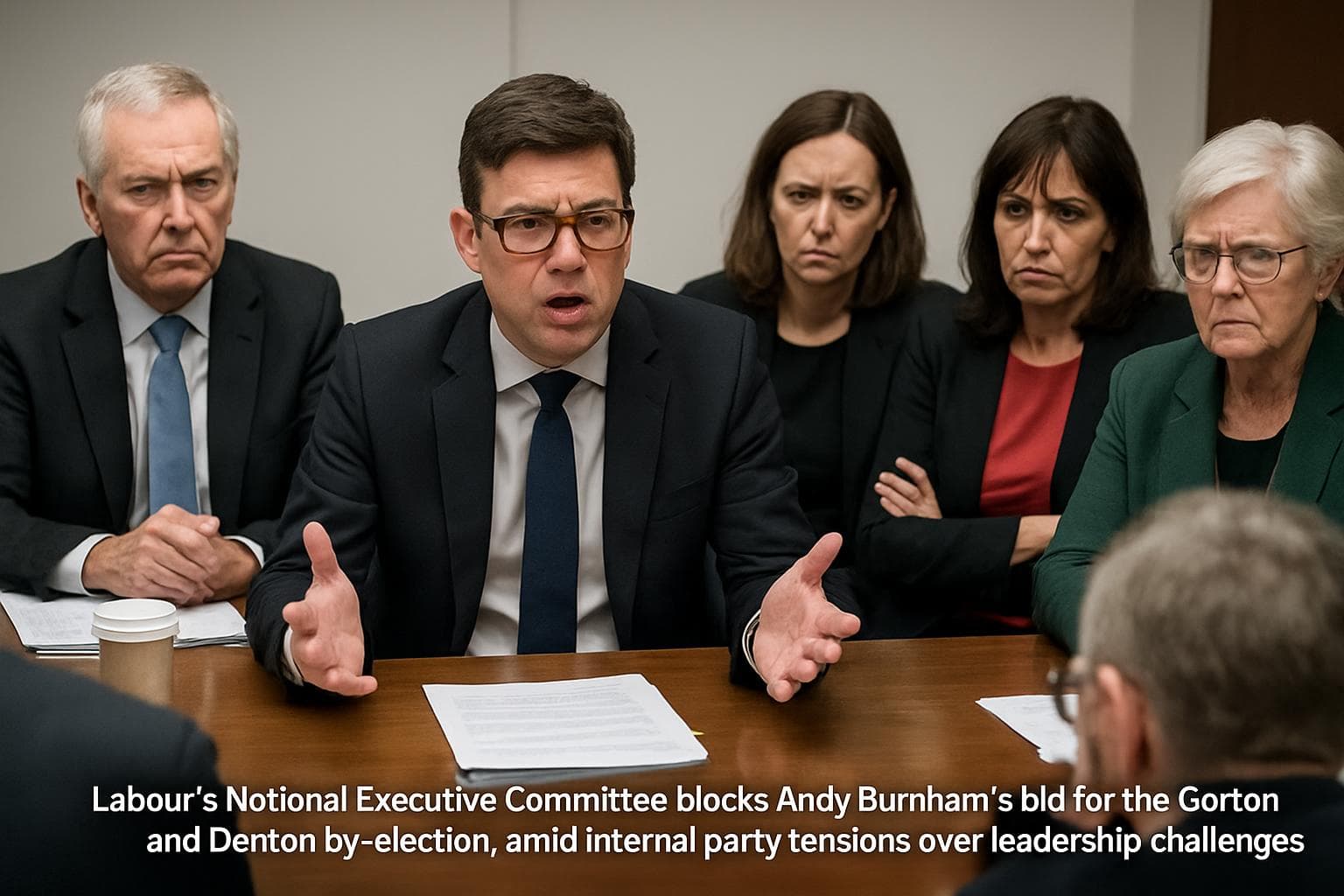
Labour's NEC Blocks Andy Burnham's By-Election Bid Amid Leadership Concerns
In This Article
HIGHLIGHTS
- Andy Burnham has been blocked by Labour's NEC from standing in the Gorton and Denton by-election, sparking backlash from some MPs.
- Concerns were raised that Burnham's candidacy could lead to a leadership challenge against Prime Minister Keir Starmer.
- The NEC's decision was partly influenced by the potential cost and distraction of a mayoral election in Greater Manchester.
- Labour faces a challenging by-election in Gorton and Denton, with Reform UK and other parties posing significant competition.
- The decision has highlighted internal party tensions, with some MPs fearing a "psychodrama" similar to past Conservative leadership struggles.
The Labour Party's National Executive Committee (NEC) has decided to block Greater Manchester Mayor Andy Burnham from standing in the upcoming Gorton and Denton by-election. This decision, made by a select group of NEC members, including Prime Minister Keir Starmer, has ignited a wave of criticism from within the party.
Leadership Concerns and Internal Tensions
The decision to prevent Burnham from contesting the by-election stems from fears that his return to Westminster could pave the way for a leadership challenge against Starmer. Burnham, a former cabinet minister, has been vocal about his support for the Labour government, stating his intention to back rather than undermine it. However, his popularity and past leadership ambitions have made some within the party uneasy.
Financial and Organizational Implications
Another factor influencing the NEC's decision was the potential financial burden of a mayoral election in Greater Manchester, which could cost millions. Home Secretary Shabana Mahmood, who chairs the NEC, emphasized the need to avoid a "psychodrama" within the party, drawing parallels to the Conservative Party's recent leadership turmoil.
A Challenging By-Election Ahead
The Gorton and Denton by-election, triggered by the resignation of Andrew Gwynne due to health issues, presents a significant challenge for Labour. The constituency, newly formed due to boundary changes, has traditionally been a Labour stronghold. However, with Reform UK gaining traction nationally, the by-election is expected to be fiercely contested. Labour's decision to block Burnham, a popular figure in the region, has added complexity to the party's campaign strategy.
Reactions and Future Implications
The NEC's decision has not been universally welcomed within Labour, with some MPs expressing frustration over the handling of Burnham's candidacy. Scottish Secretary Douglas Alexander defended the decision, suggesting it was the "least bad option" to avoid internal conflict. As Labour prepares for the by-election, the party must navigate these internal divisions while facing external competition.
WHAT THIS MIGHT MEAN
The NEC's decision to block Andy Burnham could have lasting implications for the Labour Party. If the by-election results in a loss for Labour, questions may arise about the party's strategy and leadership under Keir Starmer. Conversely, a victory could reinforce Starmer's position, albeit with lingering internal tensions. Experts suggest that Labour must carefully manage its internal dynamics to avoid a protracted leadership struggle, which could undermine its electoral prospects in future contests. As the by-election approaches, the party's ability to present a united front will be crucial in maintaining voter confidence and securing a win in Gorton and Denton.
Related Articles

UK Government to Reform Asylum Seeker Support and Employment Policies
Reform UK Aims to Reshape Welsh Politics with New Manifesto
Labour MP's Husband Arrested in UK-China Espionage Probe
Antonia Romeo Appointed as First Female UK Cabinet Secretary Amid Controversy

UK Faces Dilemmas Amid Iran Conflict and China Spying Allegations

UK-Iran Tensions: Starmer Defends Cautious Approach Amid Trump Criticism
Labour's NEC Blocks Andy Burnham's By-Election Bid Amid Leadership Concerns
In This Article
 Alex Carter| Published
 HIGHLIGHTS
- Andy Burnham has been blocked by Labour's NEC from standing in the Gorton and Denton by-election, sparking backlash from some MPs.
- Concerns were raised that Burnham's candidacy could lead to a leadership challenge against Prime Minister Keir Starmer.
- The NEC's decision was partly influenced by the potential cost and distraction of a mayoral election in Greater Manchester.
- Labour faces a challenging by-election in Gorton and Denton, with Reform UK and other parties posing significant competition.
- The decision has highlighted internal party tensions, with some MPs fearing a "psychodrama" similar to past Conservative leadership struggles.
The Labour Party's National Executive Committee (NEC) has decided to block Greater Manchester Mayor Andy Burnham from standing in the upcoming Gorton and Denton by-election. This decision, made by a select group of NEC members, including Prime Minister Keir Starmer, has ignited a wave of criticism from within the party.
Leadership Concerns and Internal Tensions
The decision to prevent Burnham from contesting the by-election stems from fears that his return to Westminster could pave the way for a leadership challenge against Starmer. Burnham, a former cabinet minister, has been vocal about his support for the Labour government, stating his intention to back rather than undermine it. However, his popularity and past leadership ambitions have made some within the party uneasy.
Financial and Organizational Implications
Another factor influencing the NEC's decision was the potential financial burden of a mayoral election in Greater Manchester, which could cost millions. Home Secretary Shabana Mahmood, who chairs the NEC, emphasized the need to avoid a "psychodrama" within the party, drawing parallels to the Conservative Party's recent leadership turmoil.
A Challenging By-Election Ahead
The Gorton and Denton by-election, triggered by the resignation of Andrew Gwynne due to health issues, presents a significant challenge for Labour. The constituency, newly formed due to boundary changes, has traditionally been a Labour stronghold. However, with Reform UK gaining traction nationally, the by-election is expected to be fiercely contested. Labour's decision to block Burnham, a popular figure in the region, has added complexity to the party's campaign strategy.
Reactions and Future Implications
The NEC's decision has not been universally welcomed within Labour, with some MPs expressing frustration over the handling of Burnham's candidacy. Scottish Secretary Douglas Alexander defended the decision, suggesting it was the "least bad option" to avoid internal conflict. As Labour prepares for the by-election, the party must navigate these internal divisions while facing external competition.
WHAT THIS MIGHT MEAN
The NEC's decision to block Andy Burnham could have lasting implications for the Labour Party. If the by-election results in a loss for Labour, questions may arise about the party's strategy and leadership under Keir Starmer. Conversely, a victory could reinforce Starmer's position, albeit with lingering internal tensions. Experts suggest that Labour must carefully manage its internal dynamics to avoid a protracted leadership struggle, which could undermine its electoral prospects in future contests. As the by-election approaches, the party's ability to present a united front will be crucial in maintaining voter confidence and securing a win in Gorton and Denton.
Related Articles
UK Government to Reform Asylum Seeker Support and Employment Policies
Reform UK Aims to Reshape Welsh Politics with New Manifesto
Labour MP's Husband Arrested in UK-China Espionage Probe
Antonia Romeo Appointed as First Female UK Cabinet Secretary Amid Controversy
UK Faces Dilemmas Amid Iran Conflict and China Spying Allegations
UK-Iran Tensions: Starmer Defends Cautious Approach Amid Trump Criticism